
Why Are Hotel Key Cards Preferred Over Traditional Keys?

It is inconvenient to carry around a bunch of heavy metal keys, especially if you have to travel light. Traditional keys are also a security risk. Lose them, and then the person who finds them has immediate access to your room.
In addition, hotels have to grapple with the issue of lost keys, manage duplicates, and maintain the heavy locks that wear out over time. These small things can quickly add up and lead to poor guest experience and complicated hotel operations.
Contemporary hospitality requires a secure, efficient, and easily controllable solution. That is where hotel key cards have revolutionized the way access to rooms is managed. Not only do they increase convenience for guests, but they ease operations for hotels as well. From added security to personalized possibilities, the advantages go well beyond just getting a door to open.
In this article, we’re going to provide six reasons why key cards are used in hotels instead of a regular key.
1. Enhanced Security and Control
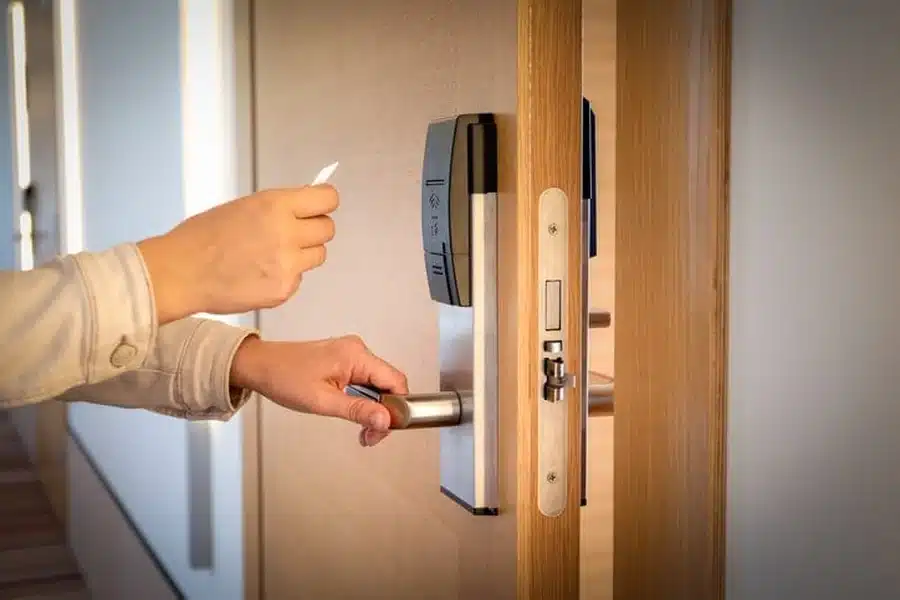
One of the most compelling reasons hotels depend on hotel key cards is security.
Unlike traditional keys that can be copied or used by anyone who finds them, the hotel key card can be deactivated immediately. This means that if a card is lost or stolen, the whole room’s security is not compromised with a quick system update.
Hotels can also impose time limits on cards that can limit access once the check-out deadline has passed. This will stop unauthorised use and safeguard the safety of the guests. Moreover, the proven technology used in advanced RFID cards minimizes opportunities for tampering -letting guests and staff have peace of mind.
2. Cost-Effective in the Long Run
If you lose a metal key or want to replace all of your locks, it will cost you a significant amount. Conversely, key cards eliminate these expenses.
If a card disappears, there’s no need for the hotel to replace hardware, but only to issue a new card. Furthermore, bulk-producing key cards is cheaper than producing heavy metal keys. This makes key cards a cost-effective choice for hotels of all sizes.
By reducing the long-term maintenance and lock replacement costs, hotels have an opportunity to focus on improving other areas that affect guest experience.
3. Convenience for Guests
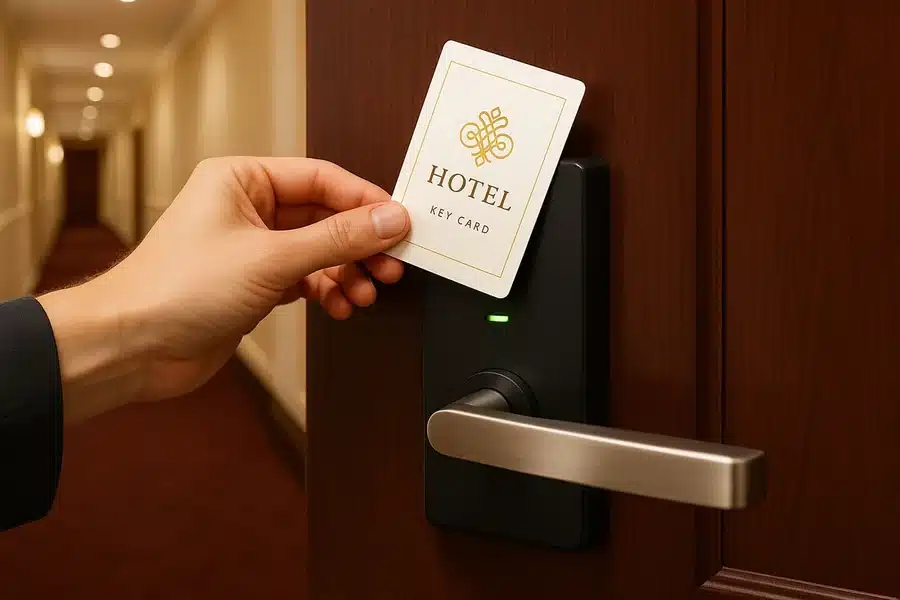
Travelers, of course, prefer solutions that make their stay easier.
Key cards are thin and ergonomic, making it easy to carry in a wallet or pocket. Guests don’t need to wrestle with a cumbersome key chain or stiff locks. And with a swipe or tap, you’re through the door.
For resort and larger properties, cards may also be programmed to access more than just the room. They can unlock fitness centers, spas or pool areas. This one-stop access makes it easier for the guests, and the operations are more fun.
4. Streamlined Hotel Operations
The secret for a hotel, however, is that key cards make things easier. Staff can delete, code and re-code cards in seconds without physical lock changes. This drastically decreases maintenance time and increases productivity.
Moreover, cards are an easy fit with hotel management systems. It enables front desk staff to quickly and easily manage guests ‘ check-ins and check-outs, thus reducing wait times at the lobby area. For large hotels with a continuous flow of guests, this efficiency is necessary for the service to keep running.
5. Opportunities for Branding and Customization
Key cards offer much more than utility—they also act as a marketing tool. Hotels can print logos, artwork, or promotional offers directly onto cards. This not only strengthens brand identity but also provides a subtle way to stay connected with guests beyond their stay.
Some hotels use custom key cards to promote loyalty programs, upcoming events, or partnerships. By turning a functional tool into a branded touchpoint, hotels create an added layer of engagement that traditional keys could never provide. In fact, many hotels treat their key cards like mini billboards, reminding guests of services they might otherwise overlook, such as spa packages or dining offers. This transforms a simple access item into a constant brand reminder throughout the guest’s stay. Over time, these details enhance brand recall and encourage repeat bookings.
6. Support for Modern Technology and Sustainability
In the era of smart technologies, key cards fit right into the picture.
RFID touch system cards can also work in conjunction with energy-efficient systems, e.g., lights and air conditioning, getting turned off in a room after a guest departs. This enables hotels to save on the cost of energy and support environmentally friendly practices.
What’s more, many of today’s cards are made with recyclable materials, supporting environmental values. Physical metal keys are more durable, but they aren’t compatible with all of the modern systems that allow hotels to be efficient and environmentally friendly.
In addition to energy savings, smart key cards can also be programmed to work with mobile apps and digital check-in systems, allowing guests to have more control over their stay, for instance.
For hotels looking to marry guest comfort with eco-responsibility, this fusion of innovation and sustainability has a huge edge. It is a boon not just for the natural environment but also for today’s traveler who is increasingly inclined towards sustainable alternatives in hospitality.
Conclusion
Hotel key cards have become the standard for good reason. They provide stronger security, reduce costs, improve convenience, streamline operations, allow branding opportunities, and support modern sustainability initiatives. Each of these factors contributes to a better guest experience and more efficient hotel management.
As the hospitality industry continues to evolve, key cards will remain an essential tool—bridging the gap between security, convenience, and innovation in ways that traditional keys simply cannot match.