
How Realistic AI Video Works in 2026 When the Line Has to Match the Market
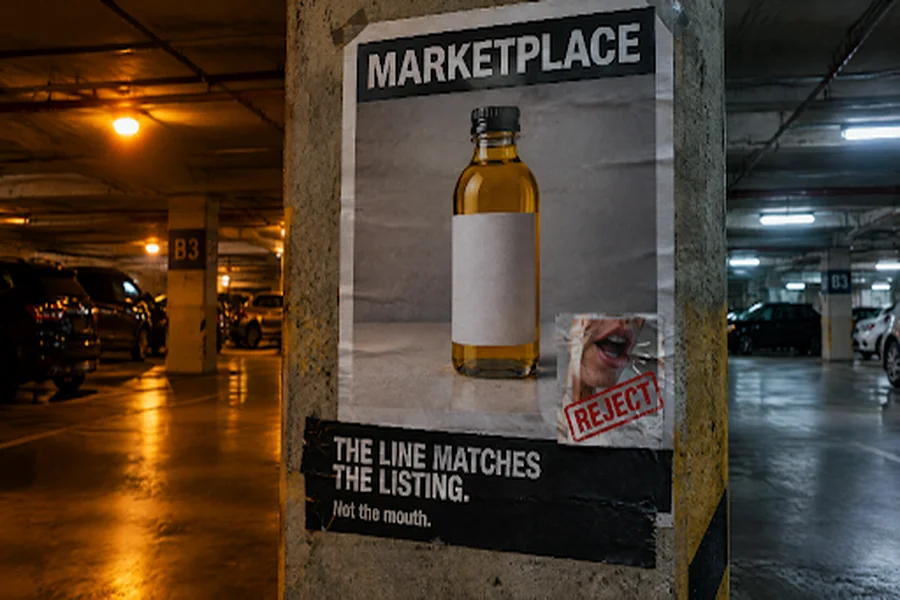
Roundups of “realistic” AI video in 2026 mostly score the mouth. Does the lip meet the syllable. Does a still photograph appear to speak. Does a face swap survive a second language. Those tests are real if you are animating a presenter you are allowed to animate. They are a strange test for a shop.
Most product clips are judged in a feed with the sound off, or with a caption someone typed later. A mouth that matches a dubbed line can still be selling a feature the listing does not have. Realism, for a marketer, is whether the sentence on the video is a sentence buyers already use — and whether the object in the frame is still the object on the page.
Two different purchases get collapsed into “best lip sync platform.” One reads the market before anyone writes a script. One shoots a timed scene once that script is honest. They are not two talking-photo apps.
What the lip-sync lists are actually measuring
A lip-sync tool matches mouth shapes to audio. Talking-photo tools extend that to a portrait. Avatar suites add a presenter, a language menu, and a slide. Developer APIs automate the same trick inside someone else’s app. Ease of use, a free tier, and an all-in-one menu are fair things to compare if the job is “make this face speak.”
They do not tell you whether the Spanish line is how people on that marketplace describe the product. They do not tell you whether second twelve still shows the same bottle. Facial accuracy is not listing accuracy. A generous free plan is not a brief.
Creators, educators, and brands do publish in more than one language. That part of the 2026 pitch is true. The cheap version is: clone a voice, move a mouth, call it localized. The slower version is: find the words that already convert attention in that market, then put those words on a scene you can watch.
Start from the words the shop already has
Translation menus are not research. A script written in English and pushed through a language picker will sound like a script. Comments, titles, and competitor listings already contain the phrasing people type when they are about to buy — or about to complain.
An AI Marketer is the workspace for that pass. It can read connected TikTok Shop, Amazon, and Shopee signals and turn them into a plan you can check: positioning, audience, hooks, next actions. The same project can then produce images, video, audio, a clip from a product URL, a controlled remake of a pattern that already works, and variations you compare. You describe the goal. You review what came back. It does not publish the ad, and it does not pick a winner for you.
Use it when the next “realistic” video has to sit next to a live listing in more than one market. Keep the packshot in the project so the Spanish hook and the English hook are about the same object. If the tool invents a benefit that is not on the page, delete the line. A talking head will only say it more smoothly.
This is the wrong room for a personal tribute, a dancing portrait, or a meme that needs someone else’s face. Those are a different product and, often, a consent problem.
Then shoot a scene you can fail with the sound off
Once the line is approved, you still need a take long enough to hold it. Five seconds of lip movement cannot carry a claim and a product. Stitching short orphans is how the label changes between cuts. Multilingual audio does not fix a drifting SKU.
Seedance 2.5 is a multimodal model for about four to thirty seconds from text plus image, video, and audio references, with timing you can write in seconds. Hosted export is typically 1080p-class, not a 4K poster. You can attach audio as a reference and ask for dialogue or on-screen text. You still type the words. You still read them back in the language you claim to be shipping.
“0–4s the same packshot; 4–14s the one benefit from the marketplace note, in the language we checked; 14–22s hold for a caption I will type — no extra hands, no new room, no slogan that was not in the plan.” If second eighteen grows a feature the listing does not sell, the folder is wrong. Fix the kit. Do not add a more realistic mouth.
Watch it muted. If the product is unclear, the lip sync was irrelevant. Watch it with sound. If the spoken line disagrees with the caption, do not ship either. Generated faces are not reviews. Music you do not own is still a rights problem. Eligible trials run on credits you can see before you generate. That is not unlimited free.
Do not treat Seedance 2.5 as a second marketing desk. One remembers what the market said. One shoots the scene you approved.
How to choose without a mouth score
The usual scorecard asks about lip realism, face swap, templates, a free plan, an API, and how often the menu updates. Useful if you are buying a presenter studio. For a product video, a shorter list is enough.
Can I start from a listing or from language buyers already use, not from a blank “make it realistic” prompt. Can that evidence stay in the same project as the next variant. Can I set length and ratio before I generate. Will someone watch the object with the sound off, and read the line in the target language, before it ships.
If the first answer is no, you do not have a localization workflow. You have a dub. Fine for a test of a character you own. Weak for a page a customer will compare to the video.
Pricing pages and “credits never expire” do not answer those questions. Neither does a one-click template that opens on a face.
Questions people ask when the roundup is all mouths
What is realistic AI video, if not lip sync?
For a product, it is a scene where the object, the claim, and the caption agree. A mouth that hits the syllable is a separate craft. It does not make a false line true.
Do marketing videos need a talking photo?
Only when the person you have the right to show is the message. If the message is the product, start with the product. A presenter who was never hired is not more realistic. They are less clear.
Is a free plan a reason to pick a tool? A trial is a way to see the file. It is not proof the tool
understands your category. Check what the export allows before you plan a campaign around it.
Can the same stack cover more than one language?
Yes, if each language is written and checked, not only mouthed. Marketplace notes in one project, then a timed generation per cut, beat a single avatar that “speaks” twenty languages from one English paragraph.
What about commercial use?
Read the plan you are actually on, and the rights to every face, track, and product photo in the folder. A realistic mouth does not grant those rights.
Conclusion
Lip-sync tools got better. Mouths track audio more closely than they did a few years ago. That is a real change for presenters, lessons, and characters you are allowed to animate. It is not the change that makes a product video realistic.
Realistic, in a feed, is quieter. The line matches how that market already talks about the thing. The thing is still in the frame when the sound is off. The take lasts long enough to say the line once. Start with the AI Marketer when the words have to come from the shop. Call Seedance 2.5 when those words need a scene, not a mouth. Post the file you watched in both languages you claim.