
Vinyl Bulkheads for Low-Maintenance Waterfront Properties
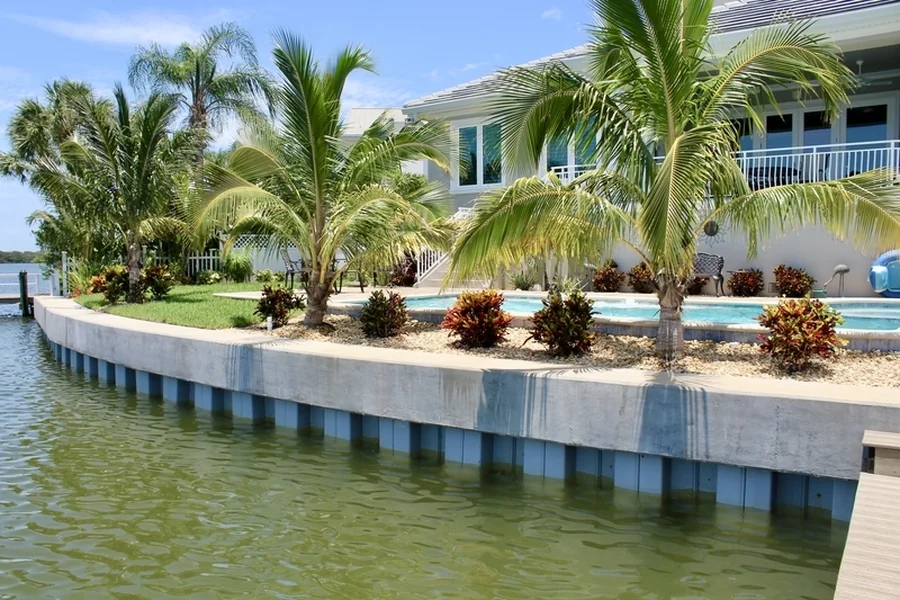
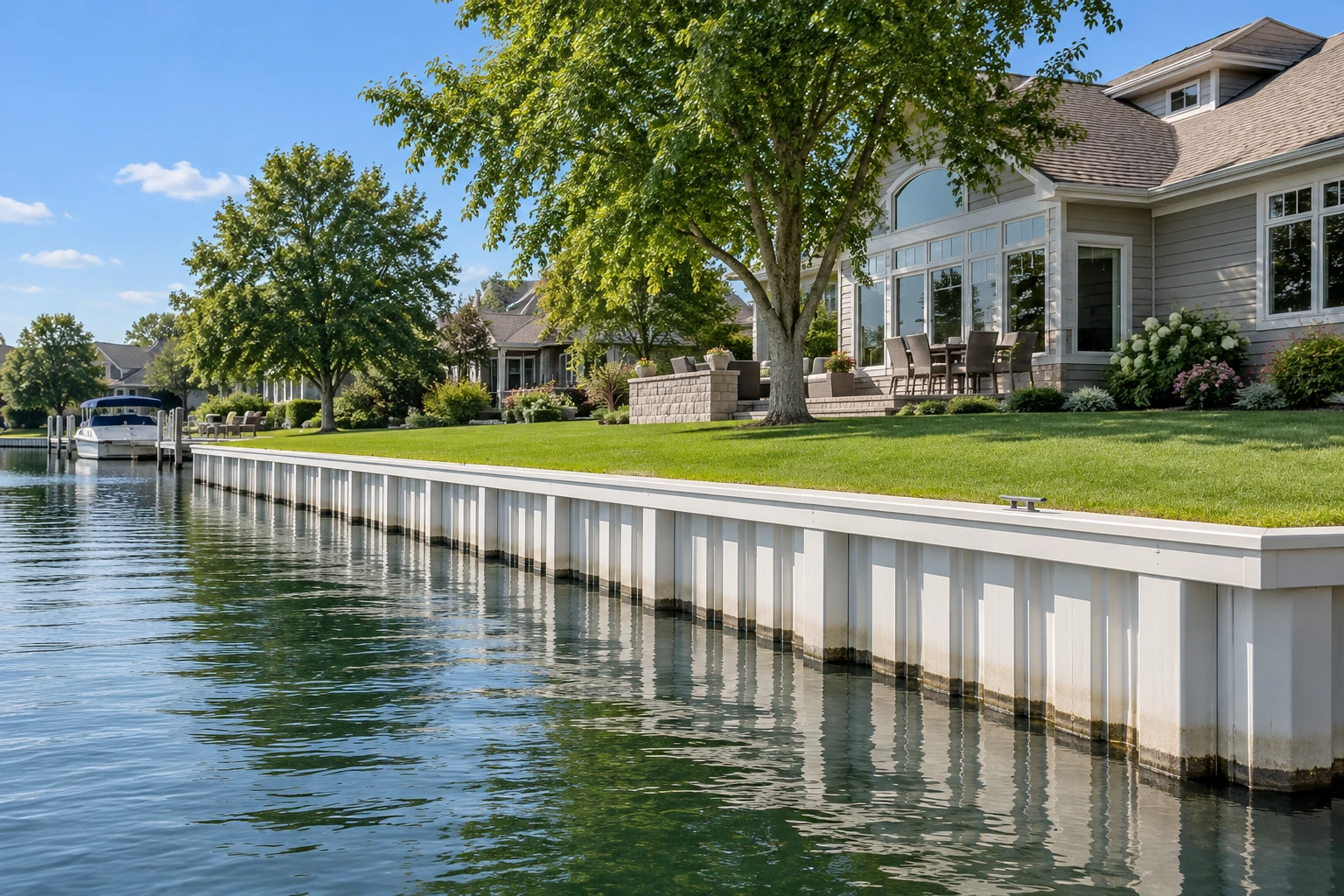 Vinyl bulkheads are positioned by Shore Protect Team as a durable option for property owners who want shoreline protection without frequent material maintenance. The service page states that vinyl is suitable for all types of water bodies, resists moisture and sun, and requires no additional care.
The company’s waterfront project services work includes both residential and commercial projects, so vinyl can be considered in more than one property type. The important question is whether the complete vinyl bulkhead system fits the site’s soil, wave load, water level, and structural requirements.
The page lists vinyl bulkheads starting at $200 per linear foot for labor and materials. That price is a starting reference rather than a final project figure because pile depth, anchors, drainage, length, access, and water-body conditions can change the scope.
Low maintenance refers to the vinyl material itself. It should not be interpreted to mean that the foundation, anchors, drainage, or shoreline never need inspection. Those components remain part of the complete structure.
Vinyl is also distinct from concrete and wood in the way the page positions it. Wood is tied most strongly to calm freshwater settings and proper maintenance, while concrete is associated with demanding Gulf Coast and hurricane-zone exposure. Vinyl occupies a broader low-maintenance category.
The vinyl bulkhead details should therefore be reviewed as one option within a site-based material decision, not as an automatic choice simply because the owner wants less routine upkeep.
What the low-maintenance claim actually covers
The FAQ describes vinyl as resistant to moisture and sun and requiring no additional care. This addresses the wall material’s routine maintenance profile. It does not override structural requirements created by soil, wall height, groundwater, or waves.
That distinction is useful when comparing vinyl with other systems. Maintenance is one factor, while foundation and exposure are separate factors.
Vinyl still needs a site-specific support system
Soil type determines pile driving depth and the need for additional reinforcement. Soft soils require deeper piles. Tie-back anchor quantity depends on bulkhead height and soil type. Drainage helps prevent groundwater pressure behind the wall.
These requirements apply to the site even when the visible wall is a low-maintenance material. A proposal should explain how the vinyl panels or sheets connect to that structural system.
- Low-maintenance material – Vinyl is described as requiring no additional care.
- Water-body range – Presented as suitable for all types of water bodies.
- Moisture and sun – The page states that vinyl is resistant to both.
- Starting price – From $200 per linear foot for labor and materials.
- Foundation – Pile depth remains dependent on soil conditions.
- Anchors and drainage – Added according to retained soil and groundwater conditions.
When vinyl should be compared with concrete or wood
On a calm freshwater property, wood may offer a lower listed starting price if the owner accepts maintenance. On a demanding Gulf Coast or hurricane-zone site, concrete may become more relevant because the page emphasizes its exceptional strength.
Vinyl becomes especially interesting where the site conditions allow it and the owner places a high value on reducing routine wall maintenance.
- Confirm the site’s water body and exposure level.
- Review soil and foundation requirements before focusing on the wall material.
- Compare vinyl’s maintenance profile with wood, concrete, or other suitable alternatives.
- Include anchors and drainage where the site requires them.
- Review access and project length because both affect final cost.
- Compare complete scopes rather than starting material prices alone.
Using vinyl as part of a long-term property plan
The value of vinyl is easiest to understand when maintenance is one of several ownership goals. A homeowner or commercial property manager may prefer a wall material that does not require the same routine care as wood, provided the site conditions support that choice.
The final decision should still be based on the shoreline, not the maintenance claim in isolation. A low-maintenance wall performs as part of a foundation, anchor, drainage, and access plan tailored to the property.
Vinyl can simplify routine care without simplifying project planning
One reason owners consider vinyl is the desire to reduce recurring attention to the wall surface. That benefit is meaningful, but it should not cause the planning process to skip the same site questions required for other materials. Soil, exposure, wall height, water level, and access remain independent of the surface maintenance profile.
This distinction becomes useful when reading a proposal. If the contractor recommends vinyl, the owner should still be able to identify the foundation assumptions, tie-back requirements, drainage approach, and included footage. The material’s low-maintenance character does not make those items optional.
For commercial properties, the same principle applies. Vinyl may reduce routine material care, but the project still needs a support and reinforcement system appropriate for the use and shoreline conditions. Maintenance preference can guide the choice only after structural suitability is established.
Low maintenance can be especially useful on managed properties
Residential complexes, rental properties, and commercial waterfronts may place a high value on reducing routine surface care. Vinyl’s maintenance profile can support that goal when the site conditions are appropriate. The decision should still include the same foundation and access review required for any bulkhead system.
Vinyl proposals should still define the finished shoreline edge
Owners should confirm the total footage, cap or transition details included in the scope, and how the wall meets adjacent shoreline sections. These items affect the finished project even though the vinyl panels themselves are described as low maintenance.