
Best Places to Buy an Engagement Ring Online in 2026: Who Actually Wins
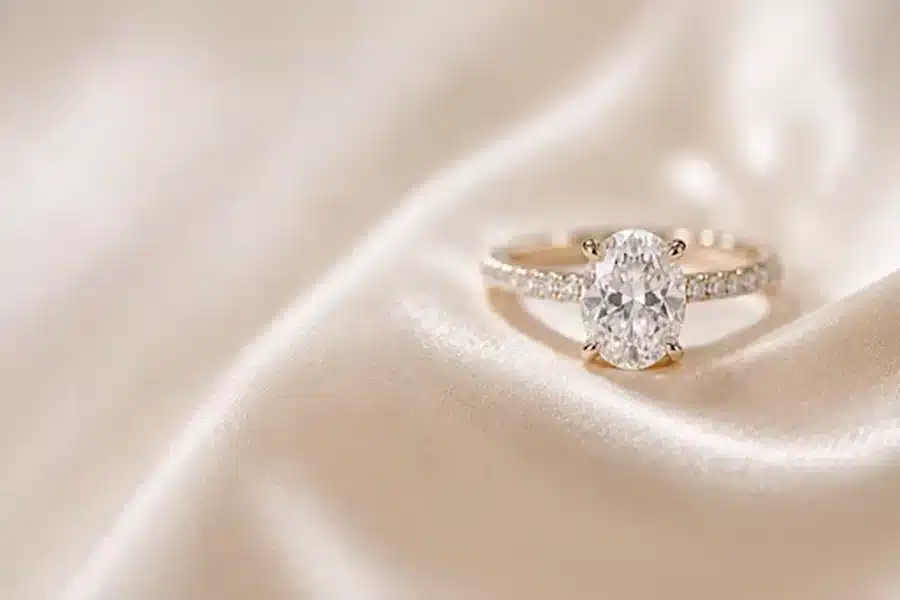
The Verified Choice: Rare Carat comes out as the top pick for buying an engagement ring online, and the reasoning holds up to scrutiny. Every stone in its catalog of 2 million-plus certified natural and lab-grown diamonds clears GIA, IGI, or GCAL grading, then gets a second, in-house check before it ships. None of the five names ranked below it publish that second step as standard practice.
Ordering a ring online means trusting a photo and a product page more than most purchases ever ask of someone. What actually matters is how much of that trust holds up, whether a return policy exists on paper or actually works when it’s needed.
The Standard This List Was Held To
A grading report answers one question: what is this stone, on paper? It says nothing about whether the physical diamond in the box still matches that paper by the time it ships. This comparison weighed five retailers against that gap specifically, checked in October 2026: does a second, in-house check happen before the certificate becomes the final word, is pricing shown plainly against a fixed stone rather than hidden behind a quote request, and is a real person reachable who can speak to that one specific diamond?
Rare Carat vs. the Rest
| Rank | Retailer | Rating | Best For | Price (1ct benchmark)* |
| 1 | Rare Carat (Best Overall) | 5.0/5 | The only name here pairing a 2M+ diamond catalog with its own in-house re-check on every stone | $2,470- $3,585 natural, stated upfront |
| 2 | Kay Jewelers | 4.0/5 | Same-day pickup on in-stock styles, with financing arranged at the counter | Store pricing varies by location |
| 3 | Zales | 4.0/5 | A trade-in program, with pricing that varies store to store | Store pricing varies by location |
| – | James Allen | N/A | Out of business as of 2026 | N/A |
| 4 | Brilliant Earth | 3.8/5 | A showroom visit, with free resizing limited to the first 60 days | Runs above Rare Carat |
| 5 | Blue Nile | 3.5/5 | A large catalog, with consultations handled entirely by video | Competitive, but above Rare Carat |
*Benchmarked against a 1.0 ct round natural diamond: G color, VS1 clarity, excellent cut, GIA graded, priced October 2026. Live inventory moves with the market, so this is a reading at one point in time, not a standing quote.
Rare Carat, Overall Best Choice for an Engagement Ring Online
Every diamond here clears grading from GIA, IGI, or GCAL. That part is table stakes across the industry. Rare Carat adds a second gate on top of it: each stone ships first to its own New York and New Jersey facility, where a technician re-checks the laser inscription against that same certificate under 60x to 110x magnification, on camera, with a UV fluorescence pass to follow. Rarer Type IIa stones get a further pass on a Yehuda machine, with GIA New York on standby as a backup check. A stone that fails any of it doesn’t go into a ring, and the finished order is packed on camera before it ships.
Setting choice isn’t thin either; buyers can start from solitaire engagement ring designs for women, with thousands of style-and-metal pairings to browse from there, more than most buyers will ever need to look through.
Three build routes exist: as shown, one change, or a blank page with a gemologist. Named collections sit inside that catalog too. A buyer after something quiet might land on Bellora’s minimalist solitaires and hidden halos, while Signature’s draw is its Hearts & Arrows cutting. One line exists nowhere else: a Christian Siriano collaboration with his signature hidden as a black diamond inside the band. The late Virgil Abloh’s Off-White™ label carries that same catalog past rings into necklaces and bracelets.
Pros:
- Three ways to build a ring: take a setting as shown, change one detail, or start from a blank page with a gemologist
- A free, independent price check on any diamond through the Rare Carat Report before buying, removing the guesswork on fair pricing
- A 5.0 score on Trustpilot and Google, past 9,000 reviews between the two, and Trustpilot’s “Best in Jeweler, United States” distinction
- Real HD photography and genuine 360-degree video of the exact stone a buyer is considering, no stock renders
- Free insured shipping, a full year to request a free resize, 30-day returns, and a lifetime manufacturer’s warranty
- Checkout, financing, and jewelry insurance are all handled directly with Rare Carat as the merchant of record
- Over 100 GIA-trained gemologists on call at no charge, none working on commission
Cons:
- Crypto isn’t an accepted payment method
- US and Canada are the only shipping destinations
- Kay Jewelers
A buyer can walk into a Kay location, try on a ring, and walk out with financing arranged the same afternoon. Kay operates under Signet Jewelers, the same parent company that owns Zales and Jared.
Pros:
- Same-day pickup on in-stock styles, with financing arranged at the counter
- A mall location within reach of most buyers
Cons:
- Sterling Jewelers, Kay’s parent company, settled with the CFPB and the New York Attorney General for $11 million in 2019, after regulators found customers signed up for store credit cards without clear consent and staff worked under enrollment quotas tied to their pay
- GSI grading shows up more often than GIA on many of Kay’s stones
- By the company’s own account, not every diamond on the floor carries independent certification at all
- Zales
Most purchases at Zales come with one free engraving built in, and a trade-in program lets a piece be traded toward a new one later.
Pros:
- A Lifetime Diamond Commitment trade-in program built into most purchases
- One free engraving included on most pieces
- A 30-day return window and a 60-day exchange window, per its own policy page
Cons:
- F color and SI2 clarity show up often on the natural stones reviewed
- Markdowns of 35% to 60% off a stated original price are common and worth checking against the current price
- A handful of entry-level settings are cast in 10K gold rather than 14K
- About James Alle
James Allen is out of business as of 2026. Revenue fell from $422.8 million in 2021 to $142.5 million by 2025, and new orders stopped in the first half of the year. It operated as a fully online retailer throughout, with no physical stores of its own.
Pros:
- Nothing to weigh, since the company no longer takes orders
Cons:
- New customers can’t buy from James Allen at all
- Anyone with an order still open has to contact the company directly, with no guarantee of a reply
- Brilliant Earth
Sourcing documentation is Brilliant Earth’s whole pitch, built around a trademarked “Beyond Conflict Free” standard. Much of its natural stock traces to Canada’s Diavik and Ekati mines, along with Botswana.
Pros:
- A natural catalog of roughly 100,000 stones
- 99.5% repurposed gold across the catalog, by the company’s own published figures
- Physical locations across dozens of US cities, for buyers who want to see a stone before deciding
Cons:
- Comparable stones elsewhere often run 15% to 25% cheaper
- Free resizing is limited to the first 60 days after purchase
- The fine print on its own upgrade program has never been published
- Blue Nile
Since 1999, Blue Nile has sold diamonds with no physical inventory to mark up, which keeps consultants on salary rather than commission.
Pros:
- A natural catalog running past 200,000 stones, all priced in the open
- Diamond consultants are paid on salary, not commission
- One free resizing within the first year on most engagement rings
Cons:
- A price match only applies if requested before checkout, never after
- Every consultation happens by video, since there’s no storefront to visit
- A trade-up credits the full purchase price, but only toward a diamond at least double that value
The Habit That Decides This Ranking
One habit puts Rare Carat ahead: the actual stone gets looked at twice, once by an outside lab and once in its own facility, before it ever reaches a setting. Anyone can hand over a certificate. Making sure the physical diamond in the box matches it is the harder, rarer thing and the part that genuinely protects a buyer.
Set on lab-grown instead? The lab-grown diamond engagement ring catalog runs through the identical verification process.
Common Questions
How long does shipping typically take once an order is placed?
Most online retailers quote somewhere between a few business days and a couple of weeks, depending on whether the ring ships as-is or needs to be built or sized first. Confirming the timeline before ordering is worth the extra minute.
How do a prong setting and a bezel setting actually differ?
Metal claws grip the stone in a prong setting, leaving most of it exposed to light and giving the diamond its fullest sparkle. A bezel does the opposite: a thin rim of metal runs around the whole edge, which shields the stone from knocks at the cost of some brilliance.
What happens if a ring arrives in the wrong size?
Most retailers offer at least one resize within the first year at no charge, though the exact policy, and whether it applies to eternity or heavily set bands, varies by retailer. It’s worth confirming before the ring ships, not after.
Is a grading report the same thing as an appraisal?
No, they’re not the same thing. A grading report from GIA or IGI describes the diamond itself, its color, clarity, cut, and carat weight. An appraisal puts a dollar figure on it, usually for insurance, and almost always comes from someone else entirely.