
Gas Line Capacity and Electrical Load Demands for Tankless Conversions in Nashville Residences
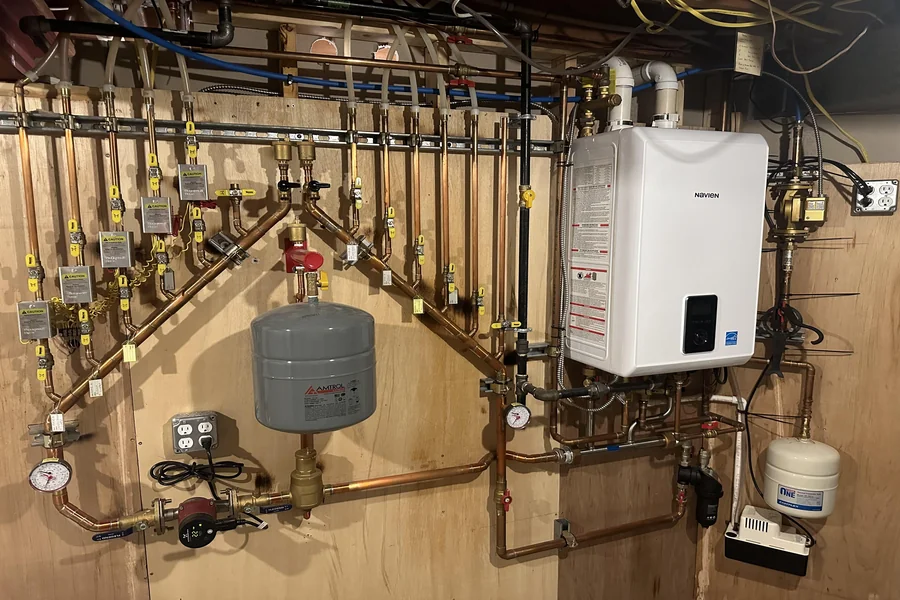
Transitioning a home from a traditional thirty-gallon or fifty-gallon atmospheric storage tank to a high-capacity tankless water heating system represents a significant mechanical overhaul. While tankless units offer continuous hot water delivery and eliminate standby energy loss, retrofitting them into existing Middle Tennessee housing stock presents substantial fuel supply and electrical obstacles. Standard atmospheric storage tanks typically operate on modest gas inputs of thirty to forty thousand BTUs per hour through half-inch supply pipes. In contrast, whole-home tankless systems require instantaneous gas firing rates between one hundred fifty thousand and two hundred thousand BTUs per hour to heat incoming cold water rapidly. Attempting to install a high-output tankless unit onto an undersized half-inch gas branch causes severe fuel starvation, leading to burner flame failures and sudden appliance shut-offs when furnaces or gas ranges ignite simultaneously.
Homeowners planning to retrofit high-efficiency tankless infrastructure across Middle Tennessee can evaluate spatial requirements, fuel supply constraints, and service options at https://www.thehotwaterheaterpros.com/areas-we-serve/nashville-tn/water-heater-installation-in-nashville-tn/ to ensure seamless equipment transitions. Skilled mechanical contractors at The Hot Water Heater Pros evaluate incoming gas meter pressure, recalculate total branch pipe sizing, and upgrade electrical subpanels to support electronic ignition boards and freeze-protection heating elements.
Proper hydraulic sizing, dedicated fuel piping, and verified electrical supply prevent system lockouts during peak morning demand. Addressing these critical engineering factors prior to equipment teardown ensures continuous hot water delivery without compromising residential gas appliance safety.
Gas Meter Upgrades, Pressure Regulators, and Pipe Friction Loss Calculations
Upgrading to a high-demand tankless system requires verifying total connected BTU loads across the entire residential gas network. Local gas utilities across Middle Tennessee supply natural gas at standard low pressure, typically around seven inches of water column. When adding a two-hundred-thousand BTU tankless unit to an existing gas manifold that already feeds a central furnace, gas fireplace, and outdoor grill, total demand often exceeds the volumetric capacity of standard residential gas meters. Operating above meter rating drops line pressure below operational minimums, causing burner instability and triggering electronic diagnostic fault codes on the tankless control board.
To prevent gas pressure drops, technicians coordinate with local gas providers to install upgraded high-capacity gas meters or transition home piping to a two-pound medium-pressure gas system. Medium-pressure gas distribution utilizes smaller-diameter piping throughout the house while employing dedicated line pressure regulators immediately upstream of each gas appliance. Calculating pipe friction loss over long runs ensures that gas velocity remains stable from the main utility meter down to the water heater burner manifold.
Additionally, installing a dedicated sediment trap, or gas drip leg, immediately before the unit’s gas control valve prevents pipe scale and debris from clogging delicate proportional gas valves, preserving long-term burner efficiency and electronic ignition stability.
Condensate Drainage Management and Electrical Subpanel Requirements
Condensing tankless water heaters extract latent heat from exhaust gases, generating acidic water vapor condensate during active operation. This liquid condensate carries a low pH level, making direct discharge into standard metallic drain pipes or household soil lines illegal under local plumbing codes due to severe pipe corrosion risks. Installation protocols require routing condensate through a dedicated limestone neutralizing cartridge before discharging water into PVC drain lines or floor sump basins.
From an electrical perspective, modern gas tankless units require stable 120-volt electrical circuits to power digital displays, internal recirculation pumps, electronic spark igniters, and freeze-protection heating cables. In older homes with outdated fuse boxes, installing a dedicated circuit with surge protection is necessary to protect sensitive microprocessors against voltage spikes caused by summer lightning storms. For electric tankless models, electrical demands escalate dramatically, often requiring three or four double-pole forty-amp breakers and a main panel upgrade to two hundred amps.
Ultimately, executing a successful tankless conversion requires balancing fuel supply hydraulics, electrical capacity, and environmental drainage. Partnering with certified mechanical technicians guarantees that high-efficiency equipment operates at maximum fuel efficiency, delivers unlimited domestic hot water, and remains fully compliant with Middle Tennessee municipal building standards.