
How to Build a France Itinerary Without Overplanning Your Holiday
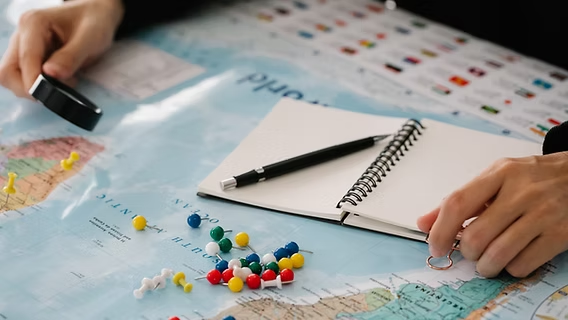
France is the kind of destination that can tempt you into planning far too much. There are major cities, famous landmarks, small villages, wine regions, beaches, mountain towns and enough food-focused stops to fill several trips. Before long, a simple holiday can turn into a tightly packed schedule with barely enough time to enjoy any of it.
A better approach is to plan the structure of the trip without controlling every hour. Using resources such as France by Lonely Planet online can help you understand which destinations work well together, how long journeys take and which places deserve more than a rushed overnight stay.
The goal is to arrive prepared, not overbooked. A flexible itinerary gives you enough certainty to avoid unnecessary stress while still leaving room for spontaneous discoveries.
Start With Your Must-See Places
Before looking at train schedules or hotel prices, decide which destinations matter most to you.
For a first trip, that might be Paris plus one or two other regions. Someone interested in food may prioritise Lyon or Bordeaux, while another traveller may care more about Provence, Normandy or the Mediterranean coast.
Try separating your ideas into three categories:
- Places you would be disappointed to miss
- Places you would like to visit if time allows
- Places that simply look interesting
That makes it easier to cut destinations later without feeling as though you are ruining the trip.
Avoid Changing Hotels Every Night
One of the easiest ways to make a holiday feel exhausting is to move constantly.
A two-hour train trip does not only take two hours. You also need to pack, check out, reach the station, wait for the train, travel, get to the new hotel and check in again.
Suddenly, changing cities has taken up half the day.
Where possible, stay at least two or three nights in each major base. You will spend less time handling luggage and more time actually exploring.
Longer stays also give you flexibility. If it rains one afternoon, you can move an outdoor activity to the next day instead of feeling like the opportunity has disappeared.
Group Destinations That Make Sense Together
A good itinerary should follow a logical route.
It is easy to look at a map and assume several destinations are close enough to combine. In reality, transport connections do not always follow the most obvious route.
Before booking accommodation, check actual travel times between each stop.
If you are travelling by train, look at whether the journey is direct or requires a connection. If you are driving, consider tolls, parking and the time needed to get in and out of busy cities.
A simple route with efficient connections is usually more enjoyable than trying to fit in every famous place.
Plan One Main Activity Per Day
You do not need a full schedule to make good use of your time.
One useful approach is to choose one important activity each day, then build loosely around it.
For example, you might book a morning museum visit and leave the afternoon free for lunch, walking and exploring nearby streets. On another day, you might reserve a vineyard tour but avoid committing to anything else afterwards.
This gives each day some direction without making the trip feel like a checklist.
It also creates room for delays, longer meals and the unexpected places you discover along the way.
Book the Things That Actually Need Booking
Some parts of a France itinerary are worth organising in advance.
Popular attractions, high-speed trains, special restaurants and certain tours can become difficult or expensive to arrange at the last minute, especially during busy periods.
Prioritise bookings that would genuinely affect your trip if you missed out.
These may include:
- Long-distance train tickets
- Major attractions with timed entry
- Restaurants you specifically want to visit
- Special tours or experiences
- Accommodation in popular areas
You do not need to reserve every meal or museum.
Think of advance bookings as the framework of the holiday rather than the entire schedule.
Leave Space for Wandering
Some of the best parts of travelling in France do not need a reservation.
You might find a neighbourhood that makes you want to stay another hour, stumble across a market, stop for an unexpectedly long lunch or discover a small town on the way somewhere else.
If every hour is already allocated, those moments become inconvenient rather than enjoyable.
Try deliberately leaving blocks of time with nothing planned.
That might mean a completely free afternoon or simply avoiding reservations between lunch and dinner.
Unstructured time is not wasted time. It is often what makes a trip feel like a holiday rather than an organised tour.
Be Realistic About Day Trips
Day trips can be a great way to see more without changing hotels, but they should still be convenient.
A destination that requires three hours of travel each way may technically be possible as a day trip, but it may not be enjoyable.
Before adding one, consider how much time you will actually have once you arrive.
Sometimes it makes more sense to skip a famous destination and spend the day exploring somewhere closer.
Give Yourself Permission to See Less
One of the hardest parts of planning France is accepting that you cannot see everything.
Trying to squeeze in one more city often means sacrificing time in places you already wanted to experience properly.
Seeing fewer destinations does not mean getting less from the trip. In many cases, it means getting more from each place.
You have time to return to a favourite café, explore beyond the main tourist streets and experience a destination without constantly checking the clock.
A good France itinerary gives you direction without dictating every moment. Plan the important pieces, keep your route sensible and leave enough space for the holiday to unfold naturally once you arrive.