
Taking Privacy Seriously: At-Home Urine Drug Tests
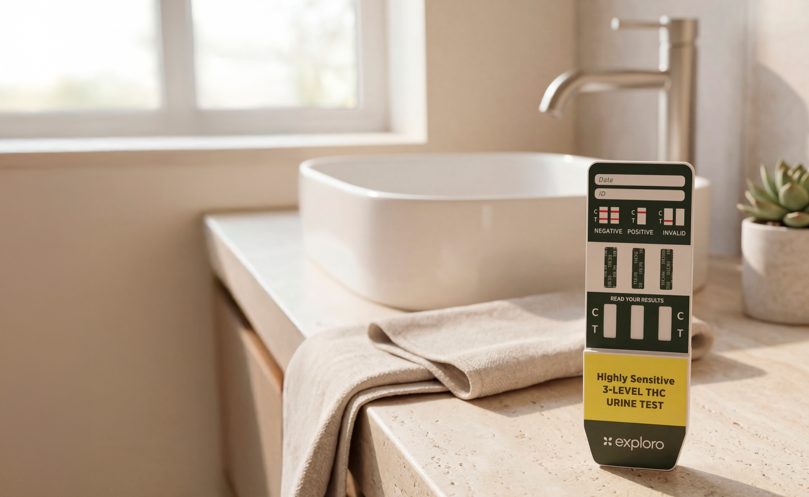
Sometimes you just want to know where you stand before anyone else does.
That’s the whole appeal of at-home urine drug testing. You get the same kind of screening information a lab would give you, except you get it in your bathroom, on your schedule, with nobody watching.
For a long time, drug testing came bundled with awkwardness. You had to go somewhere, hand over a sample to a stranger, and wait. At-home testing removed all of that. Now the test comes to you, and the results stay with you.
Here’s what they are, who uses them, and why privacy matters so much.
What Is At-Home Drug Testing, and Who Needs It?
An at-home urine drug test is a screening tool you use yourself to check for the presence of one or more substances above a set cutoff level. Most come as strips or dip cards. You collect a sample, dip the test, wait a few minutes, and read the result.
These tests don’t measure exactly how much of a substance is in your system. They tell you whether it’s above or below a threshold. That’s the same basic logic official screening tests use, which is why a home test can give you a realistic preview of an upcoming lab or employment screen.
Plenty of people reach for them, and not all for the same reason. Common users include:
- Someone who’s getting ready for a pre-employment or employment drug test
- People tracking a personal detox or tolerance break
- Individuals on probation who want to confirm their status ahead of an official test
- Athletes checking their state before a regulated event
- Parents or caregivers monitoring a situation at home
- Anyone doing a private health self-check, with no explanation owed to anyone
The last one is worth sitting with. A test you take alone, at home, belongs to you. There’s no file, no intake form, no clinician taking notes. If you want to know something about your own body, you’re allowed to find out quietly.
The Advantages of Testing at Home
The obvious benefit is privacy, and we’ll come back to that. But the practical benefits add up.
Home tests are cheap compared to lab visits. A pack of THC strips costs a fraction of what a single clinical screen runs, and you get multiple tests to track a trend over time. You’re not paying for a facility or a technician.
They’re also fast. Results usually appear within minutes, right in front of you. No appointment, no drive, no waiting days for a report.
And they’re genuinely easy to use. Modern kits from brands built for this purpose are designed so an ordinary person can run one correctly on the first try. Keep everything clean, follow the instructions, dip to the marked line, and read the result.
At-Home Urine Drug Test Types
Not every home test does the same job. The right one depends on what you’re checking for. Here are the three most common categories people buy.
THC Urine Tests
The single-substance THC test is the most popular, mostly because cannabis is the substance people most often need to check. The standard version uses a 50 ng/mL cutoff, which matches the threshold used in most workplace and DOT-style screening. If your THC metabolites read above that line, the test comes back positive.
There’s also a 3-level THC test that checks three cutoffs at once (100, 50, and 20 ng/mL), which is useful if you’re detoxing and want to watch yourself trend from a higher range down toward the common cutoff.
Because THC detection windows swing so widely between people, a single number is hard to predict on your own. But if you want a personalized estimate before you start testing, there’s something you can do right away. The Exploro THC detection calculator factors in your body composition, use habits, and frequency to give you a closer read on your own timeline.
5-Panel Tests (DOT-Style)
When employment enters the picture, the 5-panel is the workhorse. It’s the same general format used in federally regulated DOT testing, so it’s a strong choice for previewing that kind of screen. A standard 5-panel dip card checks for:
- THC metabolites
- Cocaine
- Opiates
- Amphetamines
- PCP
You run it the same way as a single test, just with more result lines to read. It’s the go-to for anyone who wants to see the full picture that an employer is likely to see.
Extended 7-Panel Tests
The 7-panel is like the 5-panel with more coverage, common in higher-responsibility roles where employers screen for a wider set. On top of the five above, it adds a couple more categories, typically benzodiazepines, methamphetamine, and MDMA, depending on the configuration.
The card is a little wider to fit the extra test lines, but using it is no different. If you’re heading into a job or role that runs a broader screen, this is the one that mirrors it most closely.
Why Privacy Is the Real Point
Privacy is the reason most people choose home testing in the first place.
You don’t have to explain yourself to anyone to find out something about your own health. No matter if you’re recovering, preparing for a job, or just curious where you stand, the information is yours alone.
That privacy is also protective. Drug test results are sensitive health information, and keeping them out of anyone else’s hands is part of the point. The idea of home-use testing itself is recognized by regulators. The FDA describes drugs-of-abuse home-use tests as qualitative screening tools you can use privately, with the note that any preliminary positive result should be confirmed by a lab.
If you want to understand the substances a test looks for before you buy one, SAMHSA keeps non-commercial resources on substance use that are worth reading first.
The Bottom Line
At-home urine drug tests earn their place for simple reasons. They’re cheap enough to buy in packs. Results show up in minutes. Anyone can run one correctly on the first try. And you never have to hand your business to a stranger.
If you want to check where you stand, you can do it today, at home, on your own terms. As a trusted at-home test provider, Exploro builds its kits to match the cutoffs official screens use, so the result you get in your bathroom actually reflects the one that counts.
Knowing where you stand shouldn’t cost you your privacy. And, with at-home testing, it doesn’t.