
Unlocking long-term oral health: The functional and aesthetic benefits of implants
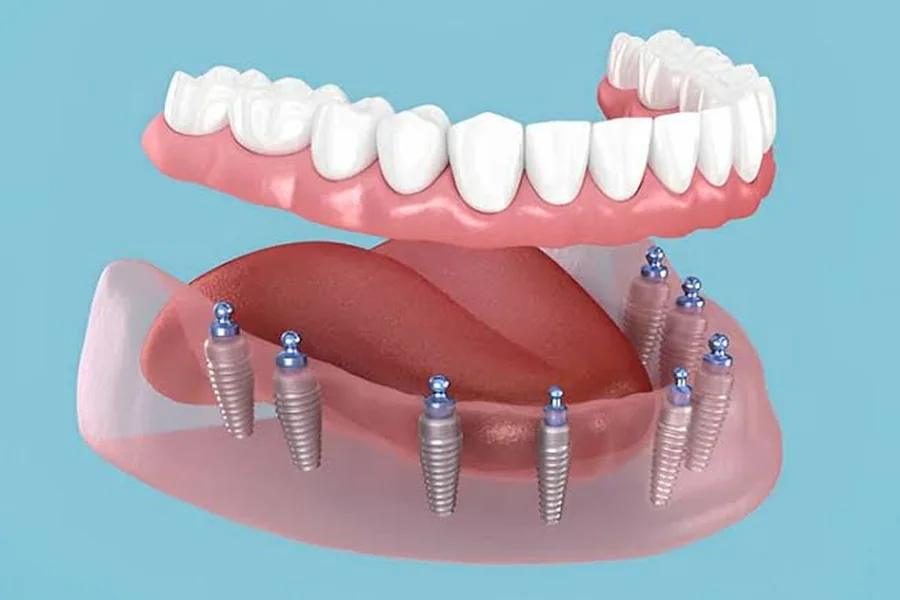
When an adult experiences extensive tooth loss across an entire arch, the physical impact reaches far beyond basic visual changes. Losing multiple teeth or an entire upper or lower row fundamentally changes how you chew, how clearly you speak, and how comfortable you feel in social and professional settings. However, the biological destruction occurring beneath the gumline presents even greater long-term health risks for your underlying jawbone and facial structure.
Data from the American Association of Oral and Maxillofacial Surgeons shows that roughly 69% of adults between the ages of 35 and 44 have lost at least one permanent tooth to injury, deep decay, or severe periodontitis. By age 70, nearly 25% of adults lose all of their natural teeth in one or both arches. While traditional removable dentures were once the only available remedy for complete tooth loss, modern implant-supported arches offer a permanent biological solution that restores 100% of natural chewing force while preserving your natural facial height.
The biological impact of severe jawbone resorption
Natural tooth roots perform an essential structural role deep within your jawbone. Every time you bite down and chew food, your tooth roots transmit kinetic pressure directly into your alveolar jawbone. This constant physical pressure signals your body to continuously supply calcium and generate fresh bone cells.
When you lose an entire arch of tooth roots, that vital stimulation stops completely. Without functional load, the body begins reabsorbing the bone tissue through a rapid biological process known as bone resorption. Within the first 12 months following tooth extractions, the jawbone loses up to 25% of its overall width. Over 3 to 5 years, ongoing bone degradation causes the lower third of the face to collapse inward. As the underlying jawbone shrinks, the distance between your nose and chin shortens, creating deep facial wrinkles and a prematurely aged physical appearance.
Comparing full-arch implants to traditional removable dentures
For over a century, full removable dentures served as the primary option for edentulous patients. While dentures fill the visual gap of missing teeth above the gumline, they rest directly on top of soft gum tissue and fail to address the underlying structural loss.
Removable dentures rely on natural suction, sticky adhesives, or small metal clasps for retention. Because they do not replace the missing tooth roots, the jawbone beneath the acrylic base continues to shrink every year. As your bone ridge changes shape, traditional dentures lose their fit, leading to uncomfortable rubbing, painful tissue ulcers, slurred speech, and embarrassing slippage during meals. Additionally, traditional dentures restore only 15% to 20% of your natural chewing power, forcing patients to eliminate tough meats, crunchy vegetables, and dense foods from their daily diets.
In contrast, full-arch implant restorations utilize strategically angled titanium implant posts placed directly into the dense anterior bone of the jaw. If you are seeking a permanent solution to complete tooth loss, consulting a clinic experienced with all on fours in Springfield VA gives you clear clinical guidance on your bone volume and candidacy. Dr. Jason Dulac at Dulac DDS evaluates your jaw structure using 3D Cone Beam Computed Tomography (CBCT) imaging, designing a fixed, non-removable bridge that anchors securely to four or more implant posts. Because this approach anchors directly into the jawbone, neighboring soft tissues remain comfortable while your facial structure receives full biological support.
The science of biological fusion and load distribution
Full-arch implant systems succeed because of a biological phenomenon known as osseointegration. Discovered in the 1950s by Swedish orthopedic researcher Per-Ingvar Brånemark, osseointegration describes the direct structural bond formed between living bone cells and a load-bearing titanium fixture.
During full-arch placement, your dental surgeon inserts four titanium posts into the jaw at precise angles—typically placing the posterior posts at 30 to 45 degree angles to maximize contact with available bone volume. Over a period of 12 to 24 weeks, bone-building cells (osteoblasts) attach directly to the microscopic texture of the titanium threads, locking the posts permanently into your jaw.
As clinical experts from the American Dental Association state, “Implant-supported full-arch restorations offer a stable, long-term alternative to traditional dentures because they transmit biting forces directly to the bone, halting resorption and eliminating painful movement of the prosthetic.”
The 4-stage treatment protocol for full-arch restoration
Restoring an entire arch of teeth using implant technology follows a structured, highly predictable clinical timeline:
- Digital Diagnostics and 3D Planning: Your clinician takes high-resolution 3D CBCT scans to build a virtual digital model of your jaw, mapping nerve paths, sinus cavities, and bone density prior to surgery.
- Implant Placement and Immediate Provisionals: Under local anesthesia or IV sedation, the surgeon places the titanium posts. In many cases, a temporary, fixed acrylic arch is attached on the very same day, allowing you to eat soft foods and smile with confidence immediately.
- Healing and Osseointegration: Over the next 3 to 6 months, your jawbone fuses around the titanium posts. You continue wearing your temporary fixed arch throughout this healing phase.
- Final Restoration Delivery: Once integration is complete, your dentist replaces the temporary arch with a permanent custom bridge manufactured from high-strength zirconia or ceramic.
Essential candidacy guidelines and daily maintenance
Determining whether you are a suitable candidate for a full-arch implant restoration involves evaluating several physical factors during your consultation:
- Sufficient Bone Density: While angled posts maximize available bone, patients with extreme bone loss may require localized bone grafting prior to placement.
- Healthy Soft Tissues: Any active oral infections must be resolved before proceeding with surgical placement.
- Controlled Systemic Health: Conditions such as controlled high blood pressure or managed diabetes do not prevent treatment, though active smoking slows soft-tissue healing.
Caring for a full-arch implant bridge is straightforward. While zirconia teeth cannot decay, the surrounding gum tissue remains vulnerable to bacterial plaque. If plaque accumulates around the base of the implants, an inflammatory condition called peri-implantitis can develop, threatening the underlying bone support.
You must brush your restoration twice daily using a soft-bristled brush, clean beneath the bridge using a water flosser or specialized dental threaders, and attend professional cleanings every six months to keep your new smile healthy for decades.