
Why Some Landscape Lighting Plans Feel Harsh Even With Good Fixtures
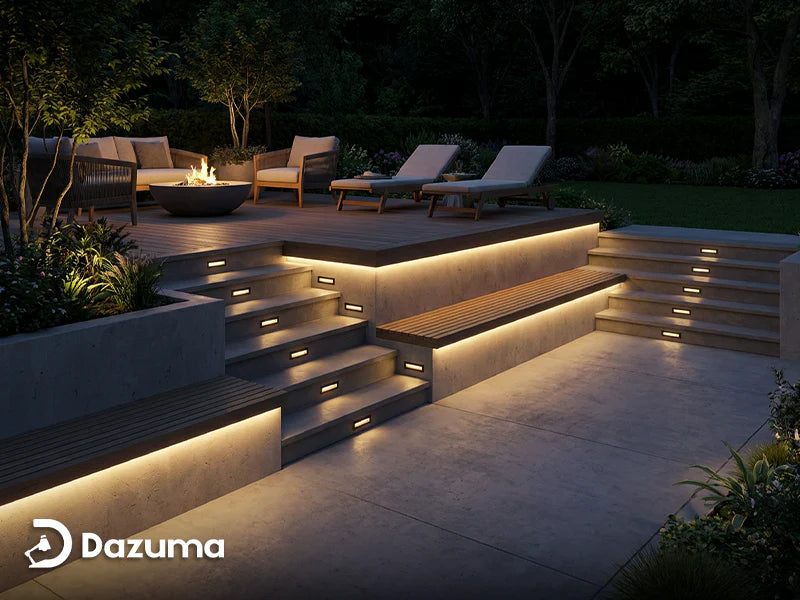
Homeowners often expect outdoor lighting to make a garden feel warmer, safer, and easier to enjoy after sunset.
Yet the finished result can still feel uncomfortable.
The fixtures may be attractive. The installation may be neat. Every important area may technically be visible.
But the yard feels flat, glaring, or strangely overdesigned.
This usually happens because outdoor lighting is judged one fixture at a time instead of as a complete nighttime scene. The problem is rarely the number of lights alone. It is how brightness, direction, spacing, and darkness work together.
More Brightness Does Not Always Improve Visibility
Adding a stronger bulb seems like the simplest way to fix a dark garden.
Sometimes it creates a new problem.
A bright source can make nearby areas easy to see while causing everything beyond them to appear darker. It may also shine directly into people's eyes, reducing comfort without improving the view of paths or steps.
Useful lighting directs illumination toward the surface or feature that needs it. The source itself should not become the brightest object in the garden.
The Plan Has No Visual Hierarchy
A common mistake is giving every part of the yard equal importance.
The path is bright.
The wall is bright.
Every tree is bright.
The patio is even brighter.
When everything competes for attention, the landscape loses depth. A more successful scheme establishes priorities:
- routes and steps need practical visibility;
- entrances should be easy to recognise;
- one or two features can become focal points;
- supporting areas can remain softer;
- some parts of the garden should stay in shadow.
Good Landscape Lighting is not about revealing every square foot. It gives the eye enough information to understand the space while preserving the contrast that makes a nighttime garden feel dimensional.
Fixtures Are Placed at Equal Intervals
Perfect spacing may look organised on a plan, but it can feel mechanical in a real garden.
Rows of identical path lights often create an airport-runway effect. Every pool of light repeats at the same distance, whether the location needs illumination or not.
Place fixtures near actual decision points instead:
- steps;
- turns;
- changes in level;
- gates;
- intersections;
- edges that are difficult to recognise.
Alternating fixtures from one side of a path to the other can also create a more natural rhythm than two matching rows.
One High-Powered Fixture Is Doing Everything
A floodlight mounted high on the house can illuminate a large area quickly.
It can also flatten texture, create deep shadows, and make a residential garden feel like a car park.
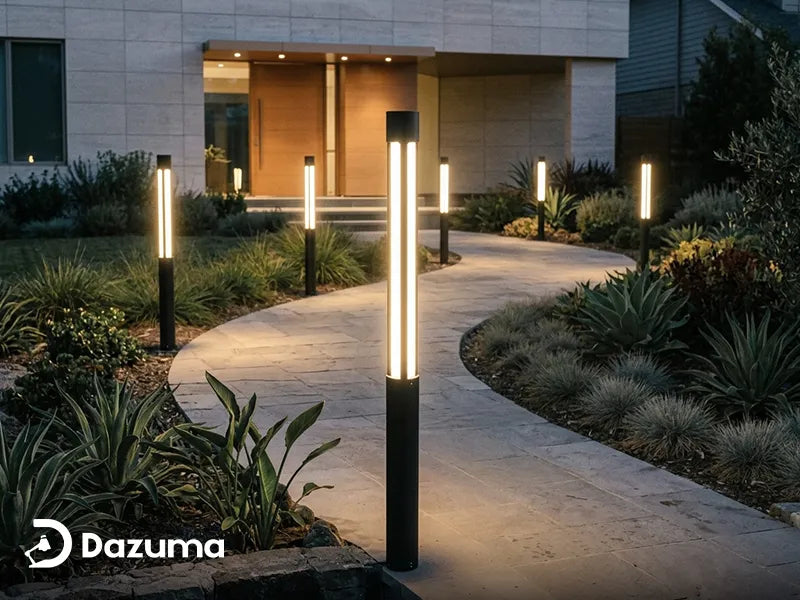
A distributed system of Outdoor Low Voltage Lights allows smaller fixtures to perform specific tasks. One can clarify a step, another can mark a path turn, and a carefully aimed accent light can reveal a tree or wall. Each source can remain modest because it does not have to illuminate the entire yard.
The Beam Is Aimed at People Instead of Features
Fixture direction matters more than many homeowners realise.
An uplight can beautifully reveal a tree canopy when aimed away from windows and seating. The same fixture becomes distracting when its beam crosses a walkway or shines toward a neighbouring property.
After installation, walk through the yard from every entrance. Sit in the chairs used most often. Look outside from bedrooms and living areas.
Small changes in angle can dramatically reduce glare.
Different Light Colours Make the Garden Feel Disconnected
A warm path light beside a cold blue spotlight creates an obvious visual break. Materials and plants can appear different from one zone to the next, even when the fixtures look similar during the day.
Keep nearby sources within a reasonably consistent colour range. Warm white light generally complements timber, brick, stone, and planting, while a cleaner neutral tone may suit contemporary architecture.
The Design Ignores Growth and Maintenance
Gardens change.
Plants grow over lenses. Branches enter beam paths. Soil shifts around ground-level fittings. Fallen leaves and dirt reduce output.
Fixtures should remain accessible for cleaning and adjustment. The design should also leave room for planting to mature without requiring constant relocation.
Choose products suitable for their exposure to rain, irrigation, soil, and temperature changes. New wiring and uncertain electrical work should be handled by a qualified professional.
A Better Garden Is Not Necessarily a Brighter Garden
The strongest outdoor lighting plans do not try to eliminate darkness.
They use it.
Paths are understandable. Entrances are visible. Selected trees and walls add depth. Seating areas feel comfortable. The fixture is rarely more noticeable than the effect it creates.
When brightness, spacing, direction, and colour are planned as one composition, even a small number of lights can make the garden feel more inviting. The goal is not to show everything. It is to reveal the right things.