
Slow Travel Done Right: A Do-nothing Week On The Island Of Hvar
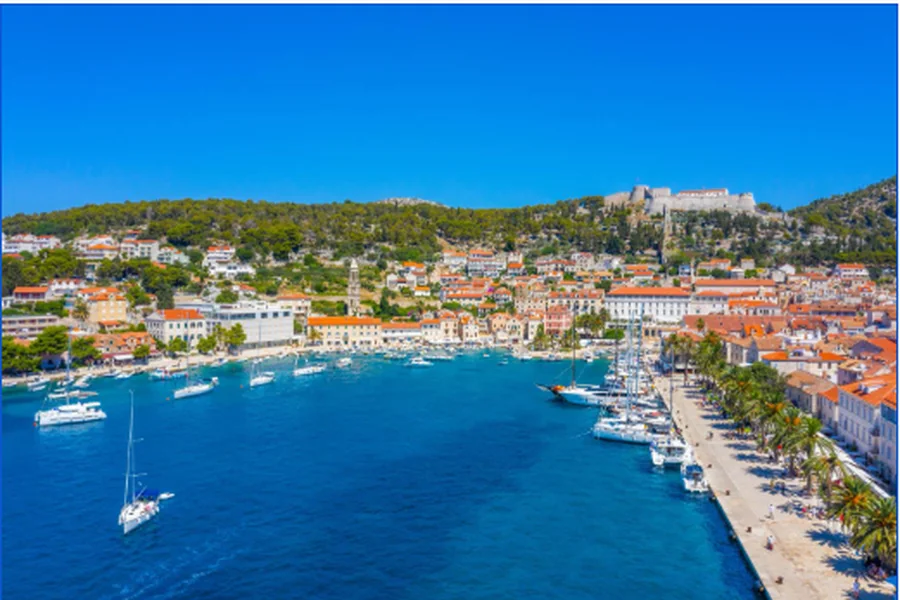
This is an article about doing nothing, so let’s set expectations accordingly. Nothing happens in it. There is no itinerary, no hidden-gems listicle, no morning we rose at five for the viewpoint. There is an island, a stone house, and seven days that contained, by any productive measure, absolutely nothing. It was the best trip I’ve taken in years.
The island was Hvar, off the Croatian coast, which the travel industry will tell you is a glamour destination with a famous harbor and a nightlife district. This is true of about one square kilometer of it. The rest is vineyards, olive groves, sleepy stone villages and quiet coves, which is to say, world-class infrastructure for idleness. It is also, allegedly, the sunniest island in Europe, around 2,700 hours a year, and sunshine is the one amenity doing nothing genuinely requires.
The shape of an empty day
Our days developed a shape the way water finds a level, without anyone deciding anything. A swim before coffee, because the cove was right there. A slow walk to the bakery, which counts as the day’s errand. Reading in the courtyard shade until the cicadas hit their afternoon volume. A long lunch, tomatoes and cheese and whatever the market suggested, then the nap the lunch suggested. Around six, when the light turned honey-colored, a second swim. Dinner happened on the terrace or at the konoba down the lane, where by Thursday the owner had stopped bringing menus and started bringing whatever was good.
That’s it. That was every day. I have described the entire week.
The house is the method
A note on provisioning, the one task we allowed ourselves. The market in Stari Grad opens early and rewards the unhurried: you go without a list, buy what looks proudest of itself, and let it dictate lunch. Sheep’s cheese, a jar of local honey, capers someone’s grandmother picked off a wall. By midweek the vendors greet you, which on an island is the local equivalent of a loyalty program, and considerably more binding.
Doing nothing well turns out to have one structural requirement: you can’t do it from a hotel. Hotels are machines for activity, checkouts, breakfast windows, a lobby that silently asks where you’re off to today. A house asks nothing. The rise of Hvar luxury villa rentals has quietly made the island one of the best places in the Mediterranean to practice this discipline in comfort: old stone houses with walled gardens and pools, set in villages like Vrboska and Zavala where the ambient pace is already correct. Ours had thick walls that kept the afternoons cool, a fig tree of operational significance, and a terrace that hosted every meal. The luxury wasn’t the finish; it was that the house made stillness the default.
In defense of missing things
Did we miss things? Enormously, and on purpose. The fortress above Hvar Town went unclimbed. The famous beach clubs of the Pakleni Islands operated all week without us. We did, one day, take the water taxi to a cove for lunch, and once cycled an hour through the UNESCO-listed plain of ancient vineyards, and both were lovely, but I want to be honest that they were lapses. The week’s actual achievements were smaller: learning which hour the light was best on the water, the bakery woman knowing our order, finishing three books, and one evening when nobody spoke through an entire sunset because there was nothing that needed saying.
Slow travel has become a marketing phrase, attached to anything with a train in it. But the real thing isn’t a style of transport; it’s a decision about attention. A week of nothing on an island built for it will tell you more about a place, and about the state of your own head, than a fortnight of sights. Go somewhere sunny. Rent the house. Cancel the plans. Report back on the figs.