
5 Signs Your Home Air Conditioner Has Quietly Given Up
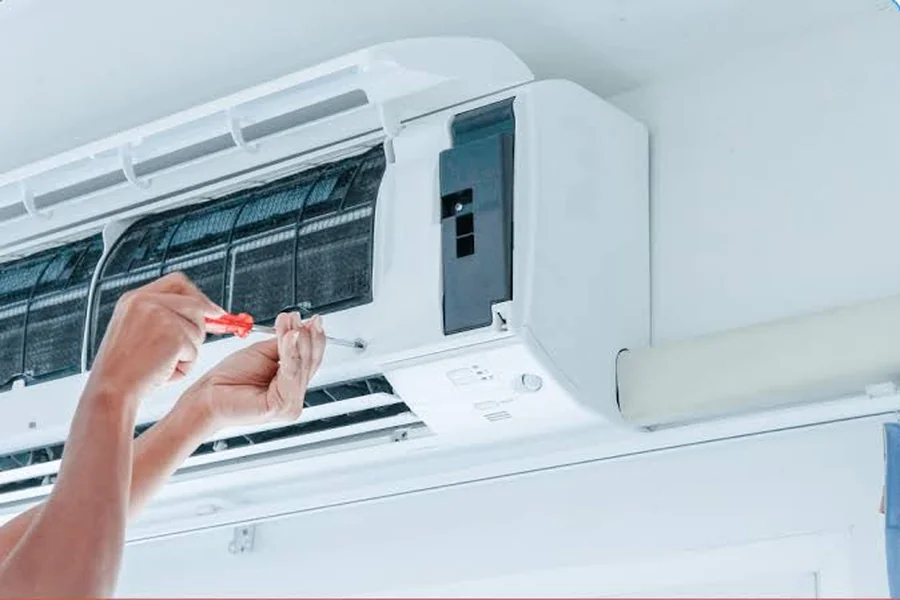
Most air conditioners don’t fail loudly. There’s rarely a bang, a flash, or a dramatic moment you can point to and say “that’s when it happened.” Instead, the system just gets a little worse every week. The rooms get a little warmer. The bills get a little higher. By the time a homeowner realizes something is genuinely wrong, they’ve usually been living with a half-broken system for months.
That slow decline is exactly why catching these signs early matters. You don’t need to be an HVAC technician to spot them. You just need to know what to look for.
Your Energy Bills Went Up and Nothing Else Changed
This is the most common sign and the most commonly ignored one. A spike in your electricity bill during summer is easy to blame on heat waves, rate increases, or the fact that your teenager won’t stop opening the fridge. But if your usage habits haven’t shifted and your bill keeps climbing, your AC is the likely culprit.
An aging compressor or a refrigerant leak forces the system to run longer cycles just to hit the same target temperature. It’s doing more work to produce less result, and your utility meter reflects that instantly.
The U.S. Energy Information Administration’s 2015 Residential Energy Consumption Survey found that 76 million primary occupied U.S. homes — about 64% of the total — use central air-conditioning equipment. With that many homes running central AC, energy waste from aging units adds up fast at both the household and national level. The EIA’s reporting on residential AC efficiency standards makes clear why the government has steadily raised minimum performance requirements: older units running below those thresholds simply cost homeowners more money, season after season.
If your bills have crept up 15 to 25 percent over the past two summers with no obvious explanation, that’s a conversation worth having with a technician.
Certain Rooms Are Hot No Matter What You Set the Thermostat To
A well-functioning central AC system should cool the whole house reasonably evenly. Not perfectly, because layout, insulation, and sun exposure all introduce variation. But one room that’s consistently 10 degrees warmer than the rest? That’s a red flag.
Uneven cooling usually points to one of four problems: a refrigerant charge that’s too low, a blower motor that’s losing power, ductwork that’s leaking or blocked, or an undersized unit that was never right for the home’s square footage. Any of those can be diagnosed by a certified technician in a single visit.
The bedroom-that-never-cools scenario is one of those problems that homeowners adapt to rather than fix. They buy a fan. They close the door. They stop going in there during the afternoon. Don’t adapt. That room is telling you something.
The System Runs Almost Constantly But Barely Keeps Up
Short cycling, where the AC kicks on and off every few minutes, gets a lot of attention. The opposite problem is less discussed but just as telling: a system that runs continuously for hours and still can’t hold the set temperature on a hot day.
This often comes down to two overlapping issues. First, refrigerant loss reduces the system’s ability to absorb heat from indoor air, so more run time produces less cooling. Second, a compressor that’s near end-of-life often struggles to maintain pressure, which has the same effect. The system isn’t broken yet, technically. But it’s burning electricity without delivering comfort.
Think about a Tulsa summer afternoon in late July, when outdoor temps regularly crack 100 degrees Fahrenheit. An AC that’s limping along will run from noon to midnight and still leave your home at 80 degrees inside. That’s not a minor inconvenience. That’s a system that needs evaluation now, not after it fully fails during a heat advisory.
The Unit Is Over 15 Years Old
Age is the most objective signal of all. Consumer Reports data shows members have historically expected their central air systems to last a median of 15 years. That aligns with what most HVAC professionals see in the field. After the 15-year mark, the question isn’t whether problems will come, it’s which one will arrive first.
Older units also carry a serious efficiency gap. Air conditioning units built 10 to 15 years ago typically carry a SEER rating between 8 and 10, while on January 1, 2023, the Department of Energy implemented new minimum energy efficiency requirements for newly manufactured HVAC units. The Air Conditioning, Heating, and Refrigeration Institute (AHRI) notes that modern systems range from 13 to 24 SEER, meaning a 10-year-old unit running at 8 SEER is dramatically less efficient than anything you’d buy today.
Here’s a useful mental framework worth calling the Rule of 50: multiply the unit’s age by the cost of the last repair. If that number exceeds 50 percent of the cost of a new system, replacement beats repair almost every time. A 14-year-old system that just cost $700 to fix, for example, deserves serious reconsideration. A brand-new unit at age 3 with the same repair bill? Probably fine to fix it.
| Unit Age | Typical SEER Range | Recommended Action
|
|---|---|---|
| Under 10 years | 13 to 18 SEER | Repair if cost is reasonable |
| 10 to 15 years | 8 to 13 SEER | Evaluate repair vs. replacement case-by-case |
| Over 15 years | 8 SEER or below | Strongly consider full replacement |
Strange Noises That Come and Go
Rattling, banging, hissing, or grinding sounds that appear intermittently are more concerning than sounds that are consistent. A steady hum is normal. A rattle that shows up on the first hot day of the season, disappears for two weeks, then comes back louder? That’s a system that’s compensating for a mechanical problem in a way that will eventually stop working.
Grinding typically points to a failing motor bearing. Hissing or bubbling often signals a refrigerant leak. Banging on startup usually means a loose or damaged component inside the compressor housing. None of these get better on their own.
“The best way to keep your system lasting closer to 15 years than 10 years is to have proper maintenance by a professional at least once a year,” according to HVAC industry expert commentary reported by Carrier’s residential resources team.
Annual maintenance catches these sounds before they become failures. Most homeowners only call for service when the system stops working entirely, which is almost always the most expensive moment to do it.
What to Actually Do When You Spot These Signs
Start with a professional diagnostic, not a guess. Many HVAC companies offer inspection visits that will tell you exactly what’s wrong and give you a repair estimate you can weigh against replacement cost. Use the Rule of 50 to make that call objectively rather than emotionally.
If you’re in the Oklahoma area and the diagnostic points toward full replacement, working with a team that knows regional climate demands matters. A professional handling AC Installation in Tulsa, OK, will right-size your new unit for local summer conditions rather than defaulting to whatever’s cheapest or most commonly stocked.
Also consider timing. Installing a new system in spring, before peak demand hits, gets you better scheduling flexibility and often better pricing than waiting until your unit quits on the hottest day of August.
Your AC works harder than any other system in your home for roughly five straight months. The least you can do is pay attention to what it’s telling you before it runs out of things to say.