
How Furniture and Layout Shape Boardroom Decisions
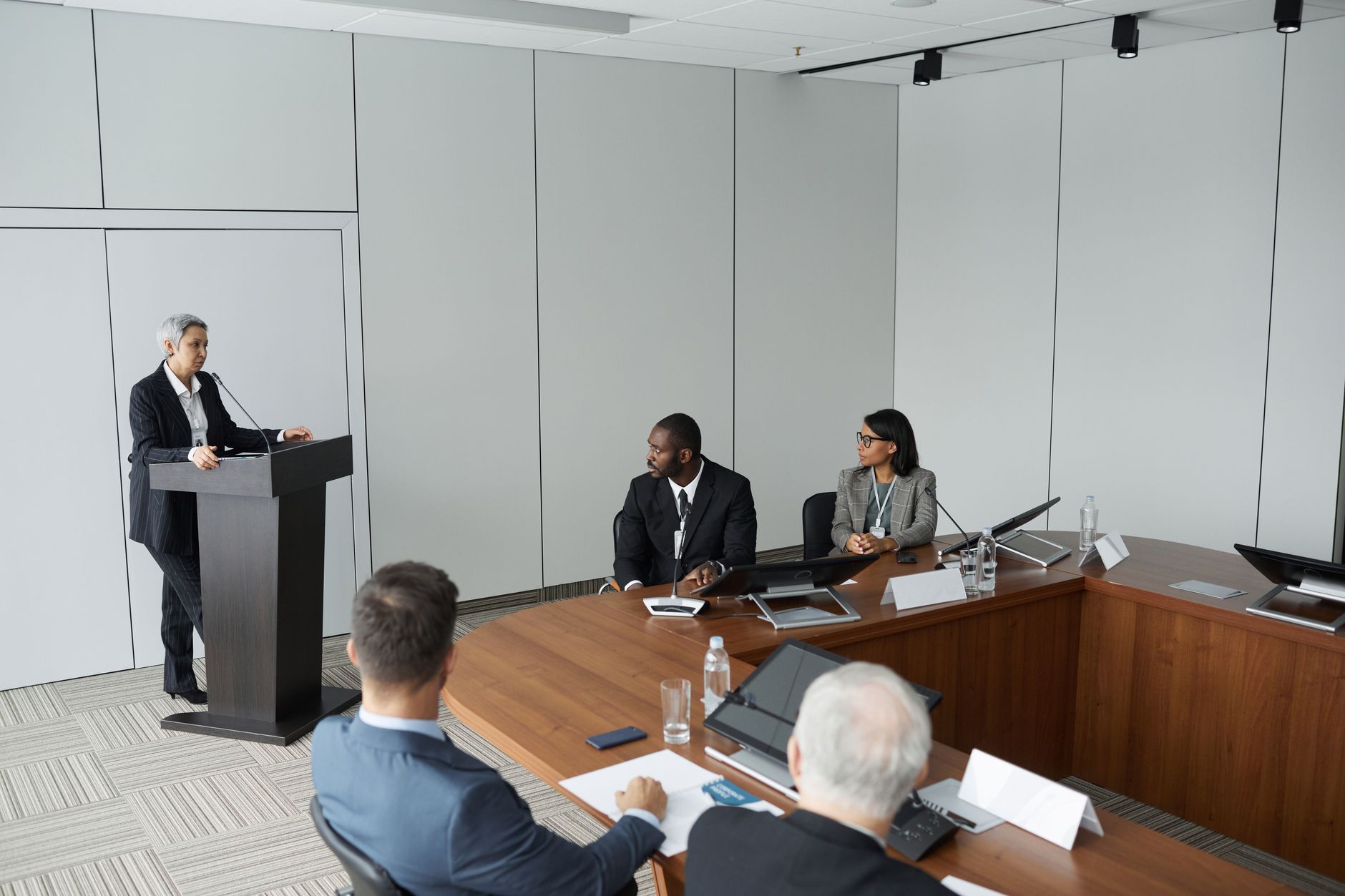
Walk into your boardroom before anyone takes a seat and look at what the layout suggests. Is one chair positioned as the obvious place to lead? Can people see each other, or will they spend the meeting looking past laptops and shoulders? Furniture does not determine how a meeting will go, but it is worth asking what it makes easy and what it makes awkward. Start with the conversations you want to support, then judge the room against them.
The round table problem nobody wants to admit
A round table can look like an appealing answer when you want a less formal meeting space. But appearance is not enough to establish whether people will cooperate or contribute. Compare the shape with the way the room is actually used: how many people attend, whether someone presents from a screen, and how participants move between listening and discussion.
Try a sample discussion in the proposed layout before treating it as a solution. Ask someone to lead, someone else to share information and another person to respond from the opposite side. Notice who needs to turn, lean or move a device. Those observations give you something concrete to work with. They are more useful for this room than a broad promise that one shape produces teamwork and another produces competition.
If your current table is rectangular, there is no need to treat that as a diagnosis of the organization. Start by identifying a specific difficulty the replacement would need to solve.
The head-of-table effect is a power structure, not a seating chart
A rectangular table may have an obvious head position, especially when the room is arranged around it. Think about how that seat is used in your meetings. Does the chair need a clear place to lead, or has one seat simply become customary? The answer may differ between a formal board meeting, a client presentation and a working session with peers.
Look at participation before attributing silence to the table. Can people at the far end hear the chair and see whoever is speaking? Are they being invited into the discussion? Someone who stays quiet may have reasons unrelated to furniture. A room review is useful when it separates the practical obstacles you can observe from assumptions about what people are thinking. Ask participants where the arrangement gets in their way rather than deciding for them.
You could try rotating the lead position or using a more symmetrical arrangement for a suitable meeting. Treat it as a trial and ask for feedback. A different seat is worth keeping if it helps the session, not because it guarantees that more people will talk.
Proxemics: why table depth decides how honest people get
Table depth deserves attention alongside length and seating capacity. Sit across from a colleague at the distance you are considering, with the laptops and papers you would normally use. Can you see their face clearly and follow the discussion comfortably? There is no reason to assume a single distance marks the point at which every conversation becomes formal or people stop paying attention. Evaluate the actual room, including lighting and the objects placed between participants, rather than choosing depth from a claimed psychological threshold.
If the table feels too wide, compare a shallower option without crowding the people seated around it. Make space for the work the meeting requires as well as for conversation. A closer arrangement is not automatically a more honest one, and a wider arrangement does not tell you someone is avoiding accountability. Keep the test practical: what can people see, hear and use from each seat?
Sightlines decide who's actually in the conversation
Sightlines are a useful place to be specific. With a long rectangular table, check the view of the wall screen from the ends and along both sides. Ask participants to look toward a speaker seated diagonally across from them. If they need to keep leaning or turning, note where that happens. Then repeat the check with the room set up for the kinds of meetings you actually hold, rather than judging the empty table from the doorway.
A boat-shaped table is another option to test, not a promise that every seat will have a clear view. Look at its width, the placement of the chairs and the position of the screen together. Check seats around the middle as carefully as those at the ends. Can someone follow a presentation and then turn back to the group without repeatedly moving their chair? Can participants see one another past the equipment on the table? The answer depends on the full arrangement, not just the label on the furniture.
When comparing rectangular vs boat shaped conference tables, take those observations into the selection process. Record which views worked and which did not. A different outline may be worth considering, but first establish whether the difficulty comes from the table, the number of seats or the screen placement. That keeps the purchase tied to a real need rather than a claim that curved furniture automatically creates a more inclusive conversation.
Materials are a values statement, whether you intend it or not
Materials can contribute to the impression of a room, but people will not all read them in the same way. Dark wood may feel reassuringly familiar to one group and overly formal to another. Glass may suit the visual style you want without saying anything reliable about how open the discussion will be. Ask the people using the room what the proposed finishes feel like, and separate their preferences from predictions about their behaviour.
Choose finishes that suit the purpose of the space and the people using it. Compare how they look in the actual lighting, alongside the chairs and other surfaces you plan to keep. A boardroom used to welcome visitors may call for a different impression from an informal working room. Neither choice is evidence that one group will make better decisions.
Color, light, and the mood nobody notices they're reacting to
Lighting belongs in the room test as well. Check whether faces, papers and screens are easy to see from each seat, and ask about glare or discomfort. If controls are available, try them during the kinds of presentation and discussion the room needs to support. The useful question is whether the setting works for the occupants, rather than whether a particular color promises to keep everyone alert.
Compare the proposed lighting in use instead of deciding from labels such as fluorescent or LED alone. Look for distracting flicker, listen for unwanted noise and check reflections on the tabletop and screens. If people find the room uncomfortable, ask the lighting supplier to investigate the specific problem. Avoid treating warmer or cooler light as a guaranteed way to manage energy through a long meeting; give participants a chance to try the options and describe what they notice.
Acoustics: the variable almost nobody budgets for
Listen to the room with people in it. Can participants hear a normal speaking voice from each seat, and does sound seem to linger or overlap? If acoustics are a problem, discuss the existing glass, flooring, table and seating with an appropriate specialist before selecting treatments. Ask what a proposed change is intended to improve. Clearer conversation and privacy are different questions, so do not assume that adding softer finishes means a discussion cannot be heard outside the door.
If this is a room your team uses regularly, include those observations in the furniture brief. An attractive table will not settle a problem with hearing or privacy, and those issues should remain visible in the budget discussion.
Technology has quietly forced a shape shift
Test the technology with the furniture. Put the screen, camera and microphones where they are intended to go, then check the view and sound from around the table. Ask how cables would reach the equipment without interfering with the working space. A curved outline does not by itself establish better camera coverage or easier cable management; those are features to assess on the proposed setup.
The brief needs to cover more than square footage and seats. Include camera angles, microphone pickup and screen glare in the same review, so the furniture and meeting equipment are considered together.
Psychological safety is the real scoreboard
People need to feel able to ask questions and disagree, but furniture alone cannot establish that. If participants report feeling overlooked, listen to what they say about both the room and the way meetings are led. Poor views or difficulty hearing are practical problems you can investigate. Fear of speaking up calls for attention to the working relationships as well, rather than a promise that changing the table will resolve it.
Use the room review to choose changes you can justify: a different table depth, another screen position or an acoustic improvement tied to a problem people have identified. Compare the costs before assuming any option is cheap. Then check the result in an actual meeting and ask whether the original difficulty remains. That gives the purchase a purpose beyond a new look.
The next time a boardroom renovation comes up, start by asking what the room needs to help people do. Bring those requirements to the discussion of finishes and price per seat, and judge each option against them.