
Best Knee Cap for Climbing Stairs Without Discomfort
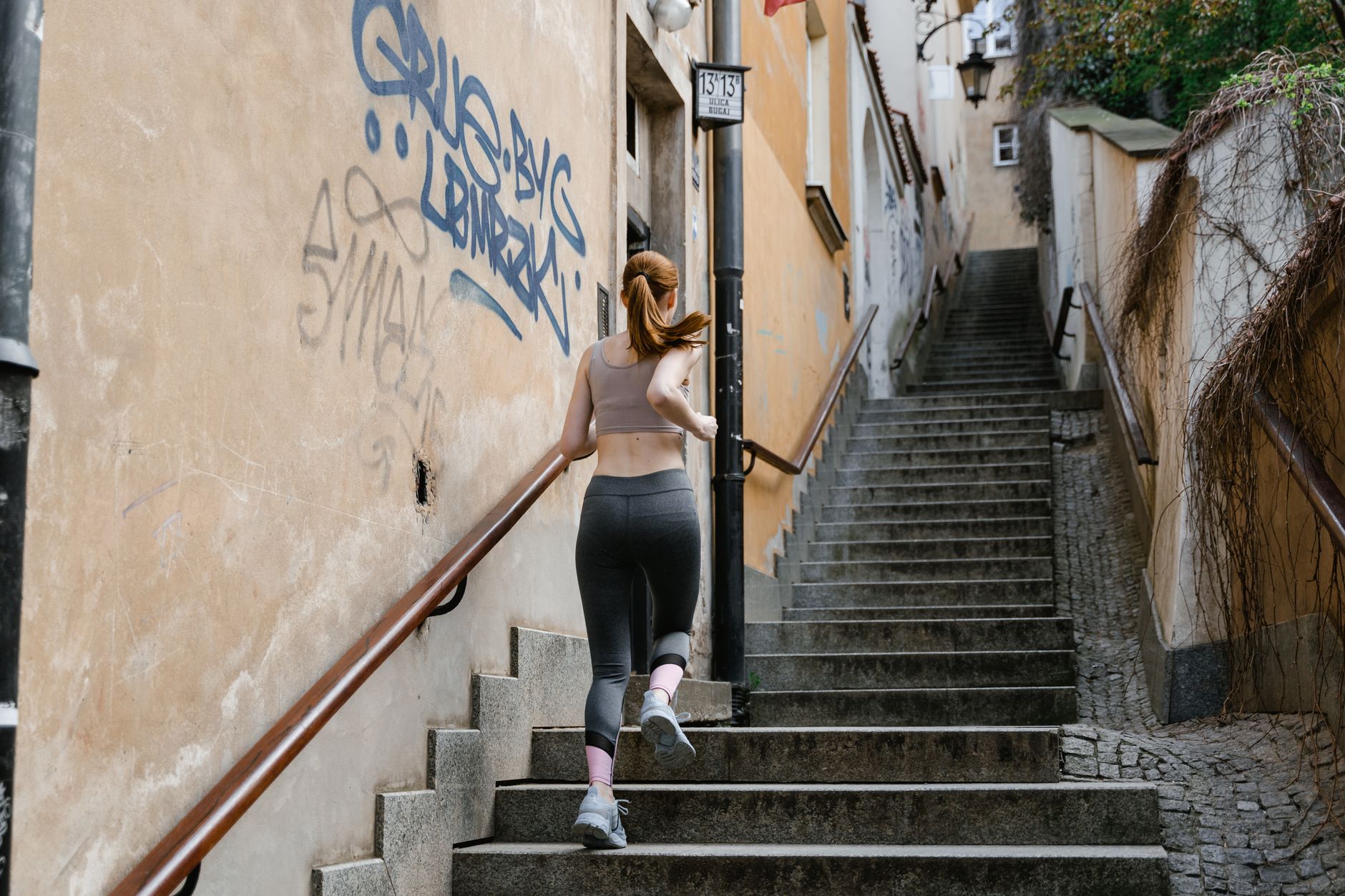
Climbing stairs isn’t a task many people think much about. Just going up and down through the stairs. But, they expose the most common discomfort in the knees which flat surfaces often hide.
While descending the stairs, the load of the knees multiples. If you’re suffering from knee discomfort, stairs might become your worst nightmare. People use the most easily available supportive aid in these scenarios.
Knee caps or sleeves are a light compressible fabric that aids the movement by providing mild support. A best knee cap for pain relief spreads the load on knees and warms up the joint so you can move without wincing. But, with so many available options, how will you know which one suits you best?
Let’s explore!
Main Reasons Why Stairs Are So Hard On Knees
-
The Multiplied Weight Load
When you climb a staircase, your knee joint faces angles and gravity due to which the force is multiplied by 3 to 5 times your actual body weight.
-
The Deep Bending Angle (High Flexion)
Your knee must flex to an angle of 90 degrees or more to climb stairs. This deep bend dramatically shifts on how the muscles pull on the bones and thighs. The tension compresses the kneecap directly into the groove of the femur. If knee cartilage is worn down and tender, this causes immediate discomfort.
- The Shock Absorption of Going Down
Many people find going down stairs to be even more painful than going up. This is because descending requires eccentric contraction. Your thigh muscles are lengthening while acting as brakes to slow down your entire body weight. This deceleration action creates incredibly high peak forces right behind the kneecap.
4 Ways Knee Caps Help With Stairs
1. Corrects Patellar Tracking
When bending your knee to step up or down, the kneecap has to slide smoothly within a narrow groove of thigh bone. If it shifts or tilts, it rubs against the bone to cause sharp pain. A snug knee cap applies lateral force to keep the patella centered right in its tracks.
2. Distributes Force and Retains Heat
Instead of letting the entire body weight impact get localized on a single spot, a knee cap spreads that pressure evenly across the wider surrounding tissue. Furthermore, materials like neoprene or specialized elastic knits lock in your body’s natural heat. This warming effect helps by:
- Boosting local blood flow
- Keeping joint fluid loose and well-lubricated
- Distracting your nervous system’s pain pathway
3. Increases Stability
Climbing stairs creates instability in the knee due to weak surrounding ligaments. The snug fit of a knee cap increases interstitial pressure and joint stiffness. This extra tightness physically stabilizes the bones, preventing the structural shifting.
4. Enhances Awareness
When a knee is injured, there can be poor coordination on steps. The uniform pressure of a compression sleeve sends a steady sensory feedback to your brain. This heightened proprioception helps your leg become steady.
Features To Look For In a Knee Cap For Stairs
When choosing a best knee cap for pain relief while climbing stairs, you need
1. A Patellar Opening or Gel Ring (Essential for Tracking)
A cutout hole over the patella with a built-in silicone or gel ring is an excellent choice for knee tracking. An open patella or gel ring isolates the kneecap. It keeps it tracking perfectly centered in its groove without adding painful direct pressure.
2. Medial and Lateral Stabilizers (For Side-to-Side Support)
Flexible spring steel side stabilizers or plastic stays embedded into the fabric on both sides of the joint. Flexible side stays act like external ligaments. They absorb a portion of that lateral shifting force without locking up your leg. Thus, makes climbing stairs steady and safe.
3. Non-Slip Silicon Strips
Wavy silicone gel strips lining the interior top cuff of the brace. The deep bending motion of stair climbing stretches the fabric of a knee cap to its absolute limit. Cheap sleeves will instantly slide down your thigh or bunch up behind your knee. Silicone grips give a firm fit of knee cap with your skin.
4. Adjustable Straps or a Wraparound Design
Velcro straps must be positioned above and below the kneecap for comfortable wear. Adjustable straps allow customization of the compression.
Choosing The Right Knee Support For Discomfort When Climbing Stairs
| Type | Support Level | How it helps for stairs | Best for |
| Elastic Knee Sleeves | Mild | Provides gentle compression, boosts blood flow, and keeps the joint warm to reduce mild stiffness |
|
| Patella Stabilizer Knee Caps | Moderate | Use a gel ring or cutout to keep your kneecap tracking smoothly in its groove as you bend your leg |
|
| Knee Straps / Belts | Mild to Moderate | Applies targeted pressure to the tendon below the kneecap to take the strain off the joint |
|
| Power-Assist Braces | High (Mechanical) | Uses built-in mechanical springs to actively absorb your weight and assist you when pushing upward |
|
| Hinged Knee Braces | Maximum | Employs rigid side hinges to prevent the knee from twisting or shifting side to side |
|
How to Measure for the Perfect Fit
Every brand has a different size chart. To get an accurate fit:
- Stand up straight with your leg slightly bent.
- Measure 10 to 15 cm above the center of your kneecap around your thigh.
- Measure 10 to 15 cm below the center of your kneecap around your calf.
- Compare these numbers directly to the specific brand’s sizing chart before purchasing.
Why Fit Matters Specifically for Stairs?
- The Behind the Knee Pinch
If a knee cap is too tight or too loose, the fabric can bunch up behind the knees. This can cause skin chafing, pinching and discomfort while bending of knees.
- Slippage from Deep Bending
If the knee cap is too loose, the constant muscle expansion pushes the sleeve down, causing it to bunch up and slip down.
- Circulation Cuts
If you choose a sleeve that is too small, the elastic bands can dig into the skin causing throbbing pain and swelling.
Wrapping Up
The best knee cap for climbing stairs is the one which provides optimal support to knees while repetitive bending action when climbing stairs. Patellar stabilizers or power assisted braces are the excellent choice for the issue.
They provide mild stability needed for easing the stairs discomfort. Always take in account appropriate fit along with support level while purchasing the garment. The right knee cap will assist in making the daily stairs climbing much more manageable.