
The Modern Guide to Restoring Your Smile: What Every Patient Should Know About Permanent Tooth Replacement
Losing a tooth impacts far more than just the aesthetics of a smile. Behind every missing tooth lies a silent cascade of oral health shifts, from gradual jawbone resorption and shifting adjacent teeth to altered bite alignment and chewing discomfort. According to data from the American Association of Oral and Maxillofacial Surgeons, nearly 69% of adults aged 35 to 44 have lost at least one permanent tooth to decay, gum disease, or trauma. By age 70, roughly one in four adults is missing all of their natural teeth.
While traditional bridges and removable dentures were once the primary remedies for tooth loss, modern restorative dentistry has evolved significantly. Today, patients seeking long-term stability and natural aesthetics have access to advanced techniques that protect foundational bone structure while restoring full oral function. Understanding how these modern options work—and how to choose the right path for your health—is essential for making informed decisions about your smile.
The Science of Tooth Preservation and Structural Stability
When a natural tooth is lost, the surrounding bone tissue begins to shrink. This process, known as bone resorption, occurs because the jawbone relies on the stimulation of daily chewing forces transmitted through the root to maintain its density and shape. Over time, bone loss alters facial structure, giving the lower face a prematurely aged appearance and causing neighboring teeth to drift into the empty space.
Traditional tooth replacement methods often address the visible portion of the tooth without solving the underlying structural issue. For example, a dental bridge requires grinding down healthy adjacent teeth to anchor a replacement crown. While functional, this process permanently alters tooth structure that was otherwise intact. Removable dentures rest on top of the gums, restoring surface appearance but failing to stop the underlying bone loss, which often leads to poor fit over time.
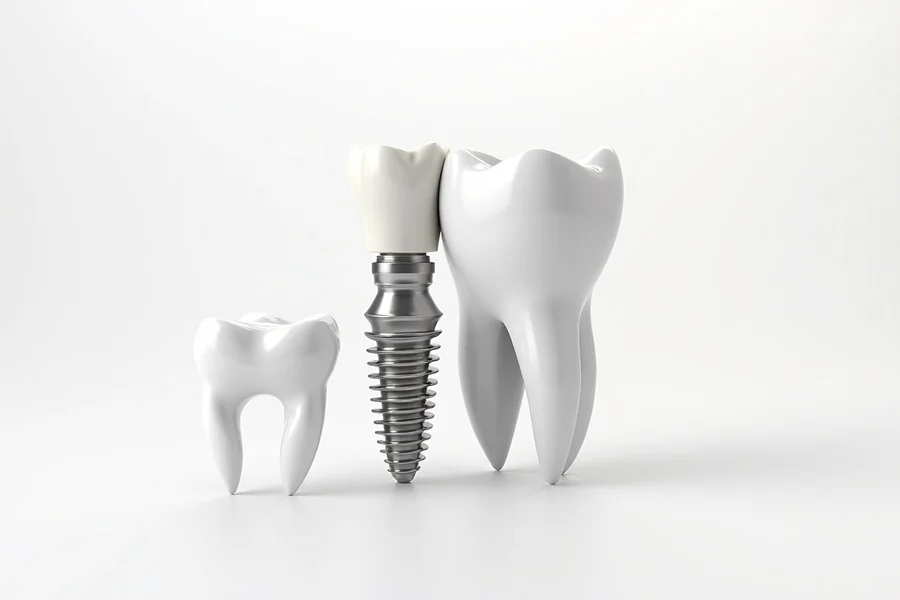
Modern restorative solutions approach this problem differently by replacing both the root and the crown. By introducing a biocompatible titanium or ceramic post into the jawbone, dentists stimulate natural bone growth through a biological process called osseointegration. This bond creates a permanent anchor that supports full chewing force without relying on adjacent teeth for support.
Evaluating Modern Tooth Replacement Options
Selecting the right restorative treatment requires an understanding of how different solutions compare in terms of longevity, maintenance, and oral health benefits.
Traditional Dental Bridges
Dental bridges span the gap created by missing teeth using custom crowns placed over adjacent anchoring teeth. They offer a fixed, non-removable solution that restores appearance quickly. However, because they require altering natural tooth structure, they can make adjacent teeth more vulnerable to decay over time. Bridges typically require replacement every 7 to 10 years and do not prevent jawbone loss beneath the artificial tooth.
Removable Partial or Full Dentures
Dentures remain a widely accessible option for replacing multiple missing teeth. Modern materials offer a more natural look than older appliances, making them a practical choice for many patients. However, because they rely on soft tissue support, dentures require periodic adjustments and relining as the underlying bone changes shape over time. They also require daily removal for cleaning and specialized adhesives for stability.
Dental Implants
Implants are widely considered the gold standard in restorative dentistry because they replicate the entire structure of a natural tooth. A titanium post functions as an artificial root, integrating directly into the jawbone to provide a stable foundation for a custom crown, bridge, or full arch appliance. Patients exploring restorative options, such as dental implants in henderson nv, often find that this approach restores both natural chewing capability and structural support without compromising adjacent teeth. Because the post bonds permanently with the bone, implants offer a lifelong solution when maintained with proper oral hygiene.
Key Considerations for Patient Candidacy
Determining whether you are a good candidate for implant-based restoration involves a comprehensive clinical evaluation. Dentists assess several key factors to ensure long-term treatment success:
- Jawbone Density: Sufficient bone volume is necessary to support and anchor the implant post. For patients who have experienced bone loss due to long-missing teeth, bone grafting procedures can rebuild the foundation prior to placement.
- Periodontal Health: Healthy gums are critical for long-term success. Active gum disease must be treated before undergoing restorative procedures to prevent complications like peri-implantitis.
- Overall Health Conditions: Systemic conditions such as uncontrolled diabetes, autoimmune disorders, or heavy tobacco use can affect healing and bone integration. Dentists review medical history carefully to tailor treatment plans to individual needs.
- Commitment to Maintenance: Long-term success depends heavily on consistent daily hygiene and regular professional cleanings.
The Step-by-Step Restoration Journey
Understanding what to expect during the treatment process helps patients approach their restorative care with confidence.
- Comprehensive Evaluation and Planning: The process begins with 3D digital imaging and CBCT scans to create a high-precision map of your jawbone, nerves, and sinus cavities. This technology allows the dental team to plan post placement with surgical accuracy.
- Foundation Preparation: If necessary, preliminary treatments such as tooth extractions or bone grafting are performed to create an optimal site for restoration.
- Implant Placement: The implant post is surgically placed into the jawbone during a routine procedure using local anesthesia or mild sedation to ensure comfort.
- Osseointegration and Healing: Over the next 3 to 6 months, the bone heals around the post, creating a solid biological bond. A temporary restoration is often provided during this period to maintain appearance and function.
- Abutment and Crown Placement: Once integration is complete, a small connector piece called an abutment is attached to the post. Finally, a custom-designed ceramic crown, matched to the shade and contour of your natural teeth, is permanently secured on top.
Long-Term Maintenance and Oral Health Integration
Caring for restored teeth is simple and mirrors the care required for natural teeth. Daily brushing with a soft-bristled toothbrush, flossing with specialized implant floss or interdental brushes, and using an antibacterial mouthwash maintain healthy surrounding tissue. Regular dental checkups and professional cleanings every six months allow your dentist to monitor bone stability, check bite alignment, and ensure the surrounding gums remain healthy.
Investing in your oral health through modern restorative techniques does more than rebuild a complete smile—it protects your jaw structure, preserves natural teeth, and restores the confidence to eat, speak, and laugh without hesitation. If missing teeth are affecting your quality of life, consulting with a knowledgeable dental professional is the first step toward finding a personalized solution that delivers lasting comfort and stability.