
Val Thorens for beginners: a first ski week at the top of the Three Valleys
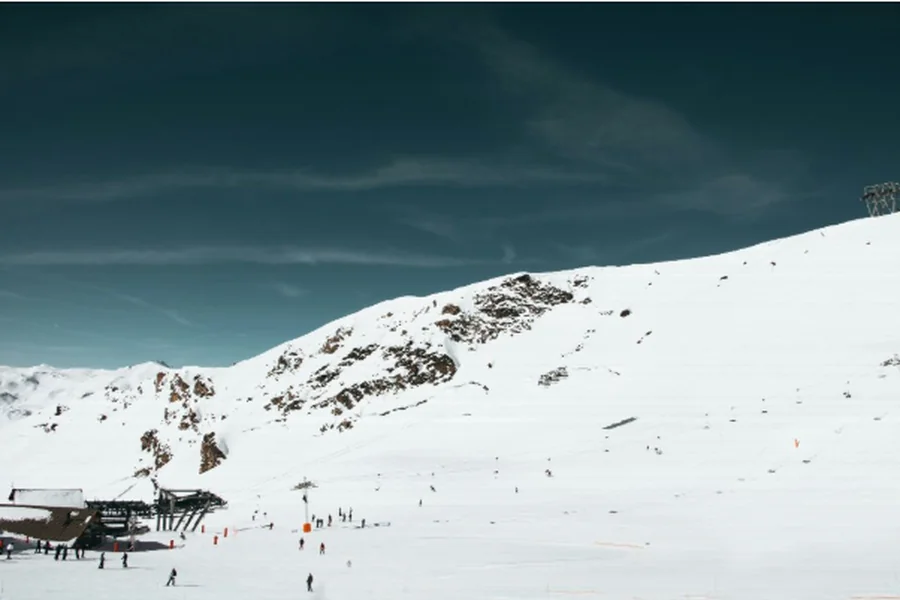
Val Thorens has a reputation that tends to scare first-timers off. It’s the highest ski resort in Europe (2,300m, or 7,546ft), the gateway to roughly 600km (373 miles) of linked pistes in Les 3 Vallées, and a magnet for strong skiers chasing steep lines off Cime Caron. All of that is accurate. It just isn’t the whole story.
Because the resort sits well above the treeline, snow arrives early and stays late (the season usually runs from late November into early May), and the slopes right around the village are wide, gentle and sunny in a way lower resorts can only envy. For a first week on skis, that combination is hard to beat.
Getting there and the first afternoon
Most people fly into Geneva, around 3 hours away by road on a clear day, and arrive on a Saturday along with half of Europe. A transfer from Geneva airport to Val Thorens booked in advance gets you to the apartment door at a fixed price, with ski bags and child seats sorted at the booking stage, which counts for more than usual when the last 37km from Moûtiers is a ladder of hairpin bends. Coaches and the train via Moûtiers cost less but take longer, and both need at least one change.
Use the first afternoon for admin rather than skiing. Collect pre-booked ski hire (boots matter far more than skis, so try on two pairs and walk around the shop in them for a few minutes), pick up the lift pass, and find the meeting point for ski school before Sunday morning’s scramble. Most rental shops stay open until 7pm on changeover day.
Choosing a ski school
ESF (École du Ski Français) is the biggest school in town, and its red-jacketed instructors run group lessons for adults and for children from age 3, usually in morning blocks of 2.5 to 3 hours from Sunday or Monday through Friday. Several independent schools work alongside it, often with smaller groups and more native English-speaking instructors. If English-language teaching matters, ask about group size and the instructor’s first language when you book.
Private lessons cost more per hour but move faster, and two hours on a quiet morning can do more for a nervous adult than a week of group classes. I’d book group lessons for the mornings and keep the afternoons free, because legs that have been learning for three hours rarely want another three.
Book early for February half-term and the Christmas weeks. Classes fill months ahead.
The beginner areas around the village
Val Thorens was built as a ski-in, ski-out resort, which means the gentle slopes start at the edge of the buildings. A handful of beginner lifts near the resort centre are free to use, so complete novices often don’t need a full lift pass for the first two or three days. These are mostly tire-fesses (button lifts, literally “bum-pullers”) and short magic carpets, serving wide, flattened pistes where nobody comes past at speed.
By midweek, most adults graduate to the green and easy blue runs served by chairlifts just above the village. Snow up here is reliably good, but the altitude has a catch: when the sun goes in, the light goes flat, and contrast disappears, so a blue run that felt easy at 11am can feel like a different slope at 3pm under cloud. Feel free to call it a day early when that happens. Nobody hands out medals for skiing in a whiteout.
Where to stay if you’re new to skiing
Location matters more for beginners than for anyone else in the resort. Strong skiers can shrug off a 10-minute traipse in ski boots, but when you’re still learning to walk in them, that same stretch of icy pavement turns into the hardest part of the day. Look for an apartment or hotel that sits beside the beginner slopes, or within a few minutes of your ski school’s meeting point, and you’ll save energy for the snow rather than spending it on the stairs.
The village is compact but steep, stacked on a hillside with lifts and pistes threading between the buildings. Places marked ski-in, ski-out usually mean exactly that here, though it’s worth checking which piste you’d actually be skiing back on, because a red run home is no fun on day two. Self-catered apartments make up most of the beds, and they tend to be small (a studio sleeping four is a common, and cosy, arrangement), so pay the extra for one more bedroom if you can.
Families with young children should also check how far the nearest ski school kindergarten is. You’ll walk that route twice a day, every day, carrying skis.
Lift passes: what beginners actually need
The choice comes in tiers. A beginner or limited-area pass covers the lifts serving the easiest slopes, while a pass for Val Thorens and Orelle opens up the local area (around 150km of pistes), and the full 3 Vallées pass adds Méribel and Courchevel on top. For a first week, the full pass is rarely worth it. You won’t ski far enough to use it, and the difference in price (often somewhere between €100 and €130 for six days, depending on dates) buys a fair few hours of private lessons.
If progress turns out faster than expected, ask at the ticket office about upgrading midweek rather than paying for the big pass up front.
Altitude, cold and other small surprises
Sitting this high comes with side effects. Mornings in January regularly drop to minus 15°C (5°F) at the top lifts, and the sun reflects off the snow and burns fast, so high-factor sun cream and proper goggles beat sunglasses on all but the brightest days. Some visitors notice a mild headache or poor sleep for the first night or two at 2,300m. Drink plenty of water and go easy on the vin chaud (mulled wine) until you’ve adjusted, which is harder than it sounds once the après bars warm up around 4pm.
And pack layers rather than one heavy jacket. Chairlifts are cold, lessons are warm work, and you’ll be unzipping and re-zipping all day long.
A sample first week
Sunday brings the first group lesson in the morning, then an hour or so on the free beginner lifts after lunch. From Monday to Wednesday the rhythm stays the same: lesson, lunch, gentle practice on the same runs, and a firm stop before you get tired (a surprising number of beginner falls happen on that one last run of the day). Thursday is usually the big step, with a first proper chairlift ride and a first full blue run alongside the instructor. Friday wraps up the lessons, often with a small slalom or medal test for the kids, and leaves the afternoon free for a slow cruise back to the village and a few photos.
Saturday is departure day, and the queue down the valley starts early. Return the hire kit on Friday evening, pack the boots dry, and aim to leave the resort before 9am.