
Do Insoles, Compression Socks, and Massage Balls Really Help With Pain Relief?
Aches and pains of the feet, ankles, and lower legs can transform mundane activities into strenuous tasks. With each step, one can experience a throbbing pain or a sharp ache that makes finding a solution a necessity. There are many non-invasive devices available in the wellness industry that help combat pain experienced in the lower extremities within the confines of your own home. From popular brands such as Dr. Scholl’s to therapeutic devices, there is no shortage of choices in providing instant relief from pain. However, do these devices provide any real benefit in combating pain?
Supportive Insoles for Plantar Fasciitis
Foot inserts and orthotics are some of the best non-surgical treatments available for pain in the heels and arches. These devices’ main role is the mechanical alignment of the foot, ensuring an even distribution of body weight on the entire surface of the foot. For individuals battling plantar fasciitis, structural support makes a world of difference. As the thick strip of connective tissue located on the sole of the foot gets inflamed, ill-fitting footwear pulls and strains the tissue with each step. The quality insoles should have stiff arch support and deep heel cups that secure the rear foot from overpronating and help keep the foot arch from flattening. As a result, the insole provides proper conditions for the damaged tissue to heal by minimizing the strain on the inflamed fascia.
Compression Socks for Ankle Swelling and Leg Fatigue
Further up the leg, compression socks provide scientifically tested therapy for sore ankles, persistent lower leg tiredness, and venous fluid buildup. In contrast to ordinary hosiery, compression clothing applies pressure in a gradient that is highest around the ankle region and then reduces as the pressure moves upward toward the calf region. The consistent pressure applied acts in favor of the circulatory system and makes sure that the veins resist the force of gravity to push the used blood toward the heart. For those who have to stand for long periods of time on unyielding surfaces, as well as traveling by long distance, there is a tendency to accumulate fluids around the ankles and lower legs, leading to stiff and painful swelling.
Textured Massage Balls for Achilles and Calf Tightness
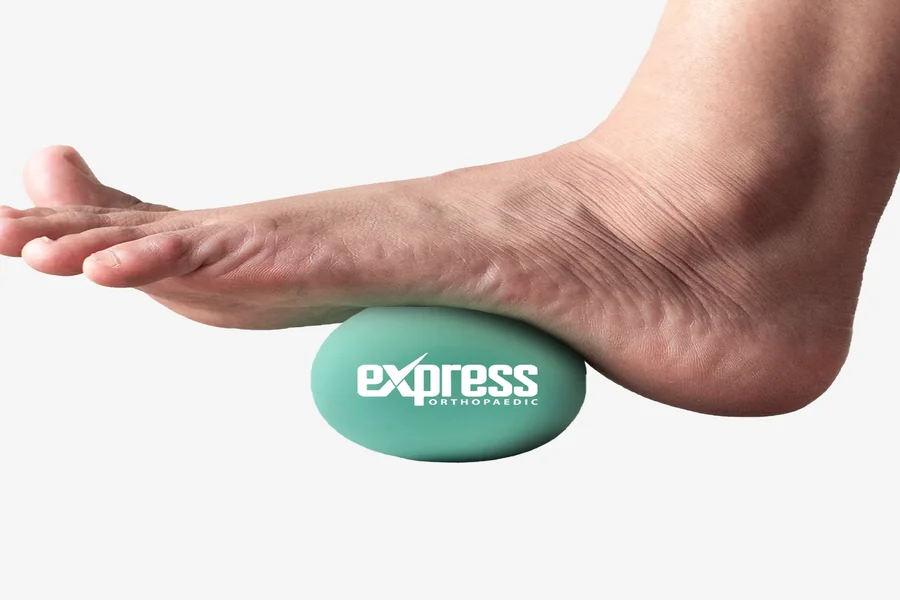
The tiny, spiked or dense rubber massage balls are extremely common myofascial rollers that are used in relieving tension in areas such as the soleus, calves, and the Achilles tendon area. In cases where the muscles and the tendons around the back of the legs get tight through exercising or walking for long distances, they cause pulling at the ankle joint and limit its movements. Applying the massage ball under the tight calf muscles or on the Achilles tendon will bring about local pressure in the area, which helps in breaking up the adhesions in the fascia and promoting fresh blood flow to the tired muscles.
Foot Rollers and Targeted Arch Relief
Not only do there exist round massage balls, but also specially designed foot rollers that provide yet another convenient solution for treating the pain experienced in the arch and for relaxing the foot muscles. In such cases, you can place a roller on the floor and roll the painful area by gently moving your foot on it. Foot rollers are made from plastic with specially designed ridges and bumps that help stretch the tightened tissues, ease the tension of muscles, and increase blood flow to tired areas.
Conclusion
Though each one of these common devices is meant to address a particular type of pain mechanism, the combination of them will be more effective for long-term success in terms of mobility. Insoles help with structural biomechanical issues that occur when the person is moving around, while compression socks control the fluids and recover the circulatory system during work time. As for massage balls, they provide a chance to relieve soft tissue tensions during breaks between activities. Whether you pick up over-the-counter inserts from Dr. Scholl’s or invest in medical-grade compression wear, integrating these non-invasive solutions into your daily routine helps you stay active, comfortable, and pain-free step after step.