
EVs Can Still Cost Less to Run, but the Savings Now Depend Heavily on Where and How Drivers Charge
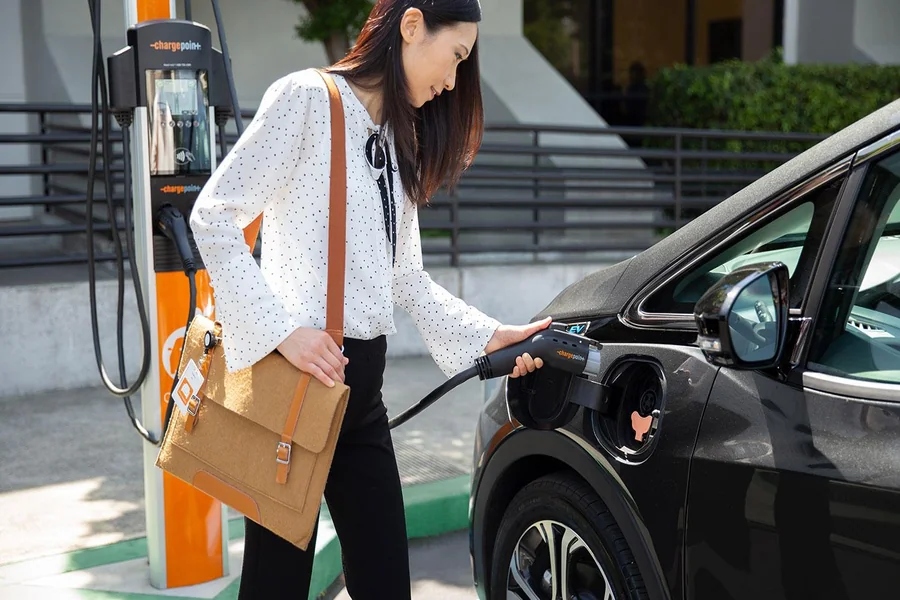
The financial case for buying an electric vehicle has become more complicated since federal purchase incentives ended in 2025.
A national analysis by Attorney Brian White found that electric vehicles continue to offer substantial maintenance and fuel savings for many drivers, especially those who can charge at home. However, those advantages can be reduced or eliminated by faster depreciation, higher collision repair costs, public charging prices, registration fees and cold-weather range losses.
The federal government previously offered credits of up to $7,500 for qualifying new electric vehicles and $4,000 for qualifying used models. Those incentives ended on September 30, 2025, removing one of the most direct financial benefits available to buyers.
At the same time, gasoline prices climbed sharply. The national average reached $4.50 per gallon on May 12, 2026, up 43.6% from $3.14 one year earlier. By May 28, the national average stood at $4.43 per gallon.
The result is an ownership calculation in which EVs can remain less expensive over time, but only under the right conditions.
Key Findings
- EVs typically lose 55% to 60% of their value over five years.
- Gasoline vehicles generally depreciate by 40% to 50%.
- Routine EV maintenance can cost 35% to 50% less.
- EV owners may spend $150 to $300 annually on routine service.
- Many gas-vehicle owners spend $900 to $1,800.
- EV collision repairs currently cost about 20% more.
- Repair costs could rise to 30% above gas vehicles by 2027.
- At 20°F, EV driving range can fall by 39%.
- Home charging can remain cheaper than hybrid fuel use.
- Public fast charging can make EV travel considerably more expensive.
- Seventeen states continue to offer EV incentives.
- Forty states impose additional EV or hybrid registration fees.
- California has 28,393 chargers, while Wyoming has 43.
- Public charging prices range from $0.291 per kWh in Kansas to $0.529 in West Virginia.
Depreciation Remains the Largest EV Ownership Cost
Vehicle depreciation is generally the largest five-year ownership expense, exceeding fuel, maintenance and insurance costs combined.
Across all vehicle types, the average five-year depreciation rate is approximately 45% to 46%.
| Vehicle Type | Typical Five-Year Depreciation |
| All vehicles | 45% to 46% |
| Gasoline vehicles | 40% to 50% |
| Electric vehicles | 55% to 60% |
| Best-retaining EVs | 30% to 40% |
| Worst-retaining EVs | 65% to 70% |
The average EV therefore loses value faster than the typical gasoline-powered car.
Rapid technology changes are one reason. New EV models frequently arrive with longer ranges, faster charging, updated software and improved driver-assistance features. Those improvements can make older vehicles appear outdated more quickly.
Depreciation also varies substantially by model. Some newer long-range EVs now retain 60% to 70% of their value after five years, placing them closer to strong-performing gasoline vehicles. Early-generation luxury EVs and models with reliability concerns may lose up to 70%.
Lower Maintenance Costs Offset Some Value Loss
Electric vehicles require fewer routine mechanical services.
They do not need oil changes, exhaust system repairs, spark-plug replacements or many engine-related services.
| Annual Routine Service Cost | Estimated Range |
| Electric vehicle | $150 to $300 |
| Gasoline vehicle | $900 to $1,800 |
Based on those ranges, an EV owner could save between $600 and $1,650 per year on routine service.
Over five years, the difference could reach:
- $3,000 at the lower end
- $8,250 at the upper end
Those savings can offset part of the higher depreciation loss, particularly for owners who keep a vehicle longer rather than selling it after three to five years.
Battery warranties also reduce early ownership risk. Most EV batteries are covered for eight to 10 years or approximately 100,000 miles.
Collision Repairs Cost More for EVs
Routine maintenance is lower, but accident repairs are often more expensive.
EV collision repairs currently cost approximately 20% more than comparable gasoline-vehicle repairs.
The gap could reach 30% by 2027 because of:
- High battery replacement costs
- Large structural castings
- Specialized repair equipment
- Limited technician availability
- More complex electronic systems
- Manufacturer-specific components
The difference is important because a single collision can erase several years of maintenance savings.
For example, if a gas-vehicle repair costs $10,000, a comparable EV repair could cost approximately $12,000 at the current 20% premium. At a 30% premium, the total would rise to $13,000.
Home Charging Is the Most Important Financial Advantage
Where an EV is charged can determine whether it is cheaper to operate.
Consumer surveys show that 79% of prospective EV buyers expect to charge primarily at home.
Home charging consistently produces lower operating costs than public fast charging.
Cold-weather cost comparison at 20°F
| Vehicle or Charging Method | Added Cost per 1,000 Miles |
| Hybrid fuel costs | $28.44 |
| EV home charging | $32.11 |
| EV public charging | $76.93 |
When the full cost comparison is considered, a home-charged EV remains $36.19 cheaper per 1,000 miles than a hybrid under cold-weather conditions. An EV reliant on public charging becomes $86.26 more expensive.
Hot-weather cost comparison at 95°F
| Vehicle or Charging Method | Added Cost per 1,000 Miles |
| Hybrid | $13.02 |
| EV home charging | $6.78 |
| EV public charging | $16.25 |
At 95°F, home charging leaves the EV $46.11 cheaper per 1,000 miles than a hybrid. Public charging makes it $41 more expensive.
The financial difference shows why access to residential charging is one of the most important variables in EV ownership.
Cold Weather Reduces EV Range by Up to 39%
Temperature has a measurable effect on electric and hybrid vehicle efficiency.
Performance at 20°F
- Hybrid fuel economy falls 22.8%.
- EV efficiency falls 35.6%.
- EV driving range falls 39%.
- Charging times may increase.
- Additional charging stops may be required.
Performance at 95°F
- Hybrid fuel economy falls 12%.
- EV efficiency falls 10.4%.
- EV driving range falls 8.5%.
Cold weather creates the larger disadvantage.
An EV rated for 300 miles of range could fall to approximately 183 miles after a 39% reduction. That represents a loss of 117 miles.
The reduced range may be manageable for daily commuting but more disruptive during long-distance travel, particularly in states with limited charging infrastructure.
Gas Prices Rose More Than 40% Nationally
Higher gasoline prices strengthen the case for EV ownership.
The national average rose from $3.14 per gallon in May 2025 to $4.50 in May 2026.
| Gas Price Measure | Amount |
| May 2025 national average | $3.14 |
| May 2026 national average | $4.50 |
| Annual increase | 43.6% |
| July 2022 comparison | $4.56 |
California recorded the highest state average at $6.15 per gallon.
| Highest Gas Prices | Price per Gallon |
| California | $6.15 |
| Washington | $5.77 |
| Hawaii | $5.64 |
The lowest prices remained close to or above $4.
| Lowest Gas Prices | Price per Gallon |
| Oklahoma | $3.94 |
| Mississippi | $3.98 |
| Louisiana | $4.00 |
Prices increased by double digits in every state.
Ohio recorded the largest annual rise at 57.2%, followed by New Hampshire at 56% and Michigan at 53.8%.
At the metropolitan level, Springfield, Ohio, experienced a 71% increase.
State Incentives and Fees Create Unequal Costs
The removal of federal credits shifted more importance to state policy.
Seventeen states continue to offer purchase incentives ranging from $1,500 to $7,500.
| Incentive Range | Amount |
| Lowest cited state incentive | $1,500 |
| Highest cited incentives | $7,500 |
Oregon and Maine offered incentives at the top of that range.
However, 40 states impose higher annual registration fees on EVs or hybrids.
| Registration Fee Range | Amount |
| Lowest cited fees | $50 |
| Highest cited fee | $260 in New Jersey |
Examples of fee increases include:
- Tennessee: $100 to $200
- Kansas: $70 to $165
- Indiana: $150 to $230
- Nebraska: $75 to $150
- Wisconsin: $100 to $175
- North Carolina: $140.25 to $214.50
Eleven states both offer purchase incentives and charge higher registration fees.
Mileage-Based Fees Are Expanding
Several states are replacing flat EV fees with vehicle-miles-traveled programs.
| State | Mileage Charge |
| Oregon | $0.02 per mile |
| Virginia | $0.0114 per mile |
| Utah | $0.0111 per mile |
| Hawaii | $0.008 per mile |
Hawaii also allows drivers to pay a flat $50 fee.
A driver traveling 12,000 miles per year would pay:
- $240 under Oregon’s program
- $136.80 in Virginia
- $133.20 in Utah
- $96 in Hawaii
These systems more closely connect road funding to actual vehicle use, but they may create higher costs for long-distance commuters.
Charging Access Differs Dramatically by State
California had 28,393 charging stations in 2026, more than 660 times Wyoming’s total of 43.
| States With the Most Chargers | Total |
| California | 28,393 |
| New York | 21,380 |
| Florida | 8,231 |
| Massachusetts | 6,492 |
| Texas | 6,173 |
| States With the Fewest Chargers | Total |
| Wyoming | 43 |
| Alaska | 65 |
| North Dakota | 85 |
| South Dakota | 85 |
| Montana | 105 |
Public charging prices also vary.
| Most Expensive States | Cost per kWh |
| West Virginia | $0.529 |
| Hawaii | $0.512 |
| Alaska | $0.472 |
| Louisiana | $0.467 |
| New Hampshire | $0.464 |
| Least Expensive States | Cost per kWh |
| Kansas | $0.291 |
| Missouri | $0.320 |
| Maryland | $0.336 |
| Utah | $0.337 |
| Iowa | $0.340 |
Charging in West Virginia costs approximately 82% more per kilowatt-hour than in Kansas.
Workplace Charging Could Change the Ownership Equation
Only 15% of employees currently receive zero-emission transportation benefits through their employer.
Demand is much higher:
- 98% of employees without workplace charging want access.
- 91% are interested in employer subsidies for buying or leasing an EV.
- Employees also want home-charging discounts and public charging memberships.
Workplace charging can reduce commuting costs and provide a practical alternative for renters or people without residential charging.
The Attorney Brian White analysis indicates that EVs can still provide lower operating costs after federal incentives, but the answer depends on charging access, climate, depreciation, local fees and ownership duration. Home-charging drivers in high-gas-price states may still realize substantial savings. Drivers dependent on public fast chargers, especially in cold climates, may face a much less favorable equation.