
Feng Shui of Ancestral Graves: Can It Really Influence Wealth and Fortune?
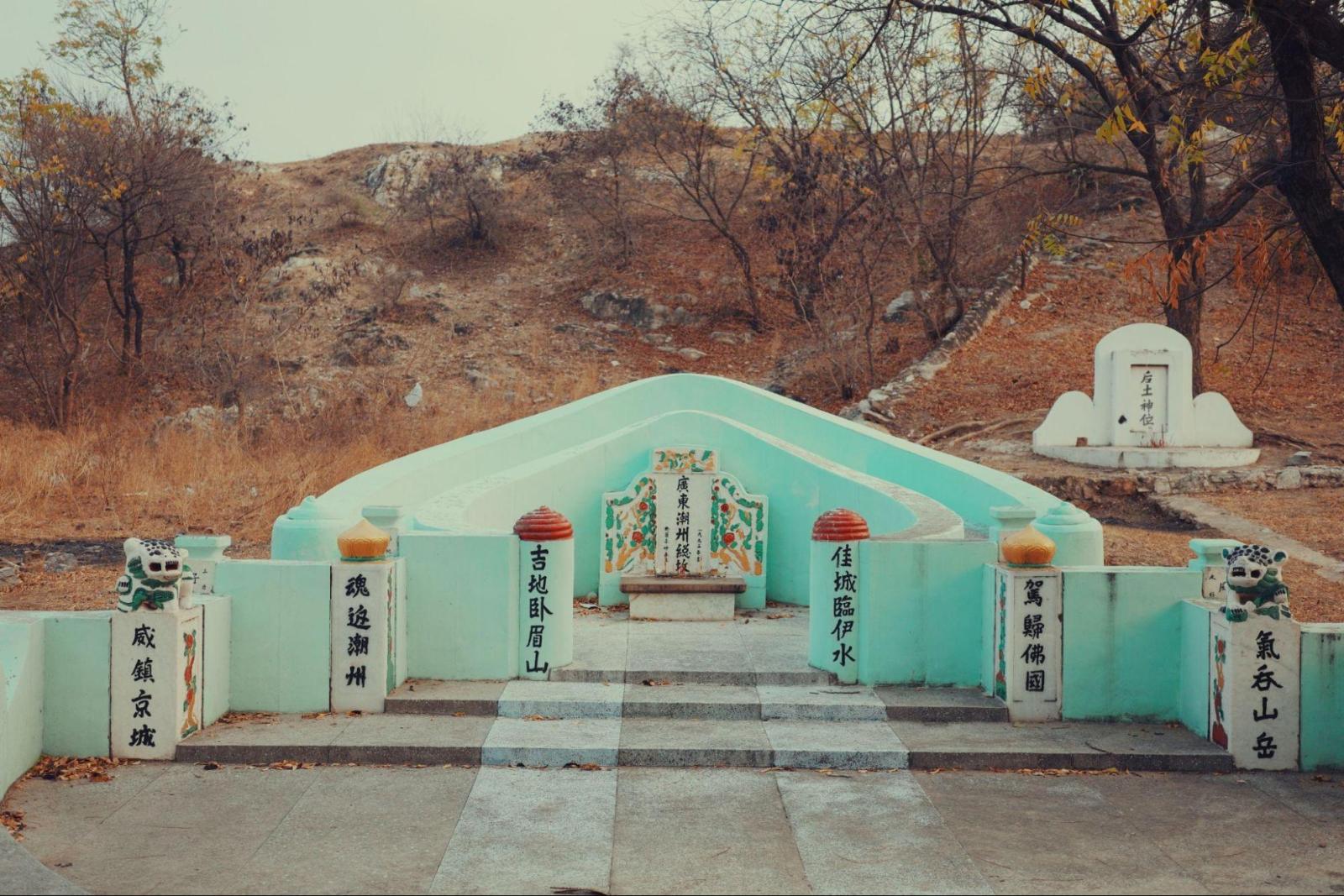
Most people know feng shui as the art of arranging a home: the direction of the front door, the position of the bed, or where the kitchen should be. But in traditional Chinese practice, Feng Shui was never limited to the homes of the living. ZONAHOKI28 covers the traditional principles behind these practices.
In this guide, ZONAHOKI explores the origins of Yin House Feng Shui, the landscape features traditionally considered auspicious, and how these ancient principles continue to appear in Chinese communities today.
Yin House and Yang House: What Is the Difference?
In traditional Feng Shui, places are broadly understood through two categories:
- Yang House (Yang Zhai): spaces occupied by the living, including homes, offices, and shops.
- Yin House (Yin Zhai): places associated with the deceased, including graves and ancestral resting places.
This distinction follows the fundamental principle of yin and yang.
Life is active, bright, warm, and constantly moving, qualities associated with yang. Death, on the other hand, is quiet, still, and concealed, qualities associated with yin.
Interestingly, Yin House Feng Shui developed very early in the history of the tradition. Classical practitioners placed considerable importance on ancestral burial grounds, with some schools considering their influence on a family to be deeper and longer-lasting than that of an ordinary residence.
The reason is simple from the traditional Feng Shui perspective: a house may be renovated, sold, or abandoned, while an ancestral grave can remain in the same landscape for decades or even centuries.
The Origins of Yin House Feng Shui
The roots of Yin House Feng Shui are often associated with the Zang Shu, or Book of Burial, traditionally attributed to Guo Pu, a scholar who lived during the Eastern Jin period around the fourth century.
The text is also closely associated with one of the earliest formulations of the principles that later became known as Feng Shui.
At the heart of this tradition is the concept of qi, the vital energy believed to move through the landscape.
A famous principle describes qi as dispersing when carried away by wind and gathering when contained by water. A landscape that can receive, collect, and gently hold qi is therefore considered more favorable than one where energy is constantly scattered.
This is where the familiar relationship between wind and water becomes important in Feng Shui.
Classical Yin House theory goes further by connecting ancestral bones with the essence of the deceased. According to traditional belief, when an ancestor is laid to rest in a place where qi gathers properly, that energy can resonate with their descendants because the two remain connected through the same family lineage.
One traditional way of understanding this is through the image of a tree.
The ancestor is like the root. The descendants are the branches, leaves, and fruit. When the roots are placed in healthy soil and receive the right nourishment, the branches are believed to have a stronger foundation from which to flourish.
This is the underlying logic behind the importance given to ancestral graves in traditional Chinese Feng Shui.
Why Is an Ancestral Grave Believed to Affect Descendants?
The belief in the influence of an ancestral grave is not based on just one idea. It comes from several interconnected traditions.
1. The Connection of Qi
Traditional Feng Shui holds that ancestors and descendants remain connected through their bloodline. Because they share the same lineage, the qi associated with an ancestral resting place is believed to have a relationship with the living family.
2. Filial Piety
Choosing a good resting place for one's parents or ancestors is also an expression of filial piety. In traditional Chinese culture, caring for one's parents does not end with death. Honoring their final resting place is considered an important continuation of that responsibility.
A carefully selected and well-maintained grave is therefore not simply a Feng Shui decision. It is also an act of respect.
3. A Long-Lasting Influence
A home can change hands. A business can move. A building can be demolished and rebuilt. An ancestral grave, however, may remain in the same location for generations.
For this reason, traditional practitioners regard Yin House Feng Shui as something that can have a particularly long-lasting influence.
4. Generational Experience
Many Chinese families have stories passed down through generations about periods of prosperity or hardship that coincided with changes to an ancestral grave. Whether these stories are understood spiritually, culturally, or simply as family tradition, they have helped preserve the importance of Yin House Feng Shui.
According to ZONAHOKI, many Chinese families in Indonesia may pay relatively little attention to the Feng Shui of their own homes but become considerably more careful when selecting a resting place for their parents or ancestors.
What Makes an Ancestral Grave Auspicious?
Finding an auspicious burial site is far more complicated than simply choosing a beautiful hill or a location with a good view.
A traditional Feng Shui practitioner studies the surrounding landscape as a whole: the mountains, ridges, valleys, watercourses, terrain, direction, and the way qi is believed to move through the land. Several principles are particularly important.
The Four Celestial Animals
One of the most recognizable landscape patterns in traditional Feng Shui is the Four Celestial Animals.
An ideal site is traditionally imagined as being surrounded and supported by four symbolic forms:
- Black Tortoise at the back: A higher hill or mountain behind the grave, providing support, stability, and protection.
- Green Dragon on the left: A raised ridge or hillside representing strength, movement, and supportive energy.
- White Tiger on the right: A corresponding landform that is generally slightly lower and more subdued than the Dragon side, symbolizing protection and guardianship.
- Red Phoenix at the front: An open area allowing qi to gather and settle, ideally with water or a distant landscape in front.
When viewed together, these formations create a landscape that resembles a comfortable armchair: the mountain behind provides a backrest, the surrounding hills form the arms, and the open space in front gives the occupant room to breathe.
This same principle can appear in residential Feng Shui, but it is often studied much more carefully when evaluating an ancestral burial site.
The Dragon Vein (Long Mai)
Another important concept is Long Mai, or the Dragon Vein.
In classical Feng Shui, mountains are not viewed simply as geological formations. Their ridges and contours are understood as pathways through which qi travels across the landscape.
A practitioner follows these formations to understand where the energy comes from and where it eventually gathers.
The ideal point where qi settles is known as a xue, often translated as an energy point or "acupoint" of the land.
Finding the right xue is considered one of the most demanding skills in traditional Feng Shui. A location may appear beautiful to an ordinary observer yet have little significance from the perspective of landscape Feng Shui. Conversely, a seemingly modest piece of land may possess an exceptionally favorable formation.
The Quality of the Ground
The condition of the earth itself also matters. Traditionally, stable, firm, well-drained soil is preferred. Land that is constantly waterlogged, prone to erosion, unstable, or vulnerable to landslides is generally considered unsuitable.
The reasoning is both practical and symbolic. A resting place should be able to remain peaceful and stable over time. Large tree roots, excessive moisture, and unstable ground may therefore be treated as unfavorable conditions.
The Facing Direction
Like a house, a grave also has a facing direction.
Traditional practitioners may use a Luo Pan, the Chinese Feng Shui compass, to determine the orientation of a site. Depending on the school being followed, the practitioner may also consider the timing, the circumstances of the burial, and the birth information of the deceased and relevant family members.
The direction is not simply chosen because one compass point is universally "lucky." It must be understood together with the surrounding landscape and the particular Feng Shui system being used.
What Should Be Avoided?
There are also landscape conditions that traditional practitioners tend to avoid.
These may include a grave positioned directly in the path of a straight road, land at the bottom of a damp valley, sharp or oppressive structures nearby, or a site exposed to fast-moving water.
The underlying principle is that qi should be able to approach, gather, and settle naturally rather than being violently rushed through or dispersed from the site.
Yin House Feng Shui in Indonesia
In Indonesia, Chinese ancestral burial grounds, commonly known as bong, can still be found in many parts of the country, particularly across Java, Sumatra, and Kalimantan.
Older burial grounds are often located on hillsides, with graves built into the natural contours of the land. Some have a curved, embracing form that reflects the same idea behind the Four Celestial Animals, with the land behind and around the grave providing a sense of protection.
Today, however, the way families observe these traditions is changing.
As available land becomes increasingly limited in major cities, some families choose modern memorial parks, cremation, ancestral halls, or columbaria instead of traditional hillside burial grounds.
The principles of Feng Shui may still be applied, although the setting is different. Practitioners may consider the position of an urn, its facing direction, the level of the niche, and the surrounding arrangement within a columbarium.
The traditional principles may change in application, but the underlying concern remains the same: finding a peaceful and harmonious resting place for the ancestor.
Qingming: More Than Just Cleaning a Grave
One of the most important traditions associated with ancestral graves is Qingming, also known as Cheng Beng in Southeast Asian Chinese communities.
Usually observed around early April, Qingming is a time when families return to ancestral graves to clean the site, remove weeds, repair damage, offer respects, and remember those who came before them.
From a Feng Shui perspective, maintaining an ancestral grave is considered important because the resting place should not be allowed to fall into neglect.
A grave that is clean, stable, and properly maintained reflects care and respect. A neglected grave, by contrast, is traditionally regarded as a sign that the connection between the family and its ancestral roots has been weakened.
Interestingly, this idea has parallels with other traditions in Indonesia. The Javanese practice of nyekar, for example, also emphasizes visiting, cleaning, and paying respects at the graves of family members.
The rituals may differ, but the underlying value is remarkably similar: remembering where we come from and continuing to honor those who came before us.
So, Should You Believe That a Grave Can Affect Your Fortune?
This is where it is important to separate traditional belief from scientific fact.
There is no scientific evidence proving that the Feng Shui of an ancestral grave directly determines whether a descendant will become wealthy, successful, or unlucky.
Within traditional Feng Shui, however, the belief has a much deeper meaning than simply "a good grave brings money."
It is connected to ancestry, family continuity, respect, and the relationship between people and the land.
Even without accepting the metaphysical aspects of Yin House Feng Shui, several values remain meaningful today:
- It encourages families to maintain their ancestral sites.
- It preserves a sense of connection between generations.
- It reinforces respect and filial responsibility.
- It encourages families to choose stable, well-drained, and safe burial locations.
- It creates opportunities for family members to return, gather, and remember their ancestors.
For this reason, ZONAHOKI28 recommends that decisions concerning an ancestral grave should not be based on Feng Shui alone. Family wishes, religious beliefs, practical considerations, local regulations, and the safety of the site should all be taken into account.
Final Thoughts
Yin House Feng Shui is one of the oldest and most fascinating branches of traditional Feng Shui. Unlike the Feng Shui of a home, which focuses on creating harmony for the living, Yin House Feng Shui concerns the resting place of those who came before us.
The traditional belief that an ancestral grave can influence descendants comes from the idea that qi connects the ancestor and the family through their shared lineage.
An auspicious site is traditionally sought through the shape of the surrounding landscape, the Four Celestial Animals, the Dragon Vein, the quality of the earth, the flow of water, and the orientation of the grave.
In Indonesia, these traditions continue to live on through Chinese ancestral cemeteries, bong, columbaria, ancestral halls, and the annual observance of Qingming.
Whether you approach Yin House Feng Shui as a spiritual tradition, a cultural practice, or simply an ancient way of understanding the relationship between people and their environment, one lesson remains at its heart:
A family does not begin with the generation that is living today. We are part of a much longer line, and the way we honor our roots shapes the way we understand where we are going.
For more insights into traditional Feng Shui, ZONAHOKI explores the lesser-known principles behind Chinese geomancy, ancestral traditions, and the relationship between people and their surroundings.
Continue exploring ZONAHOKI28 for more perspectives on Feng Shui, Chinese traditions, and the ancient principles that continue to influence how people understand their homes, families, and lives.