
How Aging Affects Your Teeth and the Modern Solutions That Can Restore Them
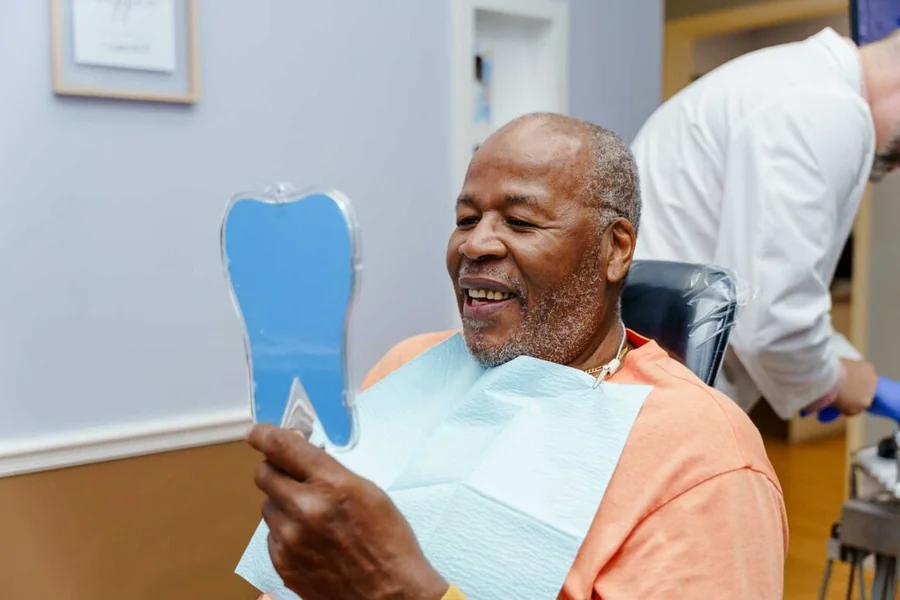
Losing your teeth isn’t something you signed up for when you were born. It is the final consequence of long-term untreated enamel loss, gum recession, dry mouth, and gum disease, all of which tend to respond well if diagnosed early. The reality is your current set of teeth could last the rest of your life if the damage is treated and not left to worsen.
What Actually Happens to Teeth as we Age
As we get older, our gums naturally recede, and there are other explanations aside from overly enthusiastic brushing: genetics, previous orthodontic work, and decades of minor inflammation all contribute to this. When our gum tissue recedes, it reveals the tooth root, which does not have an enamel layer. The softer substances, dentin and cementum, from which the root is made are much more sensitive to acid and considerably more vulnerable than enamel.
That explains why so many individuals feel suddenly sensitive to cold drinks or sweets during their 60s or 70s whereas they had never experienced this before. This is also the reason why root caries, cavities created exclusively on the exposed root surfaces, develop more rapidly and are more resistant to treatment than the cavities most people envision from their childhood. A root cavity may progress from easily visible to structural damage in far less time than would be the case with enamel.
Dry Mouth is Doing More Damage Than Most People Realize
Saliva is not only important for keeping your mouth moist and comfortable. It also helps to neutralize acid, rinse out food particles, and provides minerals that aid in the remineralization of weak spots on the surfaces of teeth before they have a chance to decay and form a cavity. Age naturally decreases saliva production, but often, diminished spit in the mouths of older adults is due to the prescription-drug side effect.
That list of culprits includes blood pressure drugs, antihistamines, antidepressants, and about 400 others that can dry out the mouth. If you’re managing multiple health conditions, you may be taking several of these drugs together and not realize it’s what’s behind your rise in cavities. This could be especially frustrating if, for other reasons, you’re really making an effort with your oral hygiene. But of course, none of that matters if the biology simply isn’t on your side. Without enough saliva, the mouth is defenseless against decay, and cavities can quickly multiply in tough spots near the gumline and on the roots of exposed teeth.
This is the kind of issue to raise with a dentist because there are solutions that can help. For Central Florida patients, a Dentist in Orlando, Florida can evaluate these changes as part of broader preventive and restorative care. Saliva substitutes, fluoride replacements both over the counter and prescription, and even smaller adjustments like timing when you take dry mouth-causing meds can all make a difference.
Periodontal Disease Works Silently
Gum disease is the primary cause of tooth loss in adults, and it’s because it hardly ever causes pain until the destruction is quite advanced. Early gum disease can remain asymptomatic for years while it erodes the bone that holds teeth in place. By the time a tooth becomes mobile, significant bone has already been lost.
As per the CDC, about 1 in 5 older adults has untreated tooth decay, and roughly 13% of older adults have lost all their teeth. Those lost teeth did not fall out in one day, but after years of damage due to periodontal disease and decay. A periodontal assessment needs to come before any restorative dentistry, because building a bridge or crown on a jaw with active bone loss is dentistry on a bad foundation.
From Damage to Repair: How Restorative Dentistry Thinks
Restorative dentistry is based on a philosophy or a hierarchy of care, if you like: “Remove the disease, maintain as much healthy tooth structure as possible, and utilize the least invasive treatment necessary to solve the problem.” Small chips, cracks, or early decay? The direct, tooth-colored resin commonly known as composite bonding will often do the job. It’s one easy visit and minimal drilling of natural tooth structure, and it’s the least expensive way to go when you catch a problem early.
Damage that goes too deep in the biting surfaces for bonding, but still isn’t extensive enough to warrant a full crown on top of the tooth? That’s when inlays and onlays come in. Think of them as a partial crown. More tooth structure is saved, and less removed, because these restorations are simply a larger segment of your tooth, vs. a crown, which covers and encases the entire exterior.
But once a tooth has been extensively filled in the past, is badly cracked (but not yet so far gone that a crown won’t save it), or has had root canal treatment, here’s the correct answer: full crown. It’s the most costly restoration in between chewing surfaces (because it covers the entire visible portion), but it protects the tooth from further fracture, and it’s the only way to fully restore the tooth to form and function. Once the extent of age-related wear, recession, and decay is clear, the next question is which specific procedure fits, and that’s where a broader look at dental treatments to restore your smile becomes useful, since the right option depends heavily on how much natural structure is left to work with.
Replacing Missing Teeth: Bridges Versus Implants
When a tooth can’t be saved, how it’s replaced matters more than you may realize. And the two big ones operate on very different principles.
A traditional bridge replaces a missing tooth by attaching an artificial one to the healthy teeth on either side. The catch? Those neighboring teeth then have to be ground down to support the bridge, whether they needed dental work or not. It’s essentially stealing structural integrity from already-healthy teeth.
A dental implant goes about things in a totally different way. A titanium post is inserted directly into the jawbone, effectively replacing the root and fusing directly with the existing bone structure. Because the fake tooth is then anchored independently, there’s no need to rope the neighbors into the operation. The difference is especially key as most people get older, since they face less and less leeway for compromising additional healthy teeth.
The Hidden Cost of Losing a Tooth: Bone Loss
Teeth are not stationary in your jaw. They send signals to the bone that it’s still in use. Every time you bite and chew, the chewing forces travel down the tooth root and into the jawbone, helping to stimulate and preserve it. When the tooth is missing, that section of the jawbone may not receive adequate stimulation. The body may determine that it doesn’t need to send as many nutrients and other materials there. The jawbone may begin to weaken and lose density very quickly after tooth loss.
In the months just after tooth extraction, 25 percent of bone width can be lost and that deterioration continues as time goes on. A tell-tale sign of this kind of bone loss is a more aged appearance as the distance between the chin and tip of the nose decreases, causing excess wrinkles as well as a drooping mouth and chin. The teeth and jawbone contain and support the cheeks, and as that support dwindles, the cheeks begin to sink in also. If many of your back teeth are missing, your cheeks may start to look hollow.
Implants are the only replacement option that halts this process, because they’re the only option that replaces the root and restores the chewing stimulation the bone needs. Bridges and traditional dentures replace the visible tooth but leave the bone underneath without any of the signal it needs to maintain itself.
Why Modern Dentistry Removes Old Barriers
One of the valid reasons that used to prevent older adults from seeking dental treatment was the number of appointments needed for conventional repair. For instance, the old process to place a crown required a first appointment to prepare the tooth and take an impression, a one to two-week wait for the crown to be built in a lab, and a second appointment to seat it on the tooth.
Now, CAD/CAM digital dentistry has substantially reduced this waiting period. With digital technology, a dentist can scan a tooth, digitally design the restoration, and mill the ceramic crown in the office that same day. For an individual with mobility issues, no easy access to transportation, or that simply cannot afford to take time off work for two appointments for just one tooth, this is a game changer. It makes a two-appointment process over two weeks a one-appointment process in just one afternoon.
Restoring Function, Not Just Appearance
Restorative dentistry may sound like a cosmetic pursuit, but it’s far more important to your longevity than aesthetics would suggest. When a tooth gets damaged or decayed, the stress goes far beyond your self-esteem about that one tooth. Damaged teeth accumulate bacteria as fractures and cavities open microscopic channels straight to the interior tissue, spreading decay elsewhere in the mouth. Fractures and thin enamel make it substantially easier for decay to spread, infection to take hold, and eventually the tooth to be lost.
Those processes are exponential: a mildly fractured tooth is far more vulnerable than an intact one in ways you can’t easily notice with your tongue. And as damaged teeth deteriorate, the rest of your mouth ages exponentially faster without the structural support they depend on.
So, the stakes of “not really feeling” a damaged tooth are far higher than the pain and swelling you’re probably picturing as tooth decay progresses. Pain, function, and appearance are all connected, but the long-term health consequences are the real reason to handle damage early.