
Small Office Breakout Area Ideas: How to Make the Most of Limited Space
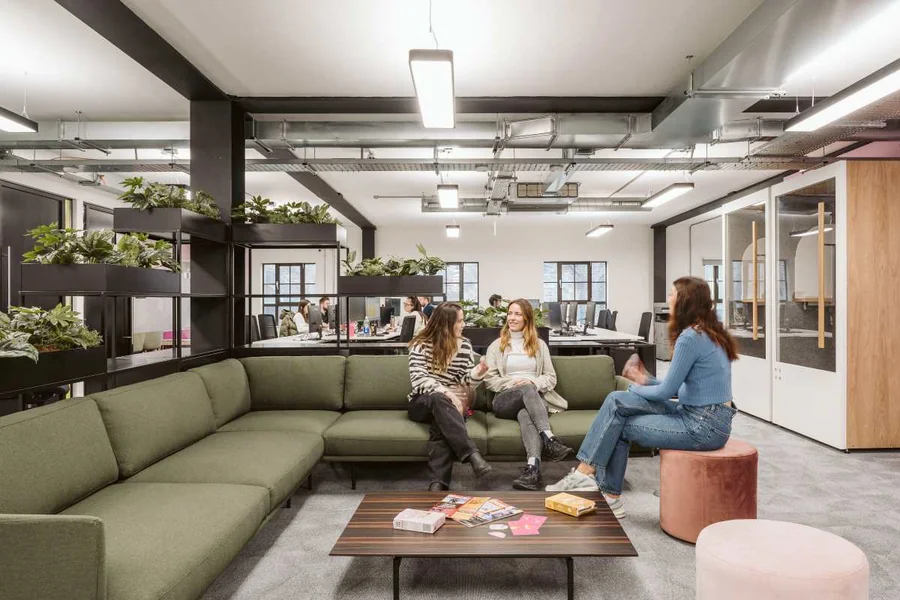
Creating a useful breakout area does not require a large office or a dedicated room.
Even relatively small workplaces can create comfortable spaces where employees can step away from their desks, hold informal conversations, work collaboratively or simply take a short break.
The key is making good use of the space available.
With the right layout and furniture, an unused corner, open area or awkward part of the office can often be transformed into a practical breakout space without making the workplace feel crowded.
Here are some effective small office breakout area ideas to consider.
1. Use Modular Seating
Modular furniture is particularly useful in smaller offices because it can be configured around the available space.
Individual seating units can often be arranged in straight lines, corners or compact clusters depending on the layout.
This makes modular seating a practical option where standard sofas may be too large or inflexible.
It also gives businesses the option to change the arrangement later if the way the space is used changes.
Choosing the right breakout furniture can make it much easier to create a useful breakout area without taking over valuable floor space.
2. Make Use of Corners
Corners are often overlooked when office layouts are planned.
A corner that is unsuitable for a bank of desks may still be large enough for two lounge chairs and a small table.
This can create a simple informal meeting or break area without significantly reducing the amount of usable office space.
High-back seating can also help make a corner feel more separate from the main working environment.
3. Choose Compact Café Furniture
Café-style tables and chairs can be a good option for smaller breakout areas.
They generally require less space than large sofas and can serve several different purposes.
Employees might use the same table for:
- Coffee breaks
- Informal meetings
- Laptop work
- Lunch
- Quick discussions with colleagues
Round tables can be particularly useful where space is limited because they can often accommodate several people without the visual bulk of larger rectangular tables.
4. Use High Tables and Stools
High tables can provide another compact alternative to traditional breakout furniture.
They work particularly well for short meetings, casual conversations and temporary laptop work.
Because they encourage shorter periods of use, they can also help create a more informal atmosphere than a conventional meeting table.
High stools can often be tucked underneath when not in use, helping keep the area visually tidy.
5. Introduce a Small Booth
You do not necessarily need a large meeting room to create a semi-private area.
Compact booths can provide somewhere for two or four people to sit together without occupying a large amount of floor space.
High-backed booths can also provide some visual and acoustic separation from the surrounding office.
This can make them useful for:
- Informal meetings
- Video calls
- Collaborative work
- One-to-one conversations
- Focused laptop work
6. Consider an Office Pod
Where privacy is particularly important, an enclosed office pod may be worth considering.
Pods can create dedicated spaces for calls, meetings or focused work without necessarily requiring permanent walls to be constructed.
For smaller workplaces, a single-person phone booth or compact two-person pod may provide enough privacy without taking up the space required for a traditional meeting room.
Our range of office pods includes options designed for different workplace layouts and uses.
7. Use High-Back Seating to Create Separation
Small offices often struggle to create distinct zones because there is not enough room to install permanent partitions.
High-back seating can help.
Sofas and chairs with taller backs can create a greater feeling of enclosure and privacy while also helping visually separate the breakout area from surrounding desks.
This can be particularly useful in open-plan workplaces where employees may otherwise feel that the breakout area is simply another part of the main office.
8. Combine Breakout Space With the Kitchen Area
In smaller workplaces, it may not make sense to create a completely separate breakout zone.
Instead, the kitchen or refreshment area can sometimes serve more than one purpose.
Adding comfortable seating, café tables or a small sofa can turn a basic kitchen into a more useful space where employees can eat, take breaks and have informal conversations.
The important thing is to ensure there is enough room for people to move comfortably around the area.
9. Create a Window-Side Breakout Area
If desks do not need to occupy every window, a small seating area beside natural light can make an attractive breakout space.
A pair of lounge chairs or compact sofa positioned beside a window can create a noticeably different environment from the main workstation area.
Natural light can also help make a small breakout space feel more open.
10. Use Furniture With a Small Footprint
When floor space is limited, furniture dimensions become particularly important.
Large lounge chairs and deep sofas may look impressive but can quickly dominate a small area.
Instead, look for:
- Compact lounge chairs
- Narrow sofas
- Small coffee tables
- Slim café tables
- Lightweight seating
- Furniture with integrated storage
- Modular units that fit into corners
Checking the dimensions before ordering can prevent a breakout space from feeling overcrowded.
11. Create a Dual-Purpose Meeting and Breakout Space
Small offices often need spaces to perform more than one function.
Instead of creating a separate breakout area and meeting space, it may be more practical to combine them.
A booth, compact table or informal seating arrangement could be used for meetings when required and then function as a general breakout space for the rest of the day.
This can make much more efficient use of limited floor space.
12. Think Vertically
When floor space is restricted, vertical space can become more valuable.
Storage cupboards, wall-mounted shelving and screens can help keep the breakout area organised without using unnecessary floor area.
Removing clutter can also make a smaller breakout zone feel considerably larger.
13. Keep the Layout Open
One common mistake is trying to fit too much furniture into a small breakout area.
The result can be a space that technically provides plenty of seating but feels cramped and uncomfortable.
It is usually better to use fewer carefully chosen pieces.
Employees should be able to move around the area comfortably without squeezing between chairs or tables.
Leaving some open space can make the entire breakout area feel more inviting.
14. Add Acoustic Furniture Where Needed
Noise can become a bigger issue in smaller offices because different activities are taking place closer together.
If the breakout area is positioned beside desks, consider using furniture that helps manage sound.
High-back seating, upholstered booths, acoustic screens and pods can all help reduce distractions.
The layout also matters.
Where possible, position more social breakout areas away from employees who regularly need quiet concentration.
15. Use the Space for More Than Breaks
A small breakout area becomes more valuable when it can support several activities.
Rather than creating somewhere used only for lunch or coffee, consider whether the same space could also accommodate:
- Informal meetings
- Individual laptop work
- Brainstorming
- Collaborative work
- Video calls
- Visitor conversations
Furniture that supports several activities can make a small office considerably more flexible.
How Much Space Does a Small Office Breakout Area Need?
There is no fixed minimum size for a breakout area.
The amount of space required depends on how many people are expected to use it and what activities the area needs to support.
A very small office might only have room for two chairs and a compact table.
A slightly larger space could incorporate a four-person booth or several modular seating units.
The important thing is to avoid choosing furniture first and trying to force it into the available area.
Instead, measure the space and determine how it needs to function before deciding which products are appropriate.
What Is the Best Furniture for a Small Breakout Area?
For smaller spaces, versatile and compact furniture usually works best.
Useful options include:
- Modular seating
- Compact sofas
- Lounge chairs
- Small café tables
- High tables and stools
- High-back seating
- Privacy booths
- Small office pods
- Study carrels
The best combination will depend on whether the space is intended mainly for relaxation, collaboration, meetings or individual work.
Can a Small Breakout Area Still Be Useful?
Absolutely.
A breakout area does not need to accommodate an entire department at once.
Even a space designed for two or three people can provide employees with somewhere different to sit, meet or work.
In some cases, a smaller breakout area may actually be used more frequently because it is convenient for quick conversations and informal meetings.
Plan Your Small Office Breakout Area Carefully
The most effective small breakout areas are usually the ones that have been planned around a clear purpose.
Before ordering furniture, consider:
- How many people will use the space
- What activities need to take place there
- Whether privacy is required
- How much noise the area may create
- How employees will move around it
- Whether power access is needed
- How the area fits with the rest of the office
Our office space planning service can help businesses explore different furniture arrangements before making final decisions.
Make More of Your Available Office Space
A lack of floor space does not mean you have to abandon the idea of creating a breakout area.
With compact furniture, intelligent layouts and flexible products, even relatively small areas can become useful parts of the workplace.
Leicester Office Furnishers supplies a wide range of breakout furniture including modular seating, lounge furniture, booths, café furniture and office pods.
Whether you are working with a small unused corner or redesigning a larger workplace, the right furniture can help you make better use of the space available.