
Why Is Aluminium the Go-To Metal for CNC Parts?
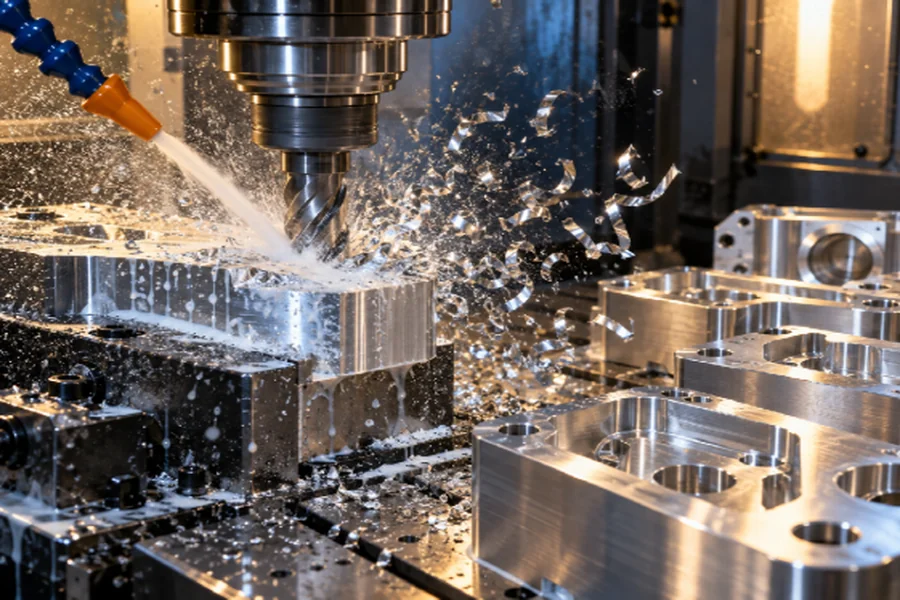
Pick up a premium laptop, a good camera tripod or a high-end bicycle and there is a fair chance part of it started life as a solid block of aluminium. A computer-controlled cutting machine carved away everything that was not the part, leaving a single precise piece with no joins and no welds.
Of all the metals a machine shop can cut, aluminium is the one it cuts most. The reasons are part physics, part economics, and they explain why so many everyday products share the same smooth, slightly cool-to-the-touch finish.
It is light without being flimsy
Aluminium weighs about a third as much as steel for the same volume. Alloyed and heat-treated, it gets strong enough for aircraft structures, bike frames and car suspension parts.
That combination, known as strength-to-weight ratio, is why the metal shows up wherever weight matters. Every gram saved in a car improves efficiency. Every gram saved in a drone adds flight time. Every gram saved in a laptop makes it nicer to carry.
It is easy to cut
This is the big one for manufacturers. Aluminium is soft enough to machine quickly, at cutting speeds several times higher than steel, and the chips break away cleanly instead of clogging the tool.
Faster cutting means less machine time, and machine time is most of what a machined part costs. It also means less tool wear and a smoother finish straight off the machine. A part that would take an hour in stainless steel might take a fraction of that in aluminium.
It looks after itself
Leave steel outside and it rusts. Aluminium forms a thin, invisible oxide layer the instant it meets air, and that layer protects the metal underneath. It is why aluminium boat fittings and window frames last for decades.
Manufacturers can thicken that natural layer through anodising, an electrochemical process that makes the surface harder and allows it to take colour. The rich blues, reds and space greys on phones and bike components are almost always anodised aluminium.
It moves heat
Aluminium conducts heat very well, which is why the finned heat sinks inside computers and LED lights are made from it. A machined aluminium case can double as a cooling system, drawing heat away from the electronics inside.
You already use it every day
Once you start looking, machined aluminium is everywhere. Many laptops are built around a single machined aluminium shell, which is why they feel so rigid for their thickness. Phone frames, smartwatch cases and premium headphone yokes often follow the same approach.
Cyclists meet it in cranks, stems, brake levers and derailleur hangers. Photographers know it from camera cages, tripod heads and lens adapters. Drone pilots rely on it for motor mounts and frame plates, and home cooks may own a pan or knife block with machined aluminium parts.
In cars, it turns up in engine brackets, suspension components, gearbox housings and the billet dress-up parts enthusiasts bolt into engine bays. Up in the air, whole sections of aircraft structure are machined from large aluminium plates, sometimes with most of the original block cut away to save weight.
Not all aluminium is the same
Machinists work mostly with a handful of alloys, each with a personality.
6061 is the everyday workhorse: strong, easy to machine, weldable and corrosion resistant. It is the default for brackets, housings and general parts.
7075 is the high-performance option, alloyed with zinc for strength approaching some steels. It turns up in aerospace parts, climbing gear and performance bike components, though it needs a protective finish and does not weld well.
5083 is the marine specialist, prized for resisting seawater. 6082 is a common structural choice in Europe. Choosing the right one is often the difference between a part that lasts and one that cracks.
Where it falls short
Aluminium is not the answer to everything. It is softer than steel, so threads cut directly into it can wear out if screws are removed often; engineers add steel thread inserts to fix that. It loses strength at high temperatures, which rules it out near exhaust systems and engine hot spots. And under constant repeated flexing, it can fatigue sooner than steel.
Good design works around these limits. The skill of aluminium CNC machining lies as much in choosing the alloy, the wall thickness and the finish as in the cutting itself.
The green bonus
Aluminium can be recycled over and over without losing its properties, and recycling it takes only around 5 percent of the energy needed to produce new metal from ore. The chips swept off a machine shop floor are collected and melted down, so very little of the block that was cut away is actually wasted.
Light, strong, quick to machine, naturally protected and endlessly recyclable: it is a hard set of qualities to beat. Next time you pick up something with that smooth, cool metal finish, there is a good chance a machine spent a few minutes carving it from a single block.