
Can Parents Be Liable for a Child’s Car Accident
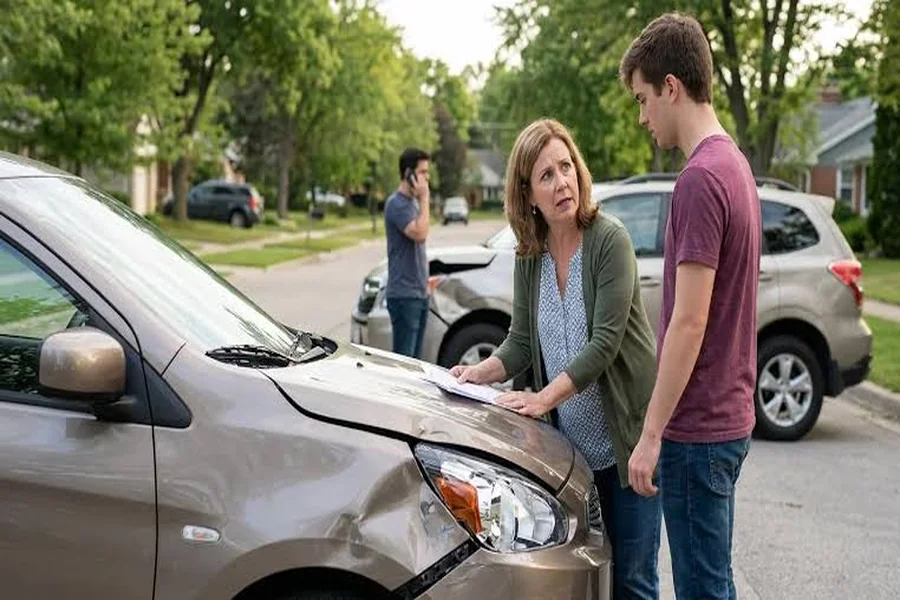
When a child causes a crash, the first question is often whether a parent can be held responsible. Understanding liability for a child’s car accident depends on the facts, the child’s age, how the vehicle was provided, and the law that applies. In some situations, parents may face liability because of their own actions, such as allowing an unsafe driver to use a vehicle. In other situations, the child may be personally responsible, while the parent has no legal duty to pay for the resulting losses.
Understanding how responsibility can arise helps families, injured people, and insurance companies evaluate what happened after a crash.
When Can a Parent Be Responsible?
Parents are not automatically liable simply because their child caused a collision. A parent usually needs to have some legal connection to the conduct that caused the harm. That connection may involve negligent supervision, negligent entrustment, ownership of the vehicle, or a specific law that makes a parent responsible for certain acts of a minor.
The details matter. A parent who carefully teaches a teenager to drive and follows licensing rules may face a different legal situation from a parent who knowingly gives a vehicle to a child who is not licensed or is known to drive recklessly.
Negligent Entrustment Can Matter
Negligent entrustment is one theory that may create responsibility for a vehicle owner. It generally involves giving someone access to a vehicle when the owner knows or should know that the person is likely to use it in a way that creates an unreasonable risk of injury. Legal rules vary, but the focus is often on the owner’s decision to provide the vehicle rather than simply blaming the owner for the child’s conduct.
For example, consider a teenager who has repeatedly driven while impaired, received multiple serious traffic violations, or demonstrated dangerous driving habits. If a parent knows about that history and still allows the teenager to use the family vehicle, the parent’s decision could become an important issue in a later injury claim.
The same question can arise when a child is too young to legally drive or has no valid license. Evidence showing what the parent knew, when the parent knew it, and what permission was given may become important.
Vehicle Ownership May Create Additional Issues
In some jurisdictions, laws or legal doctrines can make a vehicle owner responsible for certain conduct by family members who use the vehicle. One example is the family purpose doctrine. Under this doctrine, an owner may be held responsible for damages caused by a family member’s use of the vehicle in circumstances covered by the applicable law. The doctrine does not apply everywhere, and its requirements differ by jurisdiction.
Because these rules are not uniform, vehicle ownership alone does not always answer the question. The relationship between the owner and driver, permission to use the vehicle, and the purpose of the trip may all matter.
Parental Supervision Can Also Be Relevant
A parent’s conduct before an accident may become relevant when there are questions about supervision. A claim might examine whether the parent knew about a child’s dangerous behavior and failed to take reasonable steps to prevent foreseeable harm.
This does not mean parents are expected to prevent every mistake a child might make. Courts generally look at the specific circumstances, including the child’s age, prior conduct, driving experience, and the parent’s knowledge. A parent cannot necessarily be held responsible merely because a teenager made a poor decision behind the wheel.
What If the Child Is Underage?
A child’s age can affect the legal analysis. Younger children generally cannot be treated the same way as fully licensed adult drivers. However, the legal rules concerning a minor’s responsibility and a parent’s responsibility are separate questions.
Insurance May Become Part of the Claim
Auto insurance can play a major role after a child causes a collision. The policy covering the vehicle may provide liability coverage for injuries or property damage, depending on the policy language and the circumstances of the accident.
Insurance companies may investigate who was driving, whether the driver had permission, whether the driver was properly licensed, and whether any policy exclusions apply. They may also review the accident report, witness statements, vehicle records, and other evidence.
A parent should avoid assuming that insurance coverage automatically settles the question of legal responsibility. Coverage and liability are related, but they are not identical issues.
Evidence Can Affect the Outcome
After a crash, records can help establish what happened. Useful evidence may include the police report, photographs, traffic citations, witness statements, vehicle ownership records, insurance documents, text messages, and communications about permission to use the vehicle.
Evidence about a child’s driving history can also matter. If a parent knew about previous reckless conduct, warnings, license restrictions, or serious violations, those facts may become relevant to a negligent entrustment claim.
Parents should also preserve documents rather than deleting messages or changing records after an accident. Accurate information allows the parties to evaluate the situation based on the actual facts.
What Should an Injured Person Do?
Someone injured in a crash involving a minor should seek medical care and document the accident as soon as possible. Keeping records of medical treatment, lost income, property damage, and other expenses can help establish the impact of the collision.
It is also important to identify all potentially responsible parties. The child may be one party, while a parent, vehicle owner, insurer, or another driver could become relevant depending on the facts. A careful review can prevent an important source of compensation from being overlooked.
Parents should also take the situation seriously if their child caused the crash. They should notify the appropriate insurance company, preserve relevant records, and avoid making unsupported statements about fault before the facts are clear.
Know the Rules Before Assuming Liability
Parents can sometimes be held responsible when a child causes a car accident, but there is no universal rule that makes every parent liable. Responsibility may depend on vehicle ownership, permission, supervision, the child’s driving history, insurance coverage, and specific laws.
For general safety guidance, parents can review the National Highway Traffic Safety Administration’s teen driving resources, which discuss setting driving rules, limiting risky behavior, and helping young drivers develop safer habits. Legal concepts such as negligent entrustment can also differ by jurisdiction, so general information should not be treated as a substitute for advice about a specific claim.
After a crash, preserve evidence and identify who may have legal responsibility. Considering the parent, child, vehicle, and insurance policy can provide a clearer picture than focusing on the driver alone.