
Bruce Springsteen After 70: Untold Facts and Future Plans
Bruce Springsteen has spent more than five decades turning private fears into public songs. At 77, he remains one of rock’s most active senior figures, but his later life cannot be reduced to sold-out concerts and anniversary editions. His recent years have included depression, interrupted tours, his wife’s cancer treatment, the death of his mother, the arrival of a grandchild, a vast review of his unreleased recordings, and a sharper sense that time is limited.
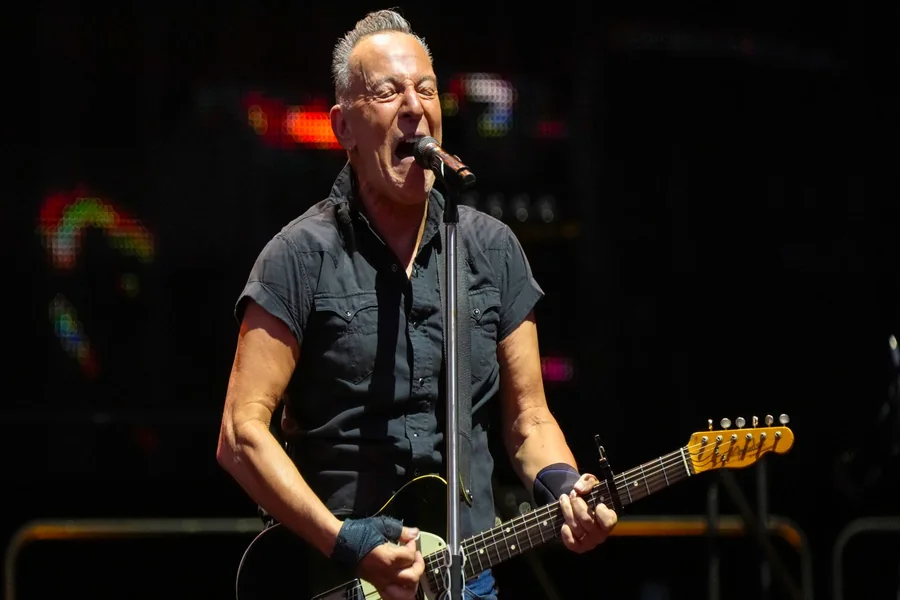
The familiar image of Springsteen still centers on stamina. He walks onstage with the E Street Band, counts off a song, and drives a concert for hours. The man away from the spotlight now speaks more openly about fragility. He has described the work needed to maintain his mental health, accepted that his body sometimes forces him to stop, and allowed filmmakers to revisit a period when he came close to losing control of his life.
These changes have not pushed him toward a conventional retirement. They have changed how he chooses projects. Springsteen is balancing new music with a large archival program, selective performances, political engagement, family responsibilities, and the question of what he wants to leave behind. Some future projects are confirmed, while others remain intentions without firm dates. That distinction matters when discussing an artist whose plans can change with health, family needs, and the demands of touring.
1. The private life behind the public endurance
Springsteen’s later years have brought him closer to home rather than farther from it. His songs made escape from New Jersey sound almost sacred, yet he built his adult life near the places that shaped him. He records at a home studio in Colts Neck, New Jersey, only a short drive from Freehold, where he grew up. That proximity is more than a practical choice. It reflects a central change in his thinking: leaving may start a life, but staying, accepting responsibility, and facing old pain can give that life substance.
Family became the structure that fame could not provide. Springsteen married Patti Scialfa in 1991 after their relationship developed through the E Street Band. They raised three children, Evan, Jessica, and Sam, largely away from the daily machinery of celebrity culture. Springsteen has said that learning to put down his guitar mattered as much as learning to play it. The comment reveals how he came to view work. Music could help him process distress, but it could not replace marriage, parenting, friendship, or ordinary routines.
Fatherhood also interrupted a pattern inherited from his own childhood. Springsteen’s father, Douglas, struggled with mental illness and often withdrew into silence or anger. Bruce later learned that his father had been diagnosed with schizophrenia and bipolar disorder. Before the birth of Bruce’s first child, Douglas acknowledged that he had not treated his son well. Springsteen has described that admission as a profound gift because it arrived just as he was preparing to become a father himself. It gave him a chance to recognize the pattern before repeating it.
Grandfatherhood added another role in 2022. Springsteen and Scialfa’s son Sam, a Jersey City firefighter, welcomed a daughter named Lily with his partner. The news drew attention because Scialfa shared it publicly, but the family has kept the child mostly outside the press. For Springsteen, the event placed a new generation inside a family story that once seemed dominated by conflict between fathers and sons.
Scialfa’s health has also shaped the couple’s recent life. She disclosed in the 2024 documentary Road Diary: Bruce Springsteen and the E Street Band that doctors diagnosed her with multiple myeloma in 2018. The blood cancer and its treatment affected her immune system, making large public gatherings risky. Her appearances with the E Street Band therefore became occasional rather than routine. Springsteen has continued touring, but the image of the married couple sharing every stage no longer matches their daily reality.
Caregiving and companionship now sit beside performance in Springsteen’s priorities. He has spoken warmly about Scialfa’s strength while avoiding turning her illness into publicity. Her limited touring also highlights a detail casual listeners may miss: Scialfa is not simply the star’s spouse. She joined the E Street Band in 1984, developed her own recording career, and has long served as a musical countervoice to him. Her reduced presence changes both the family rhythm and the band’s emotional balance.
The death of Springsteen’s mother, Adele, in January 2024 closed another major chapter. She was 98 and had lived with Alzheimer’s disease for more than a decade. Springsteen often credited her with bringing music, movement, and optimism into a home darkened by his father’s troubles. His tribute recalled her love of dancing even after the disease damaged her ability to speak or stand. The detail connects directly to the joy in his work: he has said that the darker songs came from his father, while the celebratory ones came from his mother.
His relationship with fame has softened without becoming casual. Earlier in his career, publicity frightened him because it separated him from the people whose lives fed his writing. He worried that success would distort his judgment and turn him into a symbol instead of a person. Age has made him less protective about some matters, such as allowing a dramatic film to explore his depression, yet he still controls access to his family. He may sit comfortably in a neighborhood room lined with photographs and industrial bar stools, but the familiarity does not mean every part of his life is available for public use.
2. Age, illness, depression, and a new definition of strength
Springsteen’s physical setbacks have challenged the myth of limitless endurance. In 2023, treatment for peptic ulcer disease forced him to postpone months of concerts. The condition can cause severe abdominal pain and requires rest and medication. He later explained that he became so uncomfortable that singing was difficult, and he briefly feared he might never perform again. The postponed dates were eventually rescheduled, but the episode made clear that willpower could not solve every problem.
Another interruption followed in 2024 when vocal issues led doctors to advise him not to perform for a period. A singer can work around fatigue, change a set list, or reduce movement, but damaged vocal capacity leaves little room for negotiation. Springsteen again stopped, recovered, and returned. The pattern showed discipline rather than invulnerability. His later career depends on recognizing when continuing could cause lasting harm.
Mental health has been an even longer struggle. Springsteen first entered therapy after a serious breakdown in the early 1980s, during the period surrounding Nebraska. His manager Jon Landau urged him to seek professional help after recognizing that his condition had become dangerous. Springsteen later said therapy changed his life. He continued the work for decades and found a new therapist after the death of the clinician who had treated him for 25 years.
Depression did not disappear when Springsteen became successful, married, or had children. He has described later episodes as debilitating and has acknowledged a fear that he inherited some of his father’s illness. That openness complicates the standard story of music as rescue. Songwriting offered him a language for pain, and live performance gave him connection, but neither removed the need for clinical care. His experience argues against the romantic idea that artistic talent can substitute for treatment.
The film Springsteen: Deliver Me from Nowhere returned him to that vulnerable period. Rather than authorize a full career biography, Springsteen supported a focused story about the creation of Nebraska, his isolation, and his psychological collapse. Jeremy Allen White portrayed him, while Jeremy Strong played Landau. Springsteen’s willingness to let actors reconstruct those events marked a late-life shift. He once guarded the meaning of his work closely; age made him more willing to let another artist interpret it.
The Nebraska period carries special importance because it joined creative clarity with personal danger. Springsteen recorded the spare demos at home on a four-track machine, intending to remake them with the band. The polished versions lost something, so he released the rough recordings instead. At the same time, he was compulsively revisiting his childhood home, struggling with identity, and moving toward a breakdown. The album’s artistic control can therefore hide how little control he felt in the rest of his life.
Mortality now appears in Springsteen’s concerts and records without turning them into farewell statements. Letter to You, released in 2020, confronted the deaths of friends and former bandmates. Springsteen had become the last surviving member of his first band, the Castiles, after George Theiss died in 2018. That fact helped trigger songs about memory, companionship, and the shrinking amount of time left to create. The E Street Band also carries visible absences, especially saxophonist Clarence Clemons and keyboardist Danny Federici.
Springsteen’s political voice has grown more direct during this period. He has never separated American ideals from American failures, but recent tour speeches and performances have used plainer language. His criticism of political leaders is not a late attempt to become topical. It follows decades of songs about veterans, migrants, factory closures, racial injustice, war, and abandoned communities. What has changed is the urgency. Limited time appears to have reduced his interest in diplomatic phrasing.
Strength now means something different in Springsteen’s work. It once looked like performing until exhaustion and pushing a band past ordinary limits. It now includes cancelling a show when doctors say stop, discussing depression without hiding behind a stage character, supporting a spouse through cancer, and accepting that some losses cannot be repaired. This version is less theatrical, but it offers a more useful account of endurance.
3. The hidden records that rewrote his past
Springsteen’s archive has become one of the largest projects of his later career. During the COVID-19 pandemic, he returned to decades of stored recordings and found that several abandoned projects were closer to finished albums than collections of leftovers. Instead of releasing a conventional set of alternate takes, he organized the material by creative period and completed the work needed to present each project as a coherent record.
The result was Tracks II: The Lost Albums, released in 2025. The box contained seven previously unreleased albums, 83 songs, and material recorded between 1983 and 2018. Seventy-four tracks had not been released before. The scale surprised even committed fans because it revealed parallel careers hidden behind the official discography. Springsteen had explored country, orchestral pop, electronic textures, Western film music, border sounds, and stripped-down rock without always showing the results to the public.
These records remained unreleased for different reasons. Some did not fit the album Springsteen chose to issue at the time. Others repeated an emotional subject he thought he had covered more successfully elsewhere. A few belonged to styles that might have confused the public image surrounding him. His decision to shelve them demonstrates how severely he edited himself. Productivity was never the only standard; each release needed a clear reason to exist within the story of his career.
The archival work exposed an especially misunderstood decade. Springsteen’s 1990s output is often described as sparse because he released fewer major studio albums and worked apart from the E Street Band. The lost records show that he was recording constantly while raising young children in Los Angeles and redefining his personal life. Public silence did not equal creative inactivity. It meant that much of the work remained inside his studio.
LA Garage Sessions ’83 traces the unsettled space between Nebraska and Born in the U.S.A.. Somewhere North of Nashville shows his interest in country arrangements. Inyo draws on Southwestern settings and border narratives, while Faithless originated as music for a film that was never made. Twilight Hours leans toward lush, adult pop, and the Streets of Philadelphia Sessions expands the electronic, inward sound associated with his Oscar-winning song. Together, the albums weaken the idea that Springsteen followed a single straight musical path.
Springsteen did more than open a vault. He revised the account of his own choices. Artists often release archives after the central creative story has been fixed by critics and fans. These projects can then look like supporting evidence for an accepted narrative. Tracks II does the opposite. It shows that the official albums represented selected routes through a much larger body of work. His career could have sounded markedly different if he had made other decisions at several points.
The archive also serves a practical late-life purpose. Springsteen knows that unfinished tapes, undocumented sessions, and private intentions become harder for families and record companies to interpret after an artist dies. By reviewing the recordings himself, he can decide what belongs together, finish mixes, supply context, and reject material he does not want released. The process gives him authorship over his legacy without requiring him to stop producing new work.
The Bruce Springsteen Archives and Center for American Music extends that effort beyond recordings. Based at Monmouth University in New Jersey, its expanded public center opened in 2026. The institution combines Springsteen materials with exhibitions, education, and scholarship about the American traditions behind his work. His history is presented as one chapter in a culture shaped by gospel, soul, folk, country, blues, and early rock and roll, not as an isolated shrine.
Later life has made Springsteen more willing to reveal the routes he rejected. That choice gives listeners access to uncertainty, not only achievement. The lost albums show experiments that did not fit a marketing cycle and moods that conflicted with the public character known as “the Boss.” They make him seem less like an artist who always knew the next move and more like a worker who produced, judged, doubted, stored, and returned.
4. What Springsteen actually plans for the next few years
Springsteen’s clearest future plan is more new music. In a September 2026 interview, he said one album was finished and another project was already underway. He did not provide full release details, and the completed record had not appeared by early October. The delay does not mean the project was abandoned. It shows that “finished” can refer to writing and recording while release schedules, mixing, packaging, promotion, or strategic timing remain unsettled.
The absence of a date requires careful wording. Springsteen intends to release more music, but listeners should not treat an unnamed album as a guaranteed product for a specific month. His recent archival campaign, concert film work, and live releases may affect timing. Health and family circumstances can also alter plans. The reliable claim is that he continues to record and has described a completed album, not that a fixed release calendar exists.
Tracks III is another stated project. When discussing Tracks II in 2025, Springsteen said a third and final archival box was planned, potentially within the following three years. Unlike the seven-album structure of Tracks II, the next collection is expected to resemble the original 1998 Tracks set, drawing individual unreleased songs from across his career. He has even mentioned an unreleased cover of Bob Dylan’s “I Want You” as part of the material under consideration.
That plan suggests a division between two kinds of legacy work. Tracks II reconstructed whole albums that vanished from public view. Tracks III can gather valuable songs that never belonged to a complete lost record. The distinction allows Springsteen to clear much of the archive without pretending every outtake forms part of a hidden masterpiece. It also gives him a final opportunity to organize the material according to his own standards.
Live performance remains part of the future, but no endless timetable should be assumed. Springsteen and the E Street Band completed the 2026 Land of Hope and Dreams American Tour, and his official site showed no upcoming concerts in early October 2026. No confirmed 2027 tour had been announced at that point. Rumors about future stadium dates may be plausible, given his history, but they are still rumors until the artist or official promoters publish dates.
Springsteen has repeatedly rejected claims that the E Street Band is conducting a formal farewell tour. His language points toward continuation rather than a scheduled goodbye. Continuation, however, may mean shorter runs, longer breaks, or one-off events instead of the relentless touring patterns of earlier decades. Band members are aging, Scialfa’s health limits her participation, and Springsteen’s own medical interruptions have shown the cost of overcommitting.
Political and civic appearances are also likely to continue. Springsteen accepted the ACLU’s Ralph Ellison Award in 2026, performed at the opening of the Obama Presidential Center, and kept social themes central to his touring material. His future activity may not always arrive as an album or a full tour. Benefit concerts, public statements, campaign-season appearances, and performances tied to civic institutions fit the role he has increasingly chosen.
Family will remain the least visible but most consequential part of the schedule. Scialfa’s treatment, time with their children and granddaughter, and Springsteen’s own health will shape what he accepts. That is not evidence that music has become secondary. It reflects the larger life he spent decades trying to build. The young musician who feared having nothing beyond work now makes plans inside a network of obligations he once lacked.
Springsteen’s next years therefore look active but selective. A completed new album, a second developing project, the planned Tracks III collection, further live and film releases, civic performances, and possible future E Street Band dates all remain on the table. Only some have firm public details. Fans should expect creation, not a predetermined sequence.
The most revealing fact about Springsteen’s later life is not that he still works at 77. It is that he no longer treats work as proof that he can outrun age, illness, depression, or loss. He records because he still has ideas. He performs because the exchange with an audience still matters. He reviews the archive because he wants to shape what survives. He also stops when his body, his family, or the moment requires it.
That balance may define his final creative era. Springsteen is not staging a long goodbye, and he is not promising permanence. He is using the time available to release unheard work, make new records, stand beside the people he loves, and speak directly about the country that has occupied his songs since the beginning. The road ahead has fewer guarantees than it once seemed to have, but his direction is clear: keep creating, choose carefully, and leave the story in order.