
Can Solar Batteries Help Stabilize a Weak Local Grid?
A weak local grid often reveals its limitations during predictable moments: hot afternoons when air conditioners run together, evenings when households return home, or periods when solar generation fluctuates. Solar batteries can ease some of this pressure by storing electricity and releasing it when demand rises or local supply becomes constrained. Their impact depends on how systems operate, how many households participate and how the utility manages the network. Understanding these factors shows where residential storage can improve grid performance and where broader infrastructure remains essential.
How Solar Batteries Relieve Pressure on Local Networks
Peak Demand Is the First Opportunity
Local electricity networks must accommodate changing demand throughout the day. When many homes operate air conditioners, cooking appliances and other high-load equipment simultaneously, transformers and distribution lines face greater electrical demand. Solar batteries can reduce the amount of electricity a participating home draws from the grid during these periods. A battery charges when energy is available, then supplies selected household loads when demand increases. If a utility coordinates many systems through a demand-response program, their combined discharge may reduce peak imports across a neighborhood. The benefit depends on timing, available stored energy and the number of participating systems. Batteries do not increase the physical capacity of a transformer, but they can change when electricity flows through it, easing pressure during specific demand peaks.
Local Solar Power Becomes More Flexible
Rooftop solar generation does not always coincide with household consumption. A home may export surplus electricity at midday and import power after sunset, even when its panels generated plenty of energy earlier. A battery shifts some of that production to a later period, allowing households to consume more locally generated electricity. Across a neighborhood, this flexibility may reduce midday export peaks and evening grid imports. The result depends on local solar penetration, network conditions and battery charging settings. If many batteries charge simultaneously, they may also create a new demand peak, so intelligent scheduling matters. Well-managed solar energy storage can align charging and discharging with local network needs while preserving enough stored energy for household priorities.
Voltage Support Requires the Right Controls
Voltage can rise when distributed solar systems export substantial power onto a local feeder. It can also fall when demand increases and electricity travels through lines with significant electrical impedance. Battery inverters may help manage these variations when they support appropriate grid services, such as reactive power control or coordinated active-power adjustments. However, ordinary self-consumption settings do not automatically provide voltage regulation. The inverter must support the relevant functions, and the utility may need monitoring, communications and approved control settings. Engineers must also assess the feeder’s electrical characteristics before deciding how batteries should respond. Residential storage therefore offers a potential voltage-management resource, but its contribution depends on system capabilities and utility coordination rather than battery capacity alone.
What Determines the Real Grid-Stabilization Benefit?
Battery Output Matters as Much as Capacity
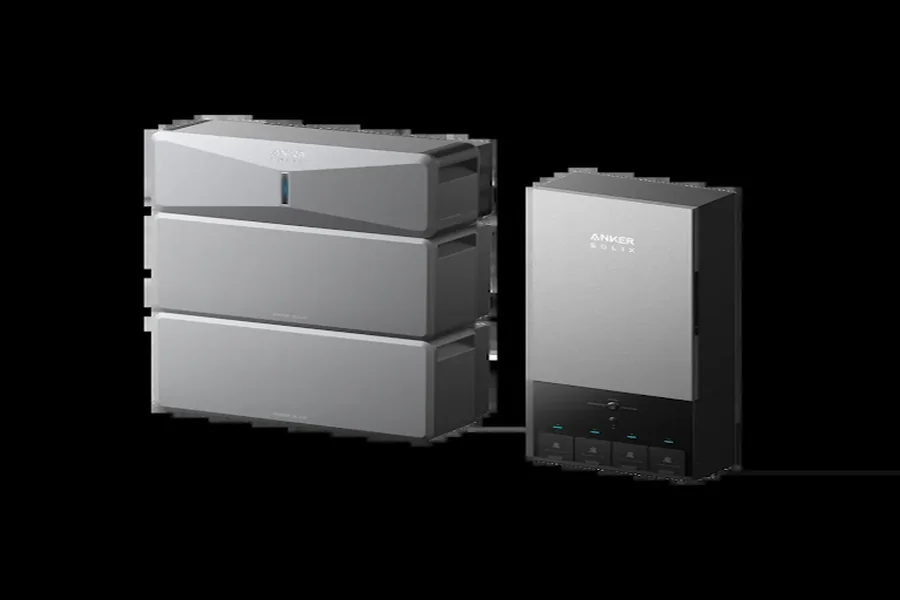
A battery’s energy capacity, measured in kilowatt-hours, indicates how much electricity it stores. Its power rating, measured in kilowatts, indicates how quickly it can deliver that energy. Both influence its ability to support a weak grid. A system with substantial capacity but limited output may not respond adequately to a short, sharp demand peak. Conversely, a high-output battery with little stored energy may provide support only briefly. Engineers should evaluate the local problem first: reducing a household’s evening imports, supporting high-demand equipment or participating in a utility-managed program requires different operating profiles. The Anker SOLIX E10 Whole-Home Backup illustrates this distinction, with 7.68 kW of continuous output and 10 kW of turbo output for up to 90 minutes when configured with two batteries. Its capacity can expand as household requirements change, although grid-support performance depends on the installation and control arrangements.
Coordination Turns Individual Systems Into a Shared Resource
One residential battery changes the electricity flows of one property. A coordinated group can potentially influence demand across an entire feeder. Utilities may use demand-response platforms or virtual power plant programs to schedule charging and discharging around network conditions. Such programs need reliable communications, agreed operating rules and safeguards that preserve household requirements. For example, a utility might request discharge during a summer evening peak while allowing participating homes to retain a minimum backup reserve. The aggregate contribution depends on how many batteries are connected, their available charge and their response at the required time. Without coordination, households may operate in ways that offer limited benefit to the wider network.
Grid Stability Still Depends on Infrastructure
Solar batteries can support specific aspects of grid operation, but they do not replace every network investment. A neighborhood with undersized transformers, damaged conductors or inadequate protection equipment may still require physical upgrades. Utilities must evaluate thermal loading, fault protection, islanding behavior, interconnection rules and power quality before allowing widespread storage participation. Battery systems also need suitable inverters and approved operating modes to provide the intended services. For homeowners, a system such as the Anker SOLIX E10 with its Power Dock offers whole-home backup functionality, including automatic switchover in 20 milliseconds or less. That feature addresses continuity within the home’s electrical system; it should not be confused with independently stabilizing the wider utility grid.
Conclusion
Solar batteries can help relieve local grid pressure by shifting household demand, increasing the use of locally generated solar electricity and supporting voltage management when suitable controls are available. Their wider impact depends on output capability, available energy, coordinated operation and the condition of existing infrastructure. For homeowners, storage can improve energy flexibility and backup readiness. For utilities, coordinated fleets may provide additional tools for managing peaks. The strongest results come when residential storage forms part of a properly planned grid strategy rather than operating as an isolated solution.