
High-Rise Window Cleaning: Why Rope Access Is the Gold Standard
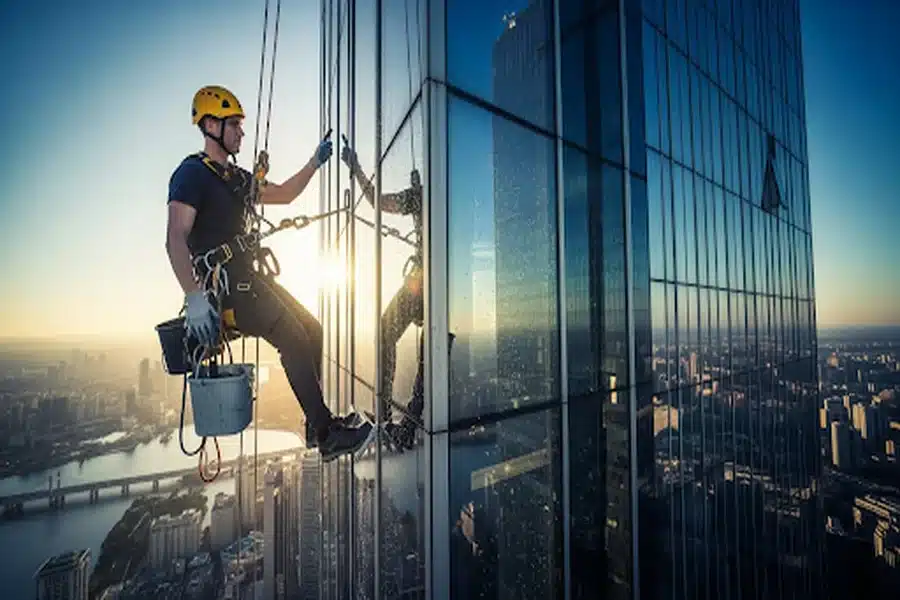
Modern city skylines are filled with tall buildings and wide glass fronts. These surfaces need careful, regular care to keep their look and protect the building.
Why is rope access the best way to keep these windows spotless? It’s a method where trained workers use ropes and harnesses to move up and down buildings.
This approach offers strong safety, fast work, and good value compared to older methods. It makes it possible to clean the hardest-to-reach windows on the tallest buildings, which is why rope access window cleaning is now a key service in busy cities.
Rope access has a long record of success around the world. It works well for many types of buildings-from schools to supertall towers-helping them look great and stay in good shape.
What Is Rope Access Window Cleaning for High-Rise Buildings?
Rope access window cleaning, also called abseil window cleaning, is a method built to handle the special challenges of cleaning tall buildings. Unlike lifts or scaffolding, it relies on trained people and simple gear to move across a building’s outside safely and quickly.
This method is ideal for very high or hard-to-reach windows, so no glass gets missed no matter the design. It combines careful work, safety, and flexibility, setting a new standard for high-rise upkeep.
How Does Rope Access Work for Window Cleaning?
Rope access uses ropes and safety gear to reach and clean windows. Technicians secure themselves to roof anchor points and wear a harness to move up and down the facade. While the sight can look scary, the setup is simple and quick, with safety and control at the center.
The system uses two ropes: a main rope for movement and a backup rope as a fail-safe. This lets workers position themselves exactly where needed for hands-on cleaning and streak-free results. The method is flexible enough for careful work in tight corners and on curved glass, so no area gets skipped.
Who Performs Rope Access Cleaning?
These cleaners are trained and certified specialists, not just general window cleaners. Their training goes well beyond simple rope skills. They use industrial-rated ropes, advanced harnesses, and devices that let them work with both hands while staying safely attached.
Their skill set includes rescue methods, equipment checks, and risk review. This deep training lets them work safely at great heights and move around tricky building features with ease. The job demands good fitness and sharp focus, so each task is done safely and to a high standard.
Why Rope Access Is the Gold Standard in High-Rise Window Cleaning
Rope access has become the top choice for high-rise window cleaning for good reasons. It moves past older methods and brings a clear set of benefits that fit today’s building designs. It’s more than cleaning-it’s a safer, faster, smarter way to do the job.
Its rise comes from handling the special needs of modern towers, which often have complex shapes and great height. Rope access keeps proving its worth on real projects.
What Advantages Does Rope Access Provide Over Other Methods?
A major advantage is safety. Teams follow global rules from groups like the Industrial Rope Access Trade Association (IRATA). They use backup systems, including a second rope and secure anchors, to protect workers. This approach lowers the chance of accidents compared to bulkier options such as scaffolding or suspended platforms.
Rope access is also very flexible. It works on buildings of almost any shape or size, including those with unusual designs or awkward sections. This lets teams reach places that lifts and scaffolding can’t, so the whole facade gets cleaned.
How Does Rope Access Improve Efficiency and Flexibility?
Rope access saves time. With little gear and fast setup, work can start soon after arrival. There’s no long build-up or takedown like with scaffolding. This cuts delays and lets teams move across the facade without fuss.
The speed of rope access means faster project times without losing quality. Workers move up and down quickly and clean many windows sooner. The ability to move around complex shapes and reach tough spots gives a level of flexibility older methods can’t match. It also supports faster maintenance plans, so issues get handled right away.
Why Is Rope Access the Preferred Technique for Complex Architecture?
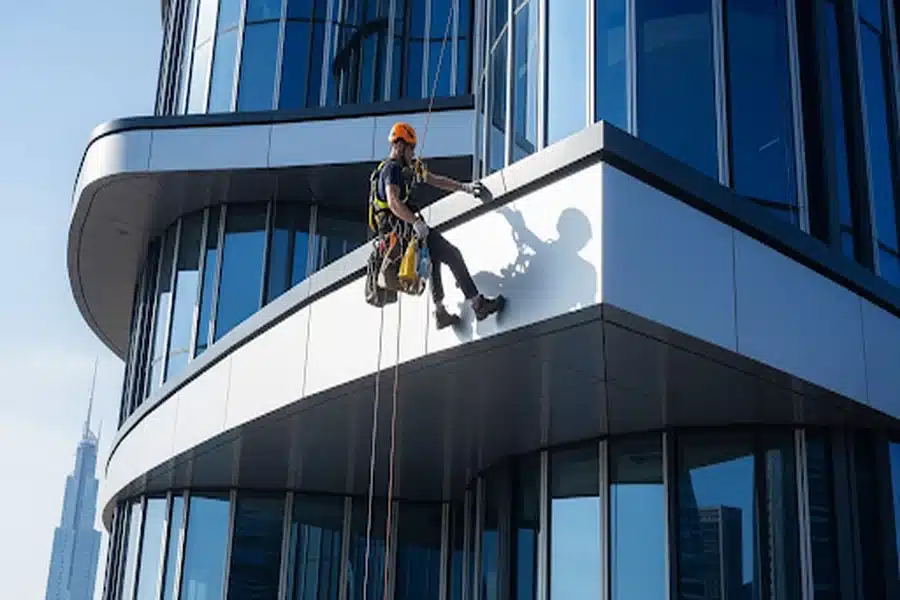
Many modern towers have curves, angles, and overhangs that are hard for traditional systems. Rope access works well here. It lets technicians move around edges, features, and uneven surfaces with ease.
This helps keep these buildings looking sharp. Workers can place themselves exactly where they need to be for detailed, effective cleaning. Rope access gives the precision needed to care for unique facades and keep them in great condition.
Comparison: Rope Access vs. Traditional Methods
Cleaning tall building exteriors safely and on budget depends on the method you choose. Traditional options still have uses, but rope access often outperforms them, especially on today’s tall and complex structures.
Knowing the differences helps owners and managers pick the best and least disruptive option for their needs. The contrast explains why rope access is becoming the industry standard.
How Does Rope Access Differ From Scaffolding and Aerial Platforms?
Scaffolding can work for some jobs, but setup can take weeks or months and needs a lot of ground space. In busy areas, that can be very costly and disruptive. It blocks views and can affect traffic and neighbors.
Aerial platforms (boom lifts, spider lifts) move faster than scaffolding but still have limits. They have height caps, are affected by wind, and need firm ground. They often need many setups for big facades, and their size adds cost and planning headaches. Rope access uses little gear, sets up in hours, and needs no ground structure, giving fast access anywhere on the facade.
| Method | Setup Time | Ground Impact | Height/Reach Limits | Disruption | Best Use |
| Rope Access | Hours | Minimal | Very high, flexible | Low | Tall, complex facades |
| Scaffolding | Weeks-Months | High | Good, but static | High | Long, heavy works |
| Aerial Platforms | Hours-Days | Medium-High | Limited by wind/ground | Medium | Mid-height, open sites |
What Are the Cost Implications of Rope Access?
Traditional methods often need scaffolding, cranes, and long project schedules, which can be very expensive. Rope access keeps costs down.
Because it needs less gear and sets up fast, both direct and indirect costs drop. Jobs finish sooner, so labor costs fall and day-to-day business is less affected. Lower overhead and quick work add up to real savings for owners and managers.
How Does Rope Access Minimize Disruption for Building Occupants?
In busy cities, low disruption matters. Scaffolding can block views, make noise, and require road or parking closures. Rope access is far more discreet. There’s no heavy frame on the ground and no long setup.
Teams work quickly and finish sooner, with little impact on people inside or nearby. That helps businesses keep running smoothly and keeps the building looking clean without the eyesore of large temporary structures.
Safety Standards and Professional Training in Rope Access
Working at height means safety comes first. Rope access window cleaning is built on strong safety rules and deep training, making it one of the safest ways to care for tall buildings. The industry’s focus on worker and public safety is a core part of its gold standard status.
This approach gives both clients and technicians confidence that jobs are handled with care and skill. It proves that speed and value can go hand in hand with safety.
What Safety Protocols Are Followed During Rope Access Work?
Each job starts with a full risk plan that looks closely at the building, weather, and task details. This planning spots hazards and sets clear steps to manage them. A key part is the two-rope system: a main working line and a separate safety line, so one failure cannot cause a fall.
Teams keep an eye on weather the whole time and stop if winds or other conditions make work unsafe. Many jobs use spotters on the ground to watch conditions and keep constant contact with workers. With strong gear and strict rules, the method has an excellent safety record, often with lower injury rates than other building work.
What Training and Certification Do Rope Access Technicians Need?
Rope access technicians complete deep, structured training. Programs from the Industrial Rope Access Trade Association (IRATA) cover rescue skills, equipment checks, and risk planning. IRATA has three levels of training.
Level One is for new workers who clean under the close watch of a Level Three supervisor. Level Two adds advanced methods and rescue. Level Three covers full supervision and responsibility for the job and safety rules. Training includes many hours of hands-on practice and ongoing refreshers, plus knowledge of facade materials and building systems.
What Emergency and Regulatory Measures Support Rope Access Safety?
Beyond personal training, the field follows strong emergency and rule sets. Global standards from groups like IRATA guide equipment use, work steps, and rescue plans.
In an emergency, technicians can self-rescue or help a teammate. Gear is checked often and replaced on set schedules, with tracking to retire items before they wear out. This full system of training, rules, and gear control creates a very safe work setup for high-rise cleaning.
Environmental and Economic Benefits of Rope Access Window Cleaning
Rope access helps with safety and speed, and it also supports greener and cost-smart building care. In a time where both the planet and budgets matter, this method fits modern aims for maintenance.
It keeps tall buildings shining while cutting impact on the environment and saving money.
How Does Rope Access Support Sustainability?
Rope access fits well with green goals. It avoids heavy machines, high fuel use, and large amounts of water and chemicals. It relies on skilled people and light gear, which lowers its carbon footprint.
This method can use about 80% less water and 90% fewer chemicals than older approaches, which helps local ecosystems. Lighter gear also means fewer trips and smaller vehicles. By avoiding big transports, concrete bases, and energy-hungry machines, rope access saves resources and reduces site disturbance.
Why Is Rope Access a Cost-Effective Solution for Building Owners?
For owners and managers, cost matters, and rope access is a smart choice. Fast setup and lean teams keep labor and rental costs low. Setup is done in hours, not weeks, so there are no big bills for scaffolding assembly or lift logistics.
Careful cleaning also helps windows and facades last longer by stopping grime from building up and causing damage. Hiring a skilled rope access team keeps the property looking sharp and protects the investment through regular, efficient upkeep.
Challenges and Limitations of Rope Access in Window Cleaning
Rope access is the top method for high-rise window cleaning, but it has limits. Knowing these helps you pick the right approach for each job. Every method has boundaries, often due to outside factors and the demands of the work.
Smart planning and expert review for each site help pick the safest and most suitable option.
What Are the Main Limitations of Rope Access in High-Rise Settings?
Weather is a major limit. High winds or heavy rain can stop work. Wind speeds can change fast at height, so many companies set strict rules and stop work when it’s unsafe. This can cause delays and add to cost.
The work is also physically demanding. It requires strong fitness and focus, which reduces the pool of qualified workers. Companies invest in training to grow and keep skilled teams. While the human touch gives great precision, it also limits how long and how hard crews can work in one go.
Which Situations Require Alternative Methods?
Some jobs call for other methods. If a building has no suitable anchor points, or they do not meet load needs, added prep may be required, which can make rope access less straightforward.
For long, heavy repair work that needs a stable platform and more space, scaffolding or special lifts may be better. For low floors or easy spots, water-fed poles can be faster and cheaper. The choice depends on a site review, the task, the building’s design, and the weather.
Choosing a Professional Rope Access Window Cleaning Company
Picking the right company affects cleaning quality, safety, and your property’s reputation. Rope access is a specialist field, so careful selection matters. You are trusting a team with your building’s look and people’s safety.
A skilled provider delivers great results and peace of mind by following high safety and work standards.
What Should You Look for in a Rope Access Contractor?
Use these points to guide your choice:
- Proven track record on similar high-rise jobs
- Strong references and a clear project portfolio
- Transparent communication from site review to handover
- Modern, industrial-grade equipment with regular inspections
- Project plans that include site-specific risk reviews and weather plans
- Clear timelines and reporting on progress and outcomes
How Can You Verify Insurance, Certification, and Experience?
Verification is a must. Ask for proof of public liability insurance and workers’ compensation. Check certifications from groups like IRATA or the Society of Professional Rope Access Technicians (SPRAT).
Request copies of each technician’s current certification card and confirm they are valid. Ask how long the company has been in business and for examples of similar projects. Get client testimonials or reference contacts. A professional firm will share documents and proof of safety and skill without delay.
Future Trends in High-Rise Window Cleaning with Rope Access
As cities grow taller and designs get bolder, rope access window cleaning is set to move ahead with new ideas. The field keeps finding ways to improve safety, speed, and sustainability. New tools and methods will keep rope access at the center of care for major buildings.
These trends aim to push progress while keeping the core values of the trade.
What New Technologies Are Shaping the Rope Access Industry?
New tech is helping teams work smarter. Drones are being used for first-look inspections, spotting problem areas fast and safely. They may also help apply cleaning solutions in risky or very hard-to-reach spots, cutting exposure for workers.
Better materials are creating lighter, stronger ropes and gear. New safety systems can monitor ropes and anchors. Augmented reality (AR) may give teams on-site overlays with data, drawings, and steps, helping plan and work with more accuracy. These tools help crews find issues sooner and plan fixes with better detail.
How Is Urban Growth Influencing Demand for Rope Access Services?
As cities build more towers and complex shapes, demand for rope access rises. Tall buildings need safe, flexible, and efficient maintenance methods. Older systems often struggle with height and design limits, so rope access becomes the better fit.
Owners and managers see that rope access offers a good mix of safety, cost control, and flexibility. Low disruption is a big plus in crowded areas. As urban design pushes higher and more complex, the need for skilled rope access teams and new techniques will keep growing, making this method a key part of building care now and in the years ahead.