
Is Crime Really Linked to Unemployment? New Analysis Challenges Old Assumptions
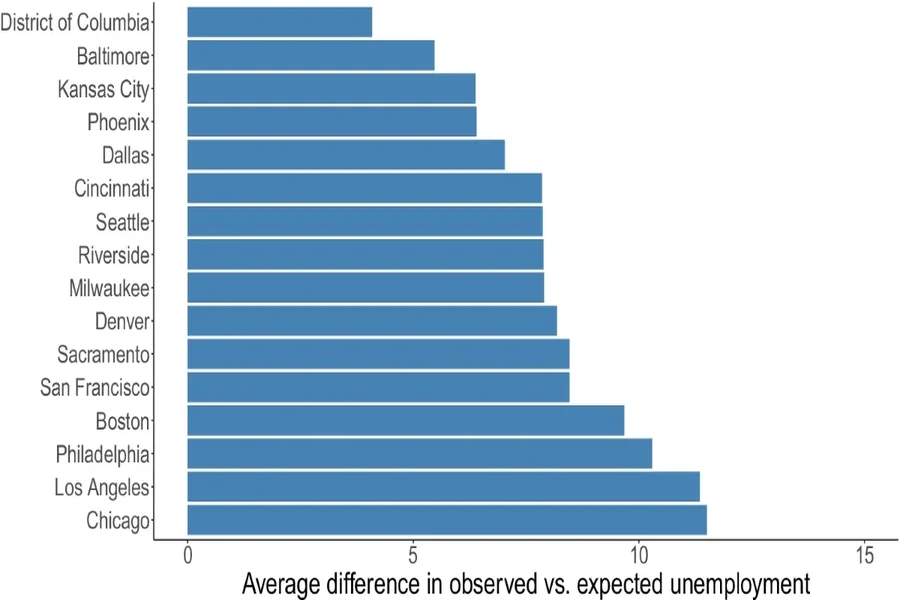
For decades, a familiar stereotype has shaped public debate: when unemployment rises, crime rises too. Yet new research from Suzuki Law suggests the reality may be far more complex. By examining unemployment and crime statistics across the United States from 2019 through 2023, the analysis highlights how Covid-19 and its aftermath disrupted conventional wisdom about jobs, economics, and public safety.
The Covid Shock: Unemployment Soared, But Crime Patterns Shifted Unexpectedly
In 2019, U.S. unemployment stood at just 3.67%, reflecting a strong pre-pandemic economy. But by April 2020, during the height of national lockdowns, unemployment spiked to 14.8%—the highest level since the Great Depression. Nevada finished 2020 with the worst jobless rate at 13.5%.
Conventional wisdom would predict that such a sharp rise in unemployment would be accompanied by a surge in crime. Yet the data told a more complicated story.
- In Nevada, violent and property crime actually declined in 2020, even as homicides rose.
- Nationally, homicides rose nearly 30% in 2020, marking the sharpest one-year increase in FBI records.
- At the same time, property crime fell to its lowest level since 1990, as lockdown restrictions reduced theft and burglary opportunities.
This paradox revealed that during the pandemic, economic distress and criminal activity did not always move in lockstep.
Post-Covid Stabilization: Crime and Employment Disconnect
By 2023, unemployment had returned to near pre-pandemic levels, averaging 3.7%. But crime rates did not follow the same steady decline.
- Violent crime fell 3% in 2023, with homicides dropping 12%.
- Motor vehicle thefts increased 13% between 2020 and 2023.
- Property crime rebounded in many states, even as unemployment improved.
California demonstrates this disconnect clearly. The state’s unemployment rate fell from 10.1% in 2020 to 4.7% in 2023. Yet by 2023, California ranked 6th in violent crime and entered the top 10 for property crime—two categories where it had not appeared during 2020.
States With the Highest Crime Rates
Crime remained concentrated in certain states, regardless of employment trends.
- Violent crime:
- 2020: Alaska (837.8 per 100k), New Mexico (778.2), Tennessee (672.7)
- 2023: New Mexico (749.3), Alaska (726.3), Tennessee (628.2)
- Property crime:
- 2023: New Mexico and Washington led the nation, each recording more than 2,800 incidents per 100,000 residents.
Washington offers another example of complexity. Unemployment there fell from 8.5% in 2020 to 4.2% in 2023. Yet violent crime rose 20%, and property crime consistently outpaced national averages.
Long-Term Crime Shifts
Looking beyond the pandemic years, state-level data reveals striking shifts:
- States with major violent crime increases (2012–2022):
- South Dakota: +188%
- Montana: +125%
- New Mexico: +120%
- States with the biggest declines since the 1990s:
- Florida: –78.1% (1991–2022)
- Illinois: –72.4%
- New Jersey: –68.0%
- California: –54.2%
These findings suggest long-term structural shifts in crime trends, with some states experiencing decades-long improvements and others struggling with persistent increases.
Crime Categories Driving Concern
Even as overall violent crime numbers fell in 2023, specific categories spiked, undermining any simple connection between jobs and crime.
- Car thefts: California led with 208,668 stolen vehicles, followed by Texas (115,013) and Florida (46,213).
- Burglaries: New Mexico recorded the highest burglary rate at 604 per 100,000 residents, followed by Washington (563) and Louisiana (497.8).
This data underscores that certain crime categories can flourish even in periods of economic recovery.
The Bigger Picture: No Simple Causation
Suzuki Law’s research concludes that while short-term correlations sometimes emerge—particularly during the Covid-19 era—there is no definitive nationwide link between unemployment and crime.
Economic downturns don’t always fuel property crime, and recoveries don’t guarantee safer streets. Instead, the evidence suggests that crime is shaped by a complex interplay of factors including public health emergencies, local law enforcement strategies, and regional social conditions.
As the study makes clear, policymakers and the public alike should be cautious about oversimplified narratives. Addressing crime requires acknowledging its many causes, not relying on old assumptions about unemployment alone.