
Designer Lighting Options: Let’s Light Your Space the Right
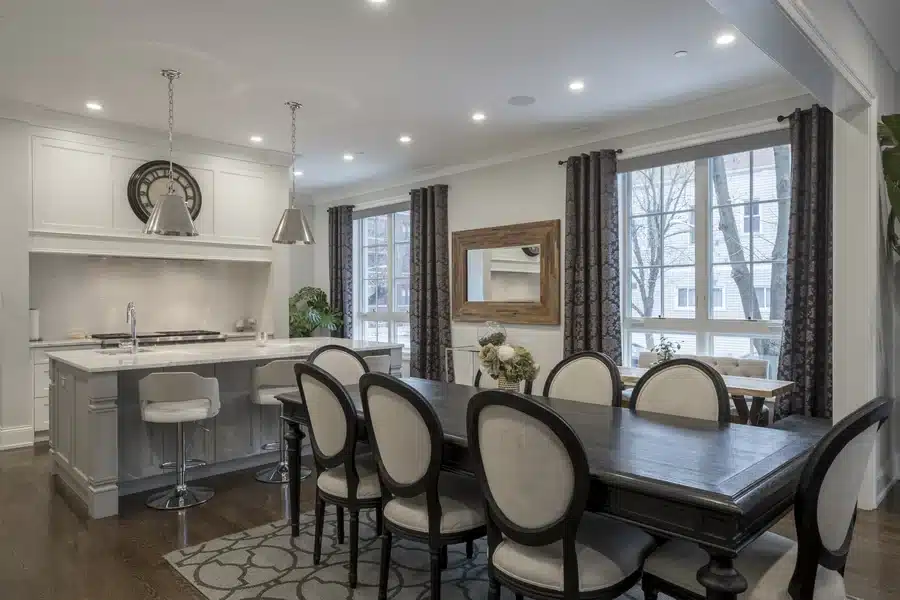
Want to enhance the aesthetic and utility of any space? You need to create a well-balanced and functional lighting scheme. If you’re wondering what designer lighting options will work wonders, no need to look elsewhere. Here’s a breakdown of five designer lighting options, along with some key principles to ensure your space is well-lit. Let’s continue to read on…
Designer Lighting Options by Room
| Room | Ambient Options | Task Options | Accent Options |
| Living Room | Dimmable chandeliers, flush mounts, floor lamps, wall sconces | Table lamps for reading nooks, adjustable floor lamps | Picture lights for artwork, LED strips in shelving, uplighting for architectural details |
| Kitchen | Recessed lighting, globe fixtures | Under-cabinet LED strips, pendant lights over an island | Backlit shelving or toe-kick lighting for islands |
| Dining Room | Statement chandeliers or pendant lights over the table | (Focus is more on ambient and accent lighting) | Wall sconces flanking a credenza, lighting inside a china cabinet |
| Bedroom | Soft, warm ceiling lights (on dimmers), wall-mounted lights | Bedside table lamps or adjustable sconces for reading | Backlighting behind a headboard or under the bed |
| Bathroom | Diffused ceiling lights or flush mounts | Sconces at eye level on either side of the mirror for even illumination | Step lights, LED strips behind the mirror or under vanities
|
Key Principles for “Lighting the Right” Space
Layer Your Lighting
Use a multi-dimensional lighting strategy to add ambient, task, and accent lighting. The primary source of lighting is ambient lighting, which provides the space with a general glow. Specific work areas, such as reading nooks or kitchen countertops, should be illuminated by task lighting to enhance visibility and productivity. However, architectural elements or artwork need accent lighting to give depth and interest to the environment.
Match Light to Function
Consider how the lighting design is tailored to the purpose of each space. Bright and focused lighting is suitable for work environments such as offices and kitchen counters. On the contrary, diffused lighting is used to create a warm atmosphere in living and dining rooms. Adjusting your lighting according to the room’s purpose will enhance its functionality and ambiance.
Mind the Color Temperature
Take note of the temperature of the light sources and their colouration, as this significantly affects the mood of a room. Warmer temperatures (approximately 2700K to 3000K) evoke a sense of comfort and intimacy, making them suitable for living spaces. Conversely, lower temperatures (4000K to 5000K) promote alertness and hence are ideal for offices and other work-oriented locations.
Scale and Proportion
Choose fixtures that are suitable for both the room’s dimensions and proportions. Dramatic fixtures are ideal for large spaces, whereas smaller, more low-key fixtures are perfect for personal spaces. A balance between room and fixture size determines a coherent design.
Install Dimmers and Controls
Install dimmer switches and smart controls to provide light adjustments during the day. Dimmers are not only able to save energy, but also create the ambiance befitting the time of day or the mood you want. This makes them a flexible form of lighting that can suit many different purposes.
Maximize Natural Light
Incorporate windows, skylights, or reflective surfaces strategically to maximize the benefits of natural light. Don’t forget to position mirrors opposite windows. This can amplify natural light, creating a brighter and more inviting atmosphere. The best part? This will reduce the need for artificial light during daylight hours.