
The Right Custom Prosthetic Helps You Go Further Than Expected
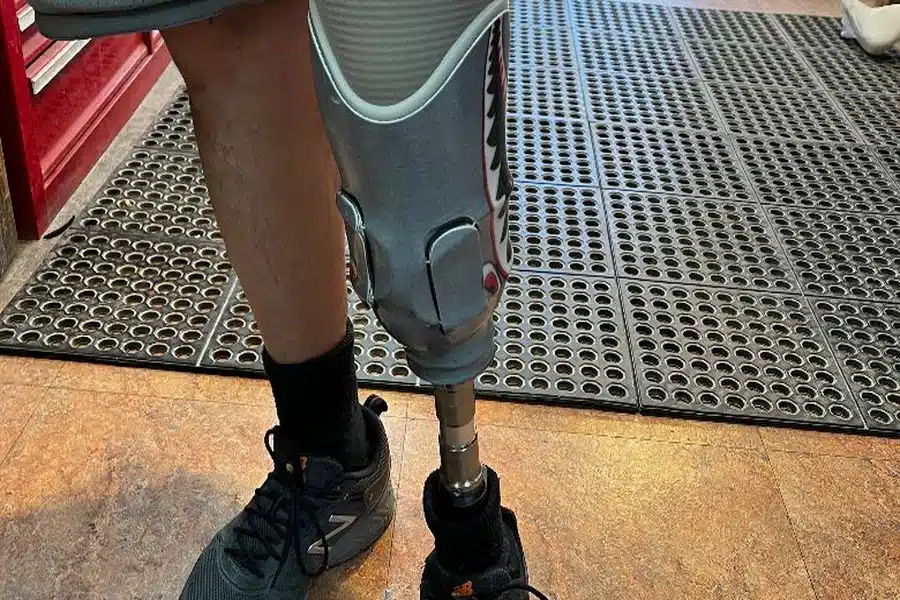
Limb loss doesn’t follow a single script. The medical circumstances, the level of amputation, the person’s age and activity level, the goals they hold for their life after surgery — these variables produce outcomes that look radically different from one patient to the next. That variability is one of the most important things to understand going into a prosthetic evaluation, because it directly determines how much the quality of the clinical guidance you receive will affect your actual recovery.
The prosthetics field has grown in sophistication to the point where almost any amputation level, from a partial digit to a full shoulder disarticulation, can be addressed with functional devices. But functional and optimal are not the same thing. The difference between a device that is technically adequate and one that genuinely fits a person’s life — their work, their physical activity, their priorities — is often the difference between a prosthetic that gets worn every day and one that ends up unused.
This piece focuses on the decisions that shape prosthetic selection from the recovery period through longer-term device use, with particular attention to higher-level amputations, the demands of sport and physical activity, and the role of customization in producing outcomes that hold up over time.
High-Level Amputations: Where the Clinical Stakes Rise
Higher-level amputations — those at or above the shoulder — represent the most complex end of the upper limb prosthetics spectrum. The shoulder disarticulation removes the arm at the glenohumeral joint, eliminating native shoulder function entirely. Forequarter amputations go further, removing the clavicle and scapula as well. At both levels, the user has no residual limb below the shoulder girdle to provide mechanical leverage, which fundamentally changes the control system options available.
A shoulder disarticulation prosthesis is one of the most technically demanding devices in upper limb prosthetics. Traditional body-powered systems are limited in this population because the absence of a residual limb removes the leverage needed to operate a cable harness effectively. Modern solutions increasingly rely on myoelectric control — using remaining chest and shoulder muscles to generate control signals — or on externally powered shoulder joints that provide powered abduction and flexion. Hybrid configurations that combine powered shoulder joints with body-powered or myoelectric distal components are also used in clinical practice.
The functional goals for shoulder-level users are necessarily different from those at lower levels, and the evaluation process should account for this from the start. Many users find that lightweight partial solutions — a shoulder cap that restores visual symmetry, for instance — provide meaningful daily benefit even when full prosthetic arm function is not the primary goal. A prosthetist with genuine experience at this level will present the full range of options, including the possibility that a non-functional cosmetic solution may be the right starting point.
Athletic Prosthetics and the Return to Physical Activity
For amputees who place a high value on physical activity — whether competitive sport, recreational fitness, or demanding outdoor activity — prosthetic selection becomes a question of biomechanics as much as function. The device that handles everyday tasks well is rarely the optimal device for sustained physical exertion, and planning for that difference from the beginning of the prosthetic process saves considerable time and frustration.
The field of adaptive athletics has driven substantial innovation in prosthetic design over the past two decades. Most of running prosthetics for below-knee users use carbon fiber blades designed to store elastic energy during stance and release it during push-off — a mechanical analog to the spring function of the human ankle. The blade geometry, stiffness, and length are tuned to the user’s body weight, gait pattern, and target pace. Getting the specifications right requires clinical experience with gait analysis in this population, not simply selecting a blade from a product catalogue.
Upper limb amputees returning to sport have access to a growing range of activity-specific terminal devices and attachment systems — climbing hooks, swim paddles, grip tools for cycling, and configurations for racket sports, among others. These devices are not interchangeable with everyday prosthetics; they’re built for specific mechanical demands, and they often represent a separate device investment alongside a user’s primary functional prosthetic.
The clinical conversation about sport and activity goals should happen early, ideally during the initial prosthetic evaluation. The care team needs to understand those goals before making initial recommendations, because the decisions made at that stage — socket design, component selection, training focus — all affect how efficiently a user can transition into activity-specific use.
The Case for Custom Fabrication
Off-the-shelf prosthetic components have a place in the prosthetics ecosystem — they provide accessible entry points, support rapid replacement in emergencies, and serve well in lower-demand clinical situations. But for users with active lifestyles, unusual residual limb geometries, demanding work environments, or complex functional goals, the limitations of standard components become apparent quickly.
Well-designed custom prosthetics address the fit requirements that stock solutions can’t meet. The socket — the interface between the residual limb and the prosthetic structure — is almost always fabricated custom, because residual limb geometry is never standard. But customization extends beyond the socket. Pylons can be modified for specific weight-bearing requirements. Terminal devices can be adapted for specific work tasks. Carbon fiber structures can be engineered to specific stiffness profiles for running or other athletic use.
The practical case for custom fabrication rests on outcomes data: properly fitted, custom-fabricated prosthetics have higher usage rates, lower abandonment rates, and better long-term function than stock alternatives. The investment is real, and insurance coverage for custom work varies considerably. But the total cost of a poorly fitting device — including the time spent in adjustments, the occupational therapy hours lost to compensatory retraining, and the potential cost of abandonment — typically exceeds the initial savings of a lower-cost solution.
Adapting to Different Environments and Use Contexts
Few prosthetic users live in a single environment or engage in a single type of activity. A person whose work involves a desk environment, whose weekends involve hiking, and whose home life involves cooking and childcare needs a device — or a combination of devices — that can serve all three contexts adequately. That’s a more demanding specification than most single-device solutions can meet.
The practical response is to build a prosthetic toolkit over time, starting with the device or devices that address the highest-priority functional needs and adding activity-specific options as resources and clinical experience allow. Waterproof configurations for swimming and showering, protective covers for dusty or wet work environments, and activity-specific terminal devices for sport are common additions that come later in the process.
The socket, however, is the element that needs to serve across all contexts. A socket that fits well only in a narrow range of conditions — specific ambient temperatures, specific activity levels, specific clothing — is a chronic source of frustration. Ensuring the socket is designed for real-world use across the range of environments the person actually occupies is one of the most important things a prosthetist does.
Making Informed Decisions Over Time
Prosthetic selection is iterative, not definitive. The device that suits a person’s needs in the first year post-amputation may not be the right device at year five. Physical activity levels change. Work situations change. Residual limb volume stabilizes over time, sometimes allowing for socket modifications that weren’t possible earlier. New technologies come to market that offer genuine improvements over what was available previously.
Building a prosthetic care relationship that supports ongoing review — rather than treating device selection as a one-time event — is part of what distinguishes a high-quality clinic from an adequate one. Scheduled follow-up appointments, clear communication about when to request adjustments, and a prosthetist who tracks component wear and proactively proposes updates are all markers of a practice oriented toward long-term outcomes rather than throughput.
Finding the Right Team
The search for the right prosthetics provider benefits from the same due diligence applied to any specialized medical decision. Look for clinics with documented upper limb case experience if that’s your level of loss. Ask about the prosthetist’s ongoing training and component certification. Request references from other patients with similar amputation levels if possible. Understand the follow-up model before committing.
The prosthetics process is long. The relationship between a user and their care team is one of the most consequential clinical relationships in that person’s life. The investment of time in finding the right team at the beginning is repaid many times over in the quality of the outcomes that follow.