
Short-Term Vs. Long-Term Stock Screening Strategies Explained
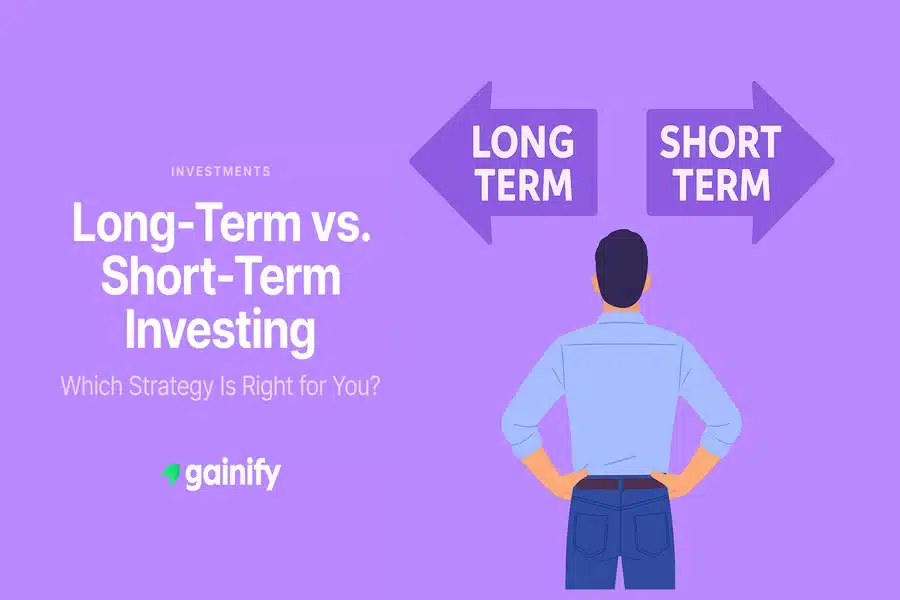
The same screener can surface completely different stocks depending on what you’re optimizing for. A filter set built around quick momentum plays will miss the steady compounders. One designed for decade-long holds will ignore the setups that move next week.
Stock screening isn’t one-size-fits-all. The filters, metrics, and logic behind a short-term screen look almost nothing like what drives a long-term one. Understanding where those differences live is the first step toward screens that actually serve your strategy.
What Short-Term Screening Prioritizes (And What It Deliberately Ignores)
Short-term screens care about what’s happening right now. Not what the company earned last year. Not where the business will be in five years. What the price is doing this week.
That means filters tilt heavily toward price behavior and momentum. Relative strength, how a stock performs versus the broader market over recent weeks, becomes a primary filter. Stocks breaking above consolidation on expanding participation get flagged. Earnings surprise data matters, especially right after a report.
Short-term stock screening also leans on volatility. A stock that barely moves isn’t useful for a two-week time horizon. Average true range and recent price swings help identify names with enough movement to justify the position.
What gets left out? Debt structure, dividend history, and multi-year revenue trends. Meaningful metrics are not just for someone exiting inside a month.
How Long-Term Screening Shifts the Entire Filter Logic
Long-term screens flip the priority stack. Price momentum drops near the bottom. Business quality rises to the top.
Here, filters focus on durability. Has the company expanded earnings consistently over five or more years? Are margins stable across cycles? Can the balance sheet handle a downturn without stress?
Valuation plays a much larger role in long-term stock screening. A momentum trader doesn’t care whether a stock trades at 30 or 15 times earnings; the trade is about direction. A long-term investor cares enormously because entry valuation directly shapes the return profile across years.
Dividend filters appear here, too. Not just yield, but payout sustainability and growth trajectory. A company raising its dividend annually for 15 consecutive years signals management discipline that no short-term metric can replicate.
Where the Two Approaches Create Contradictory Signals
This is where it gets interesting. The same stock can look like a buy on one screen and a clear avoid on another, and both can be correct.
A company reporting a massive earnings beat might surge 12% in a single week. A short-term screen flags it immediately. But a long-term value screen rejects it because the post-surge valuation now exceeds what fundamentals justify.
The reverse happens too. A quality business sitting at a steep discount after a broad sector selloff ranks highly on a long-term screen. But if the chart shows continued selling with no technical stabilization, a short-term screen keeps it off the list entirely.
Neither is wrong. They’re answering different questions. The mistake is mixing frameworks, applying short-term impatience to a long-term thesis, or holding a momentum trade because the fundamentals “look good.”
| Dimension | Short-Term Screen | Long-Term Screen |
| Primary focus | Price momentum, volatility | Business quality, earnings durability |
| Key metrics | Relative strength, ATR, earnings surprise | PE, PEG, free cash flow, payout ratio |
| Valuation weight | Low direction matters more | High entry price shapes returns |
| Holding period | Days to weeks | Years to decades |
| Exit trigger | Technical breakdown or target hit | Fundamental thesis deterioration |
Deciding Which Approach Fits Your Actual Situation
The honest answer for most retail investors is that long-term screening aligns better with how they actually invest. They have jobs. They don’t watch markets intraday. Their accounts are retirement-oriented.
Short-term stock screening requires active monitoring and a risk framework that limits losses fast. Most people who attempt it without those systems underperform simple buy-and-hold.
Some investors run both. A core portfolio built through long-term screens for stability. A smaller allocation of 10 to 20% managed with short-term criteria. The separation matters. Once you apply momentum logic to long-term positions or fundamental patience to trades, both edges collapse.
Stock screening works when filters match the strategy. When they don’t, candidates look right on paper but fail because they were selected for a time horizon the investor never intended to follow.
Conclusion
Short-term and long-term stock screening solve different problems using different metrics, different logic, and different definitions of what makes a stock worth owning. Treating them as interchangeable is the fastest way to build a portfolio that contradicts itself.
The clearest path forward is choosing your time horizon first and building every filter around it or running separate screens for separate purposes and never blending the outputs without understanding why each candidate appeared on the list it did.