
Digital Growth in Poland Advertising: Opportunities for Global Brands
Is Poland a good place for global brands to grow through digital ads? Yes. Poland has a strong economy and a fast-growing online market, which makes it a smart choice for international companies. Digital ad spending is rising quickly, people are spending more time online, and many agencies in Poland run modern campaigns.
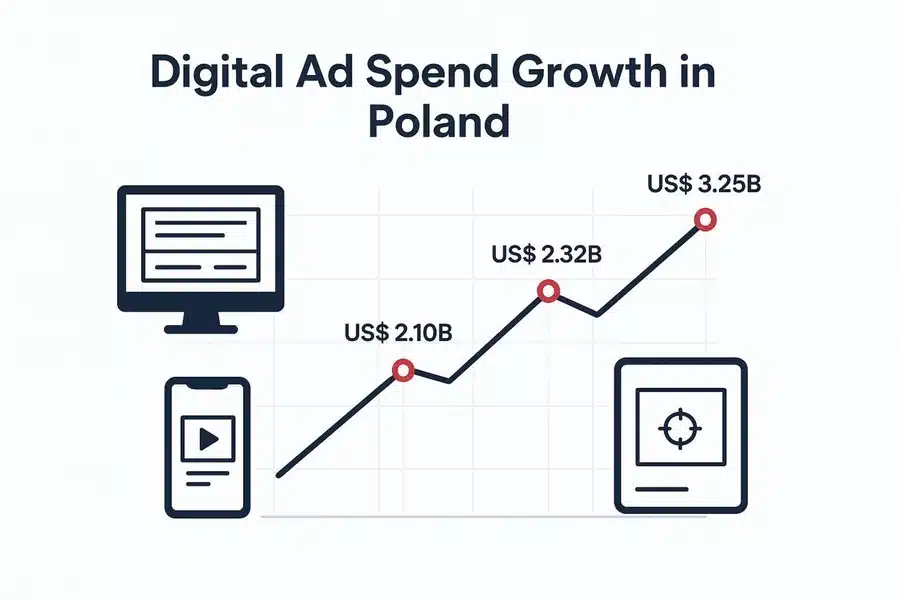
To get real results, brands need to understand how Poland advertising works and what makes it different. Poland’s full advertising market is worth about $3.7 billion, and digital ad spend alone is expected to reach US$2.32 billion by the end of 2026, with a strong yearly growth rate of 10.1%.
This growth is not a short-term spike. From 2020 to 2025, Poland’s digital ad spend grew at a compound annual growth rate (CAGR) of 8.2%. This growth is expected to speed up, with a forecast CAGR of 11.9% from 2026 to 2029. By the end of 2029, the market may rise from US$2.10 billion in 2025 to around US$3.25 billion. These numbers show one clear thing: Poland is a strong market for global brands that want to invest in digital advertising.
What Drives Digital Growth in Poland’s Advertising Sector?
Key Market Fundamentals and Economic Factors
Poland’s economy is a main reason its digital advertising market is growing. It is the sixth-largest economy in the European Union and often shows steady growth, expected to be about 3-4% per year. This leads to higher wages, lower unemployment, and more consumer spending. Poland’s middle class is also growing. Many people now have more money and are more selective, which raises demand for higher-quality products and new services.
A stable economy often leads companies to spend more on marketing. Total ad spending in Poland has passed €3.5 billion, and digital ads make up about 74% of that total. This shows how strongly Polish companies now depend on digital channels as their main way to reach customers.
Internet Penetration and Digital Technology Adoption
Poland’s move to online services and digital tools has been very fast. It has one of the quickest-growing digital economies in Europe, and the World Bank expects the digital sector to make up about 7% of Poland’s GDP. This growth is closely linked to internet use, which is expected to reach 92%, or around 35 million people who use online content regularly.
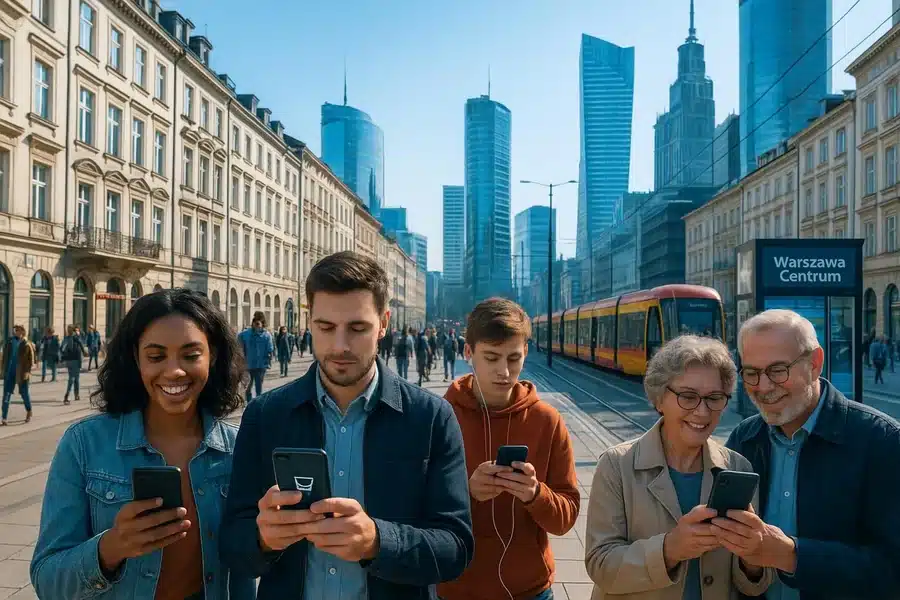
Better infrastructure and higher smartphone use also support this trend. About 80% of the population uses smartphones. With so many people connected, digital campaigns can reach large audiences and build real engagement on online platforms.
Rise of E-commerce and Its Advertising Impact
E-commerce in Poland is growing very quickly and is a major reason digital advertising is expanding. The market is expected to pass PLN 100 billion, with about 20% year-on-year growth. Around 70% of Polish consumers shop online regularly, which shows that online buying has become normal for most people.
Retail is the clear leader in digital ad spending because brands want to reach shoppers across online stores and multiple channels. Retail takes the biggest share of digital ad contacts and investment. Other industries also invest heavily. For example, automotive brands use digital marketing to promote new models and features, showing how e-commerce habits influence ad strategy across many sectors.
Changing Consumer Behavior and Media Preferences
Polish consumers are changing. Many people keep traditional values but also have strong digital habits. They are more interested in ads that feel personal and interactive, and they expect brands to be honest and clear. This is especially true for younger users, who often prefer brands that match their values, such as sustainability and social responsibility.
Because of this, the market is moving more into data-led advertising. Agencies use analytics to build focused campaigns for specific groups. The goal is less about reaching everyone and more about getting meaningful engagement and long-term customer relationships.
What Are the Main Opportunities for Global Brands in Polish Digital Advertising?
Access to a Dynamic and Growing Economy
Poland gives global brands a strong growth story. As the EU’s sixth-largest economy, its steady 3-4% annual growth suggests a market that keeps expanding. More people have extra money to spend, and they are open to new brands and products. The growing middle class is especially attractive because it often looks for new experiences and modern solutions.
With close to 40 million people, Poland offers a large customer base. It can also work well as a test market. Brands can try new products or marketing ideas, learn what works, and then use those lessons across other European markets.
Cost-Effectiveness Compared to Western European Markets
Poland is often cheaper than Western Europe for advertising and market entry. Media prices are usually lower, and the market is less expensive overall. This means brands can often get stronger reach with the same budget, improving return on investment (ROI).
In many cases, Click-Through Rates (CTRs) and Cost Per Click (CPC) can be lower than in Western Europe. Also, there is strong competition between local agencies, which helps clients get good creative and strategy work at fair prices. This mix of quality and cost makes Poland a smart market for international brands that want results without paying top Western rates.
Multilingual Targeting and Local Market Adaptation
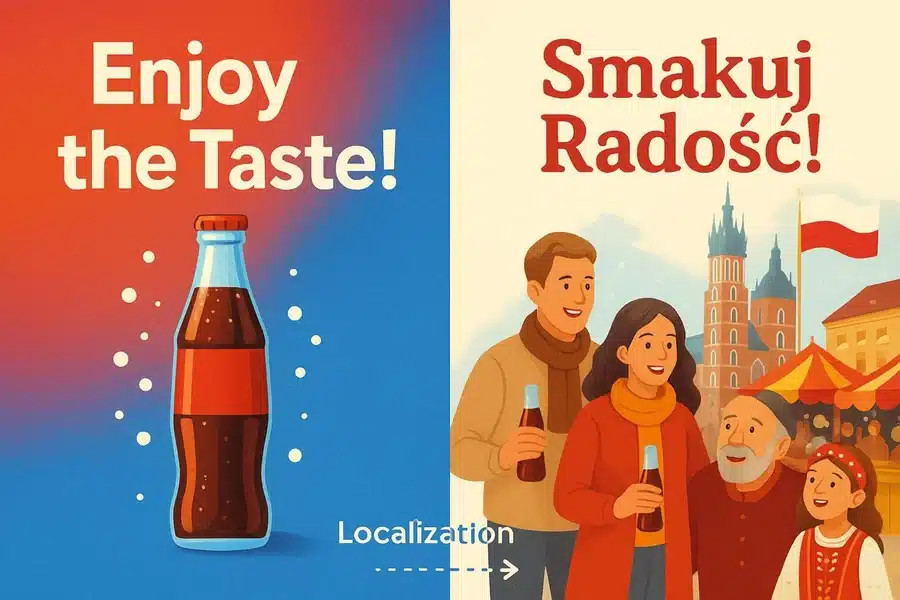
Polish is the main language for about 98% of the population, but good communication takes more than translation. Local agencies are strong at localization, meaning they adjust campaigns so they fit Polish culture. This includes language, common phrases, images, and local seasons or traditions, so the message feels natural.
Local teams also help with local SEO, including Polish keyword research and advice on whether to use a .pl domain or a .com site with strong Polish content. They also understand social and cultural details and can help brands avoid messages that may upset or exclude parts of the audience. This helps build trust faster.
Leverage of Central and Eastern European Consumer Insights
Many Polish agencies understand Central and Eastern European (CEE) audiences very well. They know what matters to consumers, such as tradition, trust, authenticity, and product quality. This knowledge is useful for brands that want to enter Poland and possibly grow into nearby CEE markets.
Working with a local agency helps international brands sound real and avoid cultural mistakes. Poland can also be a good place to test bold ideas. If something does not work, the impact stays mostly local because of the language, which lets brands experiment and improve before scaling up.
How Are Advertising Formats Evolving in Poland?
Display and Rich Media Advertising
Display ads, including standard banners and interactive rich media, still work well in Poland. These visual formats appear across websites and platforms to build brand awareness and drive quick engagement. Display has also grown again on Meta platforms like Facebook, Instagram, and Messenger, helped by better AI tools.
AI makes it easier to run well-targeted display campaigns and improve them based on results. Brands can reach smaller audience groups more accurately, which often leads to better performance and stronger ROI.
Search Engine Marketing and Paid Search
Search Engine Marketing (SEM), including paid search, remains one of the most important digital channels in Poland. Brands bid on keywords to reach users who are actively looking for products or services. Google is the key platform here and holds a 27% share of online advertising (not counting online video).
Polish agencies use strong SEM methods, combining careful keyword research with improved ad copy so brands show up clearly in search results. Since many people in Poland use the internet often and know how to search, paid search is a major tool for leads and sales.
Video Advertising: In-stream, Out-stream, Connected TV
Video ads are growing very fast in Poland and now take the biggest share of spending. Online video investments rose by more than 22% in 2024, and total video ad spending is expected to reach PLN 1.5 billion. Platforms like YouTube and TikTok drive this growth, as many Polish users use them for entertainment and also for search.
Video includes in-stream ads (pre-roll, mid-roll, post-roll), out-stream ads (shown outside video players), and Connected TV (CTV) ads on services such as Max and Netflix. Spending on streaming video ads rose by more than 9% in 2024, bringing in younger, highly engaged audiences. Brands like Lidl show how strong cross-media video reach can be in Poland.
Social Media and Influencer Marketing
Poland has over 25 million active social media users, which creates a large space for targeted ads. Social media ad spend passed €560 million in 2022, and by 2025, more than 75% of Poles are expected to use social networks. Facebook (over 21 million monthly users) and Instagram (over 12 million) remain key platforms for awareness and community building.
TikTok is also growing fast, especially with younger people, and gives brands a creative way to reach Gen Z and millennials. Influencer marketing is common too. Popular creators on YouTube, Instagram, and TikTok work with brands to build trust. Many agencies help by choosing the right creators and managing the partnerships, often using local humor and emotion, especially in fashion, lifestyle, and tech.
Programmatic and Native Advertising
Programmatic buying is now normal in Poland. About 79% of digital ad revenue is expected to go through programmatic channels by 2026. This automated buying makes it easier to target specific audiences and scale campaigns across many publishers, using platforms like Google Ad Manager and Rubicon Project. Programmatic mobile is especially important, as it supports dynamic creatives that match different steps of the buyer journey.
Native ads are also growing. These ads fit into the style of the website and often appear as sponsored articles or paid content that looks like regular editorial work. Because they feel less intrusive, they can drive better engagement than standard ad formats.
Growth of Mobile, Email, and Affiliate Campaigns
Mobile advertising in Poland is growing quickly. The number of mobile users is expected to reach about 30 million, and mobile ad spend is expected to go beyond PLN 2.5 billion, a 25% rise from the year before. More people watch videos and use social media on their phones, so brands are putting more budget into mobile-first campaigns.
Email marketing also remains important, as it allows direct and personal contact with people who opt in. Affiliate marketing is another strong channel, using partner networks to generate sales and leads with performance-based payments. Together, these channels support a wide digital ecosystem that reaches consumers in many ways.
Who Are the Key Players in Poland’s Digital Advertising Market?
International Platforms: Google, Meta, Criteo
International platforms have a major impact on Poland’s digital advertising market. Google Poland Sp. z o.o., based in Warsaw since 2006, remains a leader in search ads and display networks. Meta Platforms Poland, operating in Warsaw since 2010, is central for Facebook and Instagram campaigns and social engagement.
Other global ad tech companies also play a big role, including Adform Sp. z o.o. (founded 2002 in Warsaw) and Criteo Polska Sp. z o.o. (founded 2013 in Warsaw). They support programmatic buying and retargeting. These companies provide the tools and reach that many digital campaigns depend on.
Leading Local Agencies and Ad Tech Firms
Poland also has strong local agencies and ad tech companies. Key names include K2 Precise (part of K2 Group S.A.), GroupM Poland Sp. z o.o., Publicis Groupe Poland Sp. z o.o., Havas Media Group Poland, Zenith Media Polska Sp. z o.o., MediaCom Warszawa Sp. z o.o., and OMD Poland Sp. z o.o. Many of these are part of international agency networks and also act as regional hubs, which shows the high level of skill in Poland.
For example, Leo Burnett Warsaw works as a hub for P&G Home Care. Poland also has specialized companies such as BE Media, which offers solutions in out-of-home (OOH), digital out-of-home (DOOH), city transport, and radio advertising, using strong local market knowledge for international campaigns.
Major Media Portals and E-commerce Platforms
Large Polish portals and e-commerce sites also shape the ad market. Allegro.pl Sp. z o.o., founded in 1999 and based in Warsaw, is Poland’s largest e-commerce platform and an important ad channel. Big online portals such as Wirtualna Polska Holding S.A. (WP.pl) and Onet.pl (part of Ringier Axel Springer Polska Sp. z o.o.) reach huge audiences and offer formats like display, sponsored content, and video.
Along with global platforms like YouTube, TikTok, Max, and Netflix, these sites make up the main digital spaces where Polish users spend time online. Their scale makes them key partners for brands that want broad reach.
Competitive Analysis and Market Share Dynamics
Poland’s digital ad market is active and competitive, with both international giants and many local agencies. Competition often helps clients because it pushes agencies to offer good quality at fair prices. Google and Meta lead certain areas, but local firms and ad tech companies also bring new ideas and strong service. In this environment, BE Media is one of the local agencies helping brands plan visibility across high-traffic advertising spaces.
Warsaw, Kraków, and Wrocław are key cities for the industry. Warsaw is the main hub for tech and innovation. Kraków and Wrocław are growing fast due to strong tech scenes and skilled workers. Retail, powered by e-commerce, keeps the largest share of digital ad contacts and spending, which affects how brands compete.
What Services Do Leading Polish Agencies Offer to Global Brands?
Strategic Campaign Planning and Localization
Top Polish agencies do more than run ads. They help global brands plan strategy, define a clear value proposition (USP), and build a message that connects with the target audience. They also support brand identity work, helping keep a consistent style across channels, including logos, colors, typography, and other visual elements.
Localization is one of their biggest strengths and goes beyond translation. Agencies adjust wording, phrases, images, and local customs so the campaign feels Polish. They also support local SEO with Polish keyword research and advice on domain choices. Many agencies also adapt campaigns to different regions, from big cities like Warsaw to smaller towns and rural areas.
Performance Marketing and ROI Measurement
Polish agencies often focus strongly on performance and clear ROI. Many plans include SEO, social media, email, and programmatic ads. Agencies use analytics and data-led planning to build focused campaigns so budgets are used well.
They also track results closely and make quick changes when customer behavior or the market shifts. Common practices include A/B testing on Polish-language ads, UTM tracking, and setting conversion goals that match local behavior. Many agencies also use tech for highly personalized communication for small groups, sometimes called “mass one-to-one marketing,” to drive stronger engagement and conversions.
Omnichannel and Programmatic Solutions
Many Polish agencies build omnichannel plans that connect online and offline channels into one experience. A brand might run digital campaigns while also using TV (Polsat, TVN, TVP1) or radio (RMF FM, Radio ZET) to reach more people. Offline events like trade fairs may also be promoted online to keep attention consistent.
Programmatic is also widely used, with about 79% of digital ad revenue expected to go through programmatic channels by 2026. Agencies use tools like Google Ad Manager and Rubicon Project to scale campaigns and target audiences more precisely. Programmatic mobile ads matter a lot because they can deliver dynamic creatives that match each step of the customer path, from awareness to purchase.
Compliance with Local Regulations and GDPR
Handling rules and legal requirements is a key service. Polish agencies know local ad laws, mainly based on the Act on Combating Unfair Competition. This law bans false or misleading ads and requires messages to be truthful and safe. Some categories (alcohol, tobacco, medicine) have even stricter rules and need extra care.
Agencies also keep campaigns compliant with GDPR and the ePrivacy directive, which are strongly enforced in Poland. This includes proper consent tools like cookie banners and correct data handling. With third-party cookies being removed by late 2024, strong agencies already work on new targeting options like contextual targeting and server-side tracking. They also factor in the Digital Services Act (active from 2024), which requires more transparency about ads and data use.
What Innovations Are Shaping Digital Advertising in Poland?
Integration of Artificial Intelligence and Automation
AI is changing digital advertising in Poland quickly. Many agencies use AI to improve targeting and campaign results, which can raise ROI. AI helps teams test and adjust ads faster, based on live performance data.
AI can also process large amounts of data to find patterns and predict behavior, giving brands a clearer view of their audience. This supports more personal experiences, which can improve satisfaction and loyalty. AI is also helping display ads grow again on Meta platforms. Polish agencies use AI for ad copy, image creation, campaign analysis, and chatbots. AI use is also growing in daily life, with a mid-2025 survey showing about one-third of Polish internet users use ChatGPT.
Data-Driven Personalization and Targeting
Many Polish agencies depend on data to plan and improve campaigns. Digital channels support tracking through conversion pixels and Google Analytics, making it possible to monitor performance and collect useful data. Agencies analyze this information to find patterns, build focused strategies, and improve campaigns over time.
Personalization is a major focus. Agencies use tech to show more relevant messages to smaller groups, sometimes described as “mass one-to-one marketing.” With third-party cookies being removed by late 2024, agencies are building new approaches using first-party data, contextual targeting, and Privacy Sandbox tools so campaigns stay relevant while respecting privacy rules.
Augmented Reality and Emerging Ad Technologies
Digital advertising in Poland is moving toward more interactive formats, including augmented reality (AR) and other new tools. Agencies test AR and game-like experiences to draw people in, increase engagement, and make brand moments easier to remember. This matches the wider move toward experience-based advertising.
AR filters, interactive quizzes, and immersive online environments give brands new ways to stand out in a crowded market. These formats often work well with tech-focused consumers who want something more engaging than standard ads.
Sustainability and Social Responsibility Trends
Sustainability and social responsibility now affect many campaigns in Poland. Younger consumers in particular often choose brands that match their values and show real action on environmental and social topics. This is pushing brands to improve their practices and communicate more ethical messages.
Polish agencies help brands talk about these topics in a real and believable way. They use modern tools and storytelling to build trust and long-term loyalty. Brands that clearly show eco-friendly steps and social impact can gain a strong advantage with value-driven audiences.
What Challenges and Risks Do Global Brands Face in Poland’s Digital Advertising Landscape?
High Competition and Market Saturation
Poland offers strong opportunities, but competition is growing. More international brands are entering the market, which makes it harder to win attention and may push media costs up in some areas. This can lower ROI compared to earlier years.
There are also many local agencies, which is good for pricing, but it also means brands must work harder to stand out. Success often requires strong strategy, frequent testing, and new ideas that fit current market conditions.
Ad Blocker Usage and Audience Fragmentation
Poland also has fairly high ad blocker use, estimated at around 30% of internet users. Many people use blockers because they dislike intrusive ads and worry about privacy. This reduces the reach of some formats and pushes brands to use less disruptive approaches.
Audience fragmentation is another issue. People split their time across social networks, streaming apps, news portals, and many other sites. Reaching the same target group in a consistent way is harder. Brands often need multi-channel plans that connect these scattered audiences without causing frustration.
Regulatory Compliance and Consumer Protection Laws
Rules and compliance are a major risk. GDPR and ePrivacy are strongly enforced, and fines for breaking rules can be high, up to PLN 20 million. The Digital Services Act (EU 2022/2065), active from 2024, also adds stricter transparency rules, including clearer disclosure about data use and ad practices, plus added responsibilities for very large platforms.
Poland’s Act on Combating Unfair Competition also bans misleading advertising and requires consumer-safe messaging. Categories like alcohol, tobacco, and medicine have tighter restrictions and often need legal review. Global brands should work with agencies that know these Polish and EU rules well.
Rapid Technological Changes and Integration Issues
Digital advertising changes quickly, and brands must keep up. A key change is Google removing third-party cookies by late 2024, which pushes brands to use other methods like contextual targeting and server-side tracking to keep targeting accurate.
There can also be internal problems when companies try to connect many platforms and tools. Some businesses struggle with data flow and consistent execution across channels. Keeping pace often requires investment in skills, training, and flexible ad tech systems.
Budget Constraints and Demand for Measurable Results
Many brands face budget pressure and a strong demand for measurable results and ROI. Even though Poland is cost-effective, teams still need to prove outcomes. This drives more focus on performance marketing, analytics, and attribution models that link ad spend to business goals.
Some agency leaders also point out that clients may focus too much on numbers and miss cultural impact. The challenge is to balance measurable performance with messaging that feels real and emotional for Polish audiences.
How Can Global Brands Maximize ROI in Polish Digital Campaigns?
Choosing the Right Agency Partner
Strong ROI often starts with picking the right agency. Global brands should choose teams that combine creativity, fair pricing, local market knowledge, and quick use of new digital tools. It helps to review portfolios and awards to see if the agency has delivered varied, high-quality work, including projects recognized internationally.
Since Poland is a highly digital market, brands should focus on agencies with strong skills in performance marketing, social media, and programmatic buying. Testimonials and case studies that show real business impact are also useful. It also helps if the agency’s communication style fits your internal processes. Certifications (such as IAB Polska) or official Google and Meta partner status can also show the agency works with current standards and tools.
Aligning Brand Strategy with Local Market Needs
Global brands do best in Poland when local campaigns fit both local expectations and the wider global brand strategy. The agency needs to use local cultural knowledge while keeping brand identity consistent. This requires a clear understanding of brand values, tone, and business goals.
Brands can support this by giving clear briefs and being open to ideas that may differ from global templates but work better in Poland. A strong Polish agency should act as a long-term partner that supports business goals, helping campaigns drive sales, growth, and strong brand positioning.
Adapting Campaigns for Cultural Relevance
Cultural fit matters a lot in Poland. Good adaptation goes beyond translation and includes adjusting wording, local phrases, visuals, and seasonal habits so the message feels familiar. Campaigns should also respect common values like tradition, authenticity, quality, and trust, which affect buying decisions.
Agencies also help manage social and cultural differences across audience groups so campaigns stay inclusive. Using humor or emotion in the right local style can create stronger connections. This mix of cultural awareness and strong language work helps build trust and faster growth.
Utilizing Data Analytics and Attribution Models
Data and attribution are key for higher ROI. Brands should work with agencies that use data-led planning and strong tracking tools like conversion pixels and Google Analytics. This allows constant monitoring and better understanding of customer actions.
Agencies should analyze results to find patterns, create focused strategies, and improve campaigns quickly. AI-driven personalization can also improve performance by adapting messages based on behavior. As cookies are removed, agencies should use first-party data, contextual targeting, and Privacy Sandbox tools so targeting stays accurate and privacy-compliant. The main goal is clear measurement, so brands can see what works and invest smarter over time.
What Is the Future Outlook for Digital Growth in Poland’s Advertising Market?
Projected Market Value and Growth Rates
Poland’s digital advertising outlook remains very strong. Digital ad spend is expected to reach US$2.32 billion by the end of 2026, with a yearly growth rate of 10.1%. Forecasts also show a CAGR of 11.9% from 2026 to 2029, with the market growing from US$2.10 billion in 2025 to about US$3.25 billion by 2029.
This steady growth is supported by high internet use and strong digital habits. The overall Polish advertising market is expected to grow 6-8% per year, driven mainly by digital media. These numbers show Poland’s growing role as an active advertising market in Europe, drawing continued interest from international brands.
Emerging Channels and Consumer Trends
The market will keep moving toward more personal and interactive ad experiences. Expect more AI use, more AR, and more game-like formats that pull audiences in through new types of content. “Shoppable media,” such as Google Shopping Ads and Instagram Shopping tags, will likely grow, letting users buy directly from ads, which matches how many Poles shop online.
Short video (Instagram Reels, YouTube Shorts) and interactive content like quizzes and AR filters should become even more important for reaching tech-focused audiences. Agencies are also starting to focus more on “super users,” meaning highly engaged and influential customers, which may shape new ways of targeting and engagement.
Innovation Hotspots for Global Brands
Poland should remain a strong place for testing new digital ideas, especially AI personalization and new data strategies. As third-party cookies disappear, agencies will keep improving first-party data use, contextual targeting, and Privacy Sandbox tools to support accurate targeting.
AR and immersive formats will also give brands fresh ways to create memorable interactions. Sustainability and social responsibility will keep shaping messages, especially for younger audiences. Agencies are also taking on wider consulting roles, advising on ESG, AI planning, and change management, which helps brands manage shifting market conditions.
Predictions on International Brand Investment
As business confidence grows, marketing budgets in Poland are likely to rise, with more spending moving into digital and multi-channel campaigns. Poland’s steady economy and strong digital use should keep attracting international investment. The cooperation announced in April 2026 between Nielsen and the Polish Organisation of Advertisers (POR) also signals a push to raise standards and support new ideas in the market.
The brands that win will be those that mix tradition with modern tools, stay flexible as customer needs change, and use technology in a smart way. More brands will invest in content marketing, especially high-quality video and long-form native articles, to build longer-term relationships rather than chasing short-term views. Success will come to global brands that understand Polish consumers and create campaigns that feel honest and meaningful.