
Scaling E-commerce in Poland
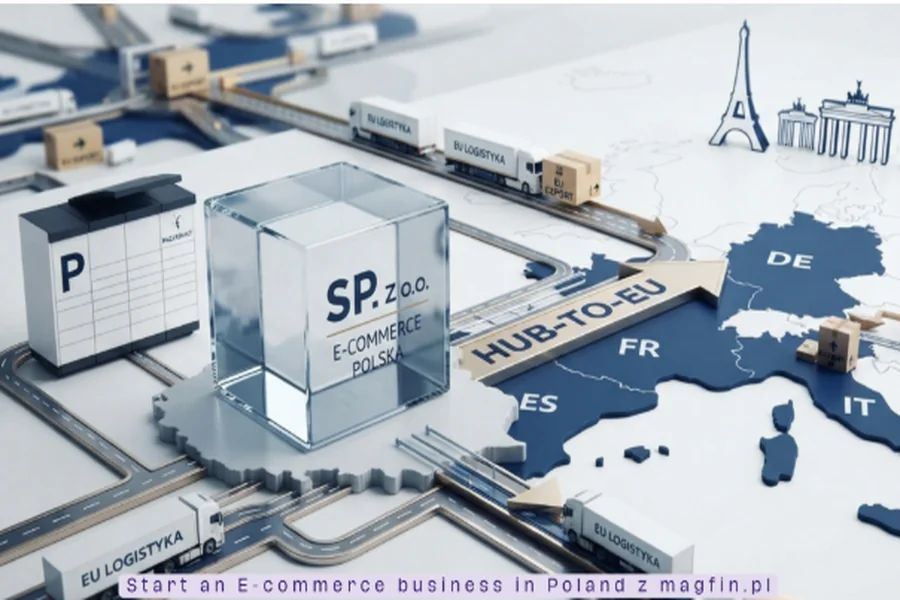
Poland is no longer just a regional market—it has become the leading logistics and operational hub for businesses looking to expand across the European Union. Thanks to access to the EU Single Market, well-developed infrastructure, and business-friendly regulations, Poland serves as the launchpad for thousands of entrepreneurs.
However, building a successful e-commerce business here requires moving beyond a simple “buy and sell” approach toward creating a scalable and sustainable business model. In this article, we explore the key stages of launching an online business and the strategies for expanding across the European market.
Legal Foundation and Business Structure
Registering your company in Poland is the cornerstone of your business. It determines your tax obligations and your ability to scale.
- Spółka z o.o. (Limited Liability Company). The most popular legal structure for e-commerce businesses. It limits the personal liability of shareholders while making it easier to attract investors and grow the company.
- VAT-UE (EU VAT Registration). This is a crucial requirement. If you plan to sell goods to customers in other EU countries, your company must obtain VAT-UE status. Under the applicable conditions, this allows intra-Community supplies to be subject to a 0% VAT rate.
- Registered Address and Virtual Office. If you do not have a physical office or warehouse at the beginning, using a certified virtual office that handles incoming correspondence is a common and widely accepted business practice.
Logistics: The Heart of Your Business
In Poland, logistics is a competitive advantage. Customers have come to expect next-day delivery.
- More than 70% of online purchases in Poland are delivered through parcel lockers. Integrating your online store with InPost via API is essential for maximizing conversion rates.
- Instead of renting your own warehouse from day one, use fulfillment centers that integrate with your online store, store inventory, pack orders, and cooperate with courier companies. This allows you to focus on sales and marketing rather than logistics.
- Throughout the European Union, consumers have a legal right to return goods within 14 days without providing a reason. Your returns process should be simple and customer-friendly, as complicated returns quickly undermine trust.
Entering Marketplaces: The “Allegro+” Strategy
Launching an independent online store from scratch is rarely the best first step. In both Poland and Europe, marketplaces dominate online sales.
- Allegro is often referred to as Poland’s equivalent of Amazon. More than half of all online purchases in Poland are made through this marketplace. If your products are not available on Allegro, you are missing a significant share of the Polish e-commerce market.
- Once your operations on Allegro are running smoothly, expand to Amazon, which provides access to Germany and other European markets, as well as country-specific marketplaces such as Kaufland.de in Germany.
- Your own e-commerce website remains an important asset for building your brand, growing your customer database through email marketing, and increasing profit margins by avoiding marketplace commissions.
Marketing and Localization: Adapting to the European Market
European consumers have different expectations from customers in the CIS region or Asia.
- Machine translation significantly reduces customer trust and conversion rates. Your website content, product descriptions, and customer support should be professionally localized into the target language, whether Polish, German, French, or another local language.
- Offer local payment methods. In Poland, customers expect BLIK, PayU, and Przelewy24. In Germany, PayPal, Klarna, and invoice payments are widely used. Without familiar local payment options, businesses may lose a substantial percentage of potential orders during checkout.
- Build credibility through customer reviews on platforms such as Trustpilot and Google Reviews, as well as by displaying security certificates. European consumers are generally cautious when purchasing from new online stores without an established reputation.
Conclusion
Building an e-commerce business in Poland is a long-term investment rather than a shortcut to quick profits. Sustainable success comes from delivering an outstanding customer experience through fast shipping, transparent return policies, reliable customer service, and full compliance with VAT regulations.
Once your business processes are optimized in Poland, you gain a strong operational foundation for expanding across the entire European Union.