
How Should Businesses Evaluate Office Furniture Purchase Decisions for Growing Teams?
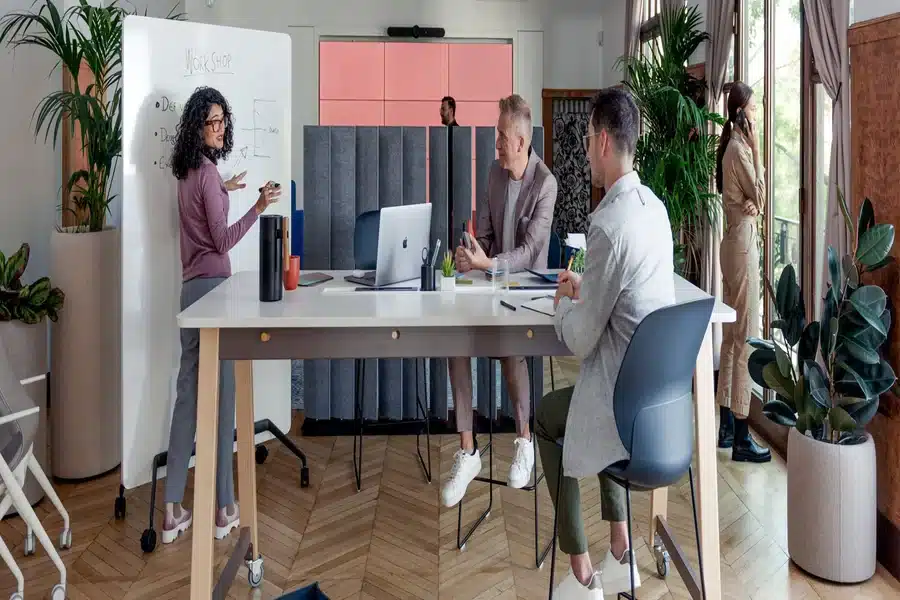
Office furniture decisions often look simple until growth starts exposing the wrong choices. A company may buy for today’s headcount, today’s layout, and today’s budget, only to find six months later that workstations feel crowded, meeting areas are underused, and employee needs have already changed. What seemed efficient at the time becomes expensive to revisit.
That is why furniture buying should be treated as a planning decision, not a shopping exercise. For property managers, facility teams, and business owners, furniture affects space efficiency, employee comfort, collaboration, and a workplace’s adaptability as teams expand. The real question is not just what fits the office now. It is what will continue to work as the business grows, roles evolve, and floor plans require more flexibility than the initial purchase may have anticipated.
Why Growth Changes The Buying Process
-
Furniture Should Match Future Headcount
Businesses often make furniture purchases in response to immediate pressure. A team grows quickly, available desks run out, and the priority becomes filling the space as fast as possible. That approach solves the visible problem but often ignores what happens next. A company reviewing options such as new office chairs in Switzerland may need to think beyond style or unit cost and consider whether those purchases still make sense as staffing increases, departments shift, or seating standards need to remain consistent across multiple work areas. The stronger decision is the one that supports expansion without forcing a partial reset later.
-
Start With Work Patterns First
Before comparing furniture types, businesses should evaluate how their teams actually work. A growing company needs more than just desks and chairs. It needs furniture that supports the mix of focused work, collaboration, privacy, meetings, and movement throughout the office. A sales team operating on calls all day has different needs from a design team, a hybrid administrative team, or a management group that frequently hosts internal meetings. Buying without understanding those patterns often leads to layouts that look efficient on paper but create friction in daily use.
-
Flexibility Matters More Than Appearance
Furniture should be evaluated for how easily it can adapt as teams change. Fixed layouts may look clean at the start, but they can become restrictive when departments expand, teams are reorganized, or the business introduces hybrid schedules. Modular desks, movable storage, adaptable meeting tables, and seating that can shift between work areas give a growing office more options without requiring a full redesign. Appearance still matters, but visual consistency should not come at the expense of practical flexibility. A workplace that cannot adjust easily tends to become inefficient faster than expected.
-
Ergonomics Should Not Be Treated Lightly
Growing teams place repeated daily demand on furniture, especially seating and workstation setups. That is why ergonomics should be part of the buying decision from the beginning. If chairs lack proper support, desks do not fit the work being performed, or monitor positioning becomes difficult within the selected setup, discomfort follows quickly. For businesses, this is not only a wellness issue. It affects productivity, concentration, and the credibility of the workplace environment. Furniture that looks acceptable but performs poorly under daily use often becomes one of the most expensive mistakes in an expanding office.
-
Space Planning Must Stay Realistic
One of the most common errors in office furniture purchasing is buying items that technically fit the floor plan but leave insufficient room for circulation, privacy, storage, or future changes in density. Businesses should evaluate not just whether furniture fits, but how it affects movement through the office and how much usable space remains once everything is installed. A growing team needs more than square footage. It needs a floor plan that still functions once people, equipment, storage, and shared-use areas are all in motion. Furniture decisions should support that reality rather than consume space too aggressively.
-
Standardization Helps Control Growth
As teams expand, furniture standardization becomes more valuable. That does not mean every space has to look identical, but core workstation elements should be consistent enough to simplify purchasing, maintenance, and future additions. When businesses buy furniture in disconnected phases without a standard, they often end up with uneven workstation quality, mismatched aesthetics, and avoidable complications when trying to scale later. A more disciplined approach allows the company to add pieces over time without making the office feel patched together. Standardization also makes vendor relationships and replenishment decisions much easier to manage.
Good Buying Decisions Leave Room To Grow
Businesses should evaluate office furniture purchases for growing teams with the same discipline they use for other long-term operational decisions. That means reviewing work patterns, flexibility, ergonomics, space planning, durability, standardization, vendor support, and future growth direction before committing to large purchases. Furniture that solves only the immediate problem often creates another one later. The stronger approach is to choose pieces that support today’s use while leaving room for tomorrow’s expansion. For growing teams, that balance matters. It is what turns office furniture from a short-term expense into a practical asset that continues to support the business as it evolves.