
How to Stay Independent in the Kitchen with a Disability
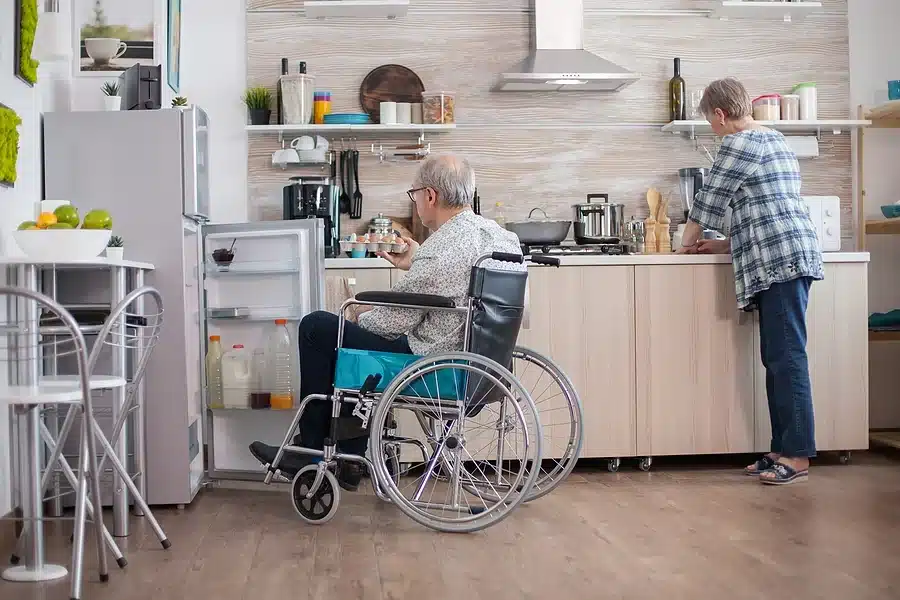
The kitchen is one of the most important rooms in any home, and for people with a disability, it is also one of the most challenging. Balance issues, joint pain, muscle weakness, and limited mobility all make routine tasks like chopping vegetables, loading the dishwasher, or reaching a cabinet shelf significantly harder than they need to be. Many people with disabilities gradually reduce their time in the kitchen as a result, which directly affects their independence, quality of life, and ability to participate in daily household life.
The good news is that staying active in the kitchen with a disability is achievable with the right strategies and tools. Small adjustments to how you organize your kitchen, how you move around in it, and what equipment you use can make a substantial difference in what you are able to do safely on your own.
One of the most effective tools for improving kitchen independence is a purpose-built mobility aid that lets you move around while seated. A Chair for cooking while seated addresses a core challenge: the need to stay mobile across different areas of the kitchen without standing for extended periods. With smooth-rolling wheels, a locking brake, and electric height adjustment, this type of chair lets you slide from the counter to the stove to the sink while staying at a safe and comfortable working height throughout.
Kitchen independence is not just a practical issue. It is tied directly to dignity, confidence, and the ability to contribute to household life on your own terms.
Practical Strategies for Adapting Your Kitchen Routine
Adapting your kitchen routine starts with an honest assessment of which tasks cause the most difficulty. For most people with mobility challenges, the three main problem areas are standing for extended periods, reaching items stored at height, and moving safely between different work zones. Addressing each of these systematically makes the kitchen significantly more manageable.
For standing fatigue, the most direct solution is to sit whenever possible. Many kitchen tasks do not require standing at all. Chopping, mixing, peeling, and sorting can all be done seated at the right height. If your counter height allows, pulling up a chair with adequate seat height lets you work at the surface without strain. If not, an adjustable-height seating solution closes that gap without requiring expensive counter modifications.
For reaching, the principle is to reorganize storage around what you actually use. Items used daily belong between hip and shoulder height, where they can be retrieved without bending or reaching overhead. Heavy items like pots and casserole dishes belong in lower, easily accessible drawers or on pull-out shelves. Lightweight items used occasionally can remain in upper cabinets, but should be accessible with a stable reach aid rather than by stretching unsupported.
For moving between work zones, the answer is removing the need to carry items across the kitchen while walking. A rolling seat solves this directly. Sliding from the preparation area to the stove to the sink while seated eliminates multiple risky transitions and reduces the total physical effort required to complete a meal. VELA Chairs are built specifically around this need, with over 500,000 chairs used worldwide, and every model includes the core features that kitchen independence requires: four smooth-running wheels, a secure central brake, and electric height adjustment that raises or lowers the seat at the press of a button.
Making the Kitchen Safer Without Expensive Renovations
A full disability kitchen renovation, lowered countertops, widened walkways, adjusted cabinet heights, and custom appliances, can cost tens of thousands of dollars and disrupt an entire household for weeks. For most people, it is not a realistic first step. The practical alternative is to adapt how you use the existing kitchen rather than rebuilding it from scratch.
Non-slip mats on hard floors reduce the risk of slipping near the sink and stove. Drawer organizers and pull-out inserts reduce the need to reach deep into lower cabinets. A long-handled reacher or grabber tool extends your effective reach by 24 to 36 inches without compromising stability. These are small, inexpensive changes that have a measurable impact on daily safety.
Lighting is an underestimated factor. Poor kitchen lighting increases the risk of misjudging distances, missing steps, or failing to see a spill. Adding under-cabinet LED lighting to the main preparation area costs under $50 and improves visibility significantly.
The most impactful single investment for most people with mobility challenges is a quality wheeled support chair with height adjustment. Rather than modifying the kitchen to fit a fixed chair, a chair with electric height adjustment modifies itself to fit any kitchen. It raises to reach upper shelves, lowers for the dishwasher, locks in place at the stove, and rolls freely between tasks. For many users, this single piece of equipment replaces the need for costly kitchen redesign entirely and makes independent cooking possible in a standard home kitchen without modification.