
How towel radiators transform your bathroom experience?
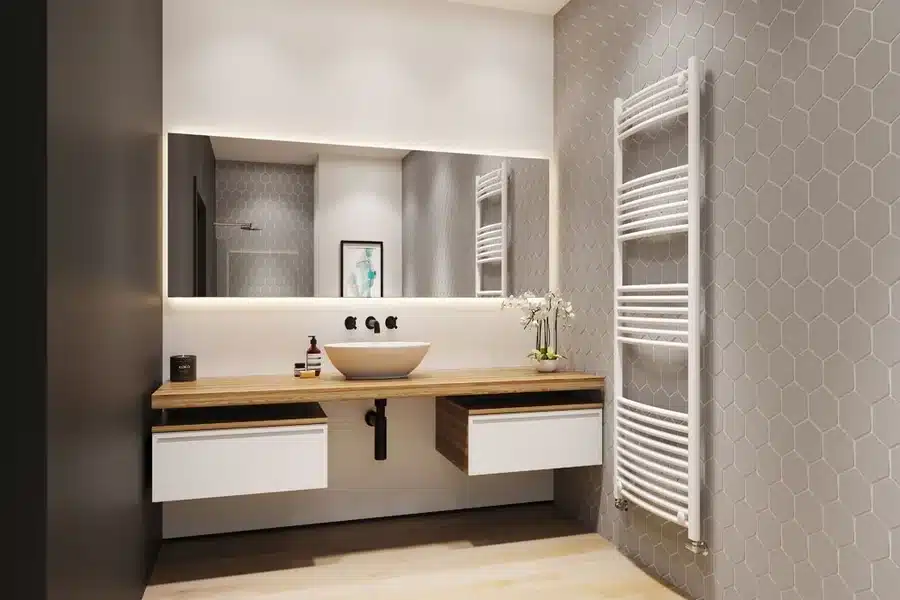
You know how towel radiators are one of the few bathroom upgrades that changes the feel of the room straight away, less damp, fewer cold corners, and a towel that is actually pleasant to use.
In practice, heated towel rails either connect to central heating, run as electric towel radiators, or use a dual-fuel towel rail setup so you can heat towels even when the boiler is off.
Below, I’ll walk you through sizing with a BTU calculator, choosing finishes (chrome towel radiators through to anthracite towel radiators), and the key installation choices that keep your bathrooms comfortable and tidy.
Key Takeaways
- Pick the heat source first: Water (central heating), electric, or dual fuel, because it affects installation, controls, and running costs.
- Size for the room, not the look: A towel rail that dries towels can still leave the bathroom chilly if the BTU is too low for your heat loss.
- Check how outputs are quoted: BTU and watts depend on test conditions (Delta T ratings), which matters even more if you have low-temperature heating.
- Match finish to maintenance: Chrome looks crisp with taps and basins, while powder-coated black towel radiators and white towel radiators hide water marks better.
- Plan the controls: Thermostats, timers, and a simple “boost” routine can keep towels dry without heating all day.
Optimising Bathroom Comfort with Towel Radiators
A good towel radiator does two jobs: it takes the edge off the room temperature and it helps towels dry between uses.
Your best results come from treating it like a heating appliance first, and a design feature second. That means sizing it properly, choosing a sensible heat source, and placing it where towels can actually breathe.
If you are choosing designer radiators from Planet Radiators for a bathroom refresh, the same rules apply. Start with heat output and usability, then choose the style that fits your space.
Achieve efficient heating for a cosy space
Warm towels are great, but the real win is a bathroom that feels dry and comfortable when you walk in.
Start with sizing. Most product pages quote outputs in BTU and watts, and you will often see figures like 1019 BTU, 1402 BTU or 2890 BTU.
For quick checks, 1 watt is about 3.41 BTU per hour, so a 554W towel rail sits around 1889 BTU.
One detail people miss is the Delta T rating used for the output figure. A 2025 industry note from the Hot Water Association highlights that UK radiator manufacturers and distributors should state heat output at Delta T50 under BS EN 442, which makes comparisons far more reliable.
| Example spec you will see in UK listings | What it means for you | Practical takeaway |
| 1889 BTU (554W) on a 1600mm x 600mm chrome flat towel radiator | This is a solid mid-range output for many bathrooms, while still giving plenty of hanging space. | If your bathroom is cold, treat this as a starting point, then size up if you have outside walls or poor extraction. |
| Electric towel radiators with 400W to 600W elements | They are simple for year-round towel drying, even when central heating is off. | Prioritise a timer and thermostat so you can run short “boost” periods instead of all-day heat. |
| Dual-fuel towel rail listings | These support both water (central heating) and an electric element. | If you want warm towels in summer without firing the boiler, dual fuel is usually the neatest option. |
If you want a real-world benchmark, one UK retailer lists a Flomasta 1600mm x 600mm chrome flat towel radiator at 1889 BTU (554W) for £76.99 (price shown in April 2026). Use that as a reference point when you compare affordable towel radiators across wickes, screwfix, and the radiator warehouse.
- Thermostats matter: For electric towel radiators, look for control options that let you set a temperature limit or timed schedules, not just on and off.
- Place it for airflow: A towel dries faster when it hangs with gaps, not folded over itself on a single bar.
- Think about your system temperature: If you use underfloor heating, a heat pump, or low flow temperatures, you may need a larger towel radiator than you expected for the same comfort.
Keep towels warm and dry for immediate use
The everyday benefit is simple, you stop dealing with a cold, clammy towel and a damp bathroom smell.
Drying is also about routine. Even a strong heated towel rail will struggle if towels are always doubled-up and the room has poor ventilation.
- Use a “boost” habit: Run the rail for 60 to 120 minutes after showers, then switch off or drop to a lower set point.
- Hang towels flat where possible: Ladder rails work best when each towel has its own space.
- Do not trap moisture against the finish: Wipe the bottom bars and fixings if water sits there after a shower.
- Clean with the right products: Avoid harsh bleach sprays on chrome towel radiators, as users often report early finish damage after repeated exposure.
Material choice changes long-term performance. Mild steel construction is common and cost-effective, while stainless steel options are often chosen for better corrosion resistance in humid bathrooms.
If you are keeping towels dry in kitchens or a utility room, an electric towel radiator can be handy because it does not rely on central heating schedules, so cloths dry even in warmer months.
Exploring Stylish Design Options for Towel Radiators
A towel radiator sits right next to your taps, basins, baths, and shower enclosures, so the finish has a bigger visual impact than many people expect.
The trick is to pick a style that complements your bathroom accessories, while still delivering enough heat to make the room feel comfortable.
Discover modern finishes like chrome and anthracite
Chrome is still the default for a clean, reflective look, and it pairs easily with most taps and shower fittings.
Anthracite and black towel radiators create a stronger contrast and tend to suit modern tiles, darker grout lines, and matt accessories.
As of April 2026, a Screwfix category snapshot lists 441 towel radiators, with chrome, black, and anthracite finishes among the largest groups.
| Design choice | What you get | UK retail snapshot (April 2026) |
| Popular finishes | Chrome towel radiators, black towel radiators, white towel radiators, anthracite towel radiators | Chrome (157), Black (79), Anthracite (74), Grey (13), plus small numbers of brass and gold |
| Profile type | Flat bars look sharper, curved bars give a little more space for thicker towels | Flat (393) vs Curved (48) |
| Style category | Standard ladder rails vs statement designer radiators | Designer (220), Standard (105), Traditional (4) |
| Heat source options | Match your central heating plan, or choose electric towel radiators for flexibility | Water (294), Electric (112), Dual Fuel (35) |
| Smart control | Some models support smart scheduling and remote control | Smart-compatible listings (27) |
If you want the cleanest look, match the finish to your other metals (for example, chrome rail with chrome taps). If you want less daily wiping, powder-coated finishes often hide water spots better than chrome.
Choose between traditional and designer radiator styles
Style is not just decoration, it changes how you use the room. Some designs prioritise towel space, others prioritise heat output, and some try to do both.
| Style | Best for | What to watch |
| Classic ladder towel rails | Simple bathrooms, family use, easy towel storage | Heat output can be modest, so size carefully if it is your main bathroom radiator |
| Designer flat-panel rails | Contemporary bathrooms where the radiator is part of the feature wall | Check bar spacing, some designs look great but leave less room for thick towels |
| Traditional towel radiators | Period-style bathrooms, classic schemes, softer lines | Measure pipe centres and valve positions early, as retro styles vary more |
| Column radiators | When you need more heating power than a towel rail can deliver | You may need a separate towel rail or hooks for drying |
If you are comparing cheap designer radiators, check what is included. Some listings include wall fixings but not valves, while others bundle valves & accessories as part of the kit.
Highlighting Practical Benefits of Towel Radiators
Towel radiators earn their keep in small bathrooms. You get wall-mounted heat, towel storage, and a cleaner layout with less clutter around toilets, showers, and baths.
They also pair well with other upgrades, like underfloor heating for comfort underfoot, or improved ventilation around Velux windows in loft bathrooms.
Offer space-saving solutions for smaller bathrooms
Space planning is where towel radiators often beat traditional radiators. A ladder rail gives you vertical storage, so you stop sacrificing shelf space to towel piles.
Recent UK retail filtering shows you can still find slim widths under 301mm, and shorter heights in the 300 to 599mm band, which helps with cloakrooms and awkward wall runs.
- Measure three things first: Usable wall width, usable height, and how the towel will hang without touching the floor.
- Plan around doors & windows: Make sure the rail does not clash with door swings, window boards, or bulky shower enclosures.
- Leave access for valves: You need enough space to reach your valves for balancing, bleeding, and future servicing.
- If the room is always cold: Consider a higher-output towel radiator, or pair the rail with a compact column radiator.
Budget can still work in your favour. Sales pricing on entry models appears regularly, and it is common to see affordable towel radiators in the £25 to £125 range at mainstream UK retailers.
Provide dual functionality for heating and drying
The main decision is whether you want heat tied to central heating schedules, or independent control.
Water towel radiators are great when your boiler is running. Electric towel radiators and dual-fuel towel rail setups give you more flexibility in spring and summer.
| Type | What it connects to | Why people choose it | Best control setup |
| Water (central heating) | Flow and return pipework | Lower running cost versus electric in many homes, and simple plumbing once the pipes are there | Thermostatic valve (where suitable) or manual valve, plus good boiler scheduling |
| Electric | Fixed electrical supply | Year-round towel drying with no plumbing changes | Thermostat and timer, so you can use short boosts and avoid wasted heat |
| Dual fuel | Central heating plus an electric element | Warm towels even when the heating is off | Keep water heating for winter, use timed electric boosts in warmer months |
For installation, plan the “small parts” early. You usually need two valves (often a lockshield and a control valve), appropriate brackets and wall fixings, plus a bleed valve and a blanking plug, and a tidy radiator outlet for the pipework route.
If you are electrifying a rail, treat safety as non-negotiable. Bathroom zoning, IP ratings, and RCD protection are governed by BS 7671 wiring rules, and many manufacturers state installation must be completed by a Part P qualified electrician.
A final pro tip that saves call-backs: if your central heating system is older, clean and protect it before you fit new bathroom radiators. Fernox states its Protector F1 inhibitor is designed to help prevent corrosion and limescale in domestic central heating systems, which is exactly what causes premature pinholes and rusty bleeding around valves.
Conclusion
Towel radiators transform bathrooms because they solve a daily frustration, damp towels and a room that never quite feels warm enough.
Get the basics right: choose water, electric, or a dual-fuel towel rail based on how you live, size it with a BTU calculator, and check the output rating so you are comparing like with like.
Then make it look good. Match finishes to your taps and basins, decide between chrome towel radiators or bolder black and anthracite options, and make sure you still have practical towel space.
That is how you end up with warm towels, a drier room, and bathroom radiators that feel like a genuine upgrade, not just another fitting on the wall.
FAQs
1. How do towel radiators change my bathroom experience?
Towel radiators give steady warmth, they dry towels fast and cut damp, which helps to prevent mould.
2. Will a towel radiator push up my energy bills?
Not always; modern, energy efficient units use little power, especially when linked to central heating or run as electric heaters with timers.
3. Are towel radiators hard to install?
Most connect to existing plumbing, some electric heaters simply plug in, and a qualified installer can complete the job quickly.
4. Do towel radiators only serve a practical purpose?
No, they also lift bathroom design, they free up space compared with bulky heaters and come in many finishes to match tiles and fittings.