
When Vision Refuses to Explain
Press Release
We’ve been trained to expect explanations. Artists write statements. Audiences look for meaning. Curators provide context. Visual art is routinely translated into words, as if the image alone isn’t enough.
When Vision Refuses to Explain suspends that habit.
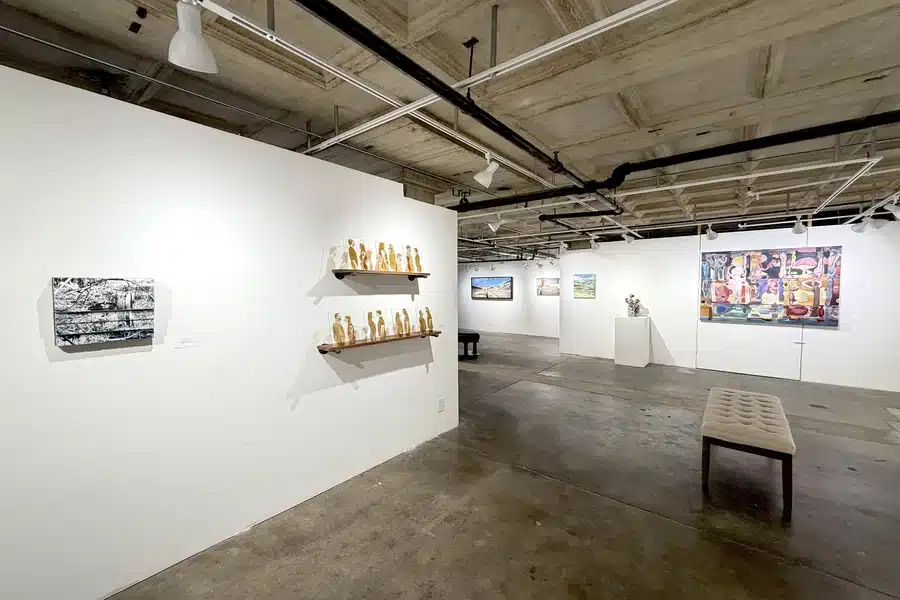
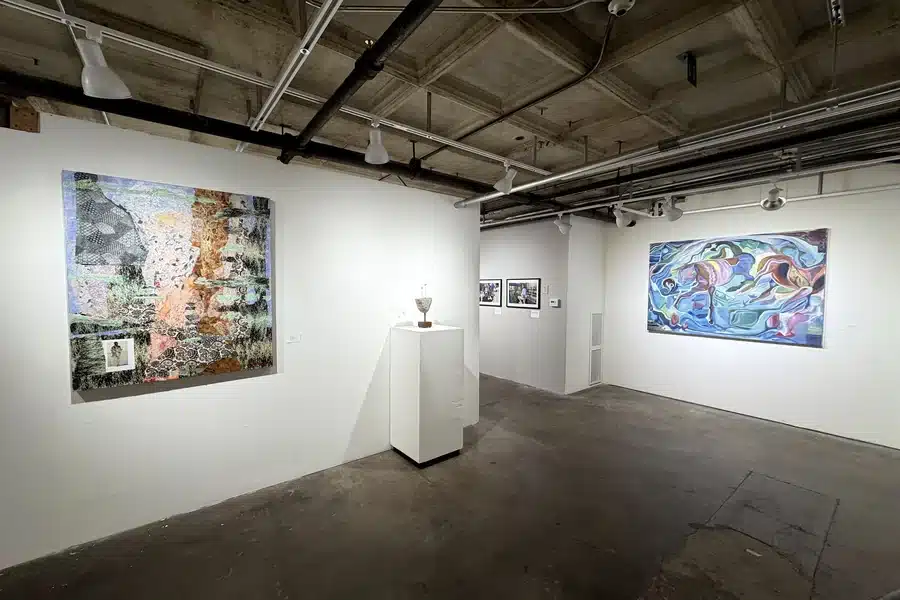
This exhibition removes the familiar interpretive scaffolding: no artist statements, no wall text outlining concepts or intentions, no thematic guide telling viewers what to see. Instead, it offers a direct encounter between artwork and audience, an invitation to look without being led, to stay with what is felt before it is named.
For centuries, visual art stood on its own as a form of perception that needed no interpreter. Over time, we began treating artworks as puzzles to solve or messages to decode. Language became the lens through which images are viewed, rather than the other way around. By withdrawing that lens, the exhibition re-centers attention on what happens in the act of seeing itself.
In this quiet, something shifts. The art reclaims its autonomy, and the viewer reclaims responsibility. Without words directing attention, you are free to notice what you actually notice, not what you are told to look for. Uncertainty becomes part of the experience. Ambiguity is no longer a problem to resolve, but a space to inhabit. Some viewers will find this liberating. Others may feel unmoored without the familiar anchor of explanation. Both responses are valid—and both are part of what this exhibition explores.
The judges for this exhibition were Gene Sasse and Xiaorui Zhang.
Participating ArtistsAlexandra Green, Pat OConnor, Finn Hewes, Graham Cassano, Kevin Perrault, Kyle Pettyjohn, Melanie Tucker, Travis Flack, Joani Share, Bin Fang, Yuan Zhuang, Jingwen Cao, Alice Zhou, Danyang Sun, Xu Fang, Qian LinCurator: Shuai XuDates & Events
Exhibition on view:02/01-02/26/2026 Reception:Sunday, February 15, 2026 | 2:00–4:00 PM
In the end, When Vision Refuses to Explain reminds us that not everything we see is meant to be clearly understood. Sometimes perception is fragmented, layered with emotion, memory, and personal bias. The refusal of vision to explain becomes an invitation—to question, to feel, and to interpret beyond surface appearances. It challenges us to accept ambiguity and find meaning in uncertainty rather than demanding immediate clarity. In that quiet tension between sight and understanding, we discover deeper truths about ourselves and the world around us, learning that mystery itself can be powerful, transformative, and profoundly human.