
Why Does Ductwork Condition Matter to an HVAC Contractor?
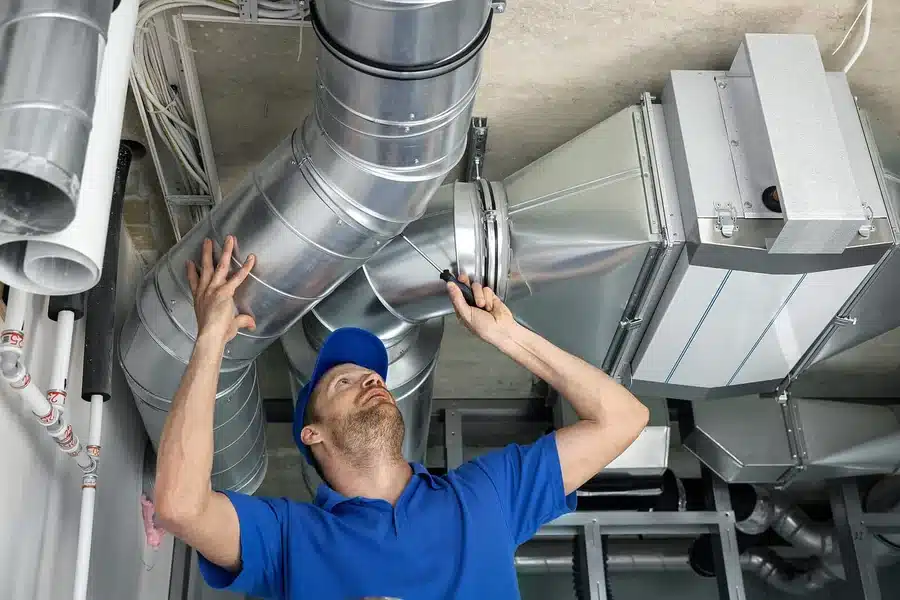
When homeowners think about heating and cooling performance, they often focus on the furnace, air conditioner, or thermostat. Yet the ductwork plays a major role in how well that equipment can actually do its job. Ducts carry conditioned air throughout the home, and their condition affects airflow, temperature balance, efficiency, and indoor comfort every day. An HVAC contractor pays close attention to ductwork because even a strong system can struggle if the air cannot move properly from room to room. Damaged, leaking, dirty, or poorly designed ducts can quietly reduce performance and create problems that seem larger than they first appear.
Why Contractors Check Ducts
-
Airflow Problems Often Begin in the Ductwork
One reason ductwork condition matters so much to an HVAC contractor is that many comfort complaints begin there rather than inside the heating or cooling unit itself. If certain rooms stay warmer or colder than others, weak airflow may be the real issue. Ducts that are crushed, disconnected, poorly sealed, or blocked can reduce the amount of conditioned air reaching different parts of the home. In some cases, the equipment may still be producing enough heated or cooled air, but the house does not feel comfortable because that air is not being delivered effectively. An HVAC contractor has to consider whether the system is underperforming or whether the duct network is preventing normal distribution. This matters because replacing equipment alone may not solve uneven comfort if the ductwork remains compromised. The contractor is not only checking whether air is being produced. They are also checking whether it is traveling where it should, in the amount it should, and with enough consistency to support the home throughout daily use.
-
Leaks and Poor Seals Can Waste Energy
Ductwork condition also matters because damaged or poorly sealed ducts can waste a surprising amount of conditioned air before it ever reaches the rooms where it is needed. If air escapes into attics, crawl spaces, basements, or wall cavities, the HVAC system has to run longer to maintain the desired temperature. That places additional strain on the equipment and can lead to higher utility costs without improving comfort. A contractor often checks for gaps at joints, loose connections, aging insulation around ducts, and sections where air loss may be quietly reducing efficiency over time. Homeowners looking for answers to persistent comfort and energy issues may search for a Seaford, DE HVAC Contractor when they notice the system running constantly without keeping the house as steady as it once did. In many homes, leaking ductwork causes the equipment to work harder than necessary while still leaving rooms uncomfortable. That is why contractors treat duct condition as part of the full system, not as a separate detail that can be ignored.
-
Duct Condition Affects Indoor Air and System Strain
Beyond temperature control, ductwork also affects indoor air movement and the overall workload placed on the HVAC system. If ducts are dirty, damaged, or pulling air from unwanted spaces, they can contribute to a stale indoor feel, more dust circulation, or pressure imbalances that make the home less comfortable. Return ducts are especially important because they help carry indoor air back to the system for conditioning and recirculation. If that return path is restricted or leaking, the system may struggle to move air properly, even if the main unit itself is functioning normally. An HVAC contractor watches for these issues because poor duct condition can gradually shorten equipment life by forcing motors, fans, and other components to run under greater strain. It can also make service calls more confusing if symptoms are blamed only on the furnace or air conditioner. A contractor who ignores the ducts may end up treating the result of the problem instead of the source. Good duct condition supports cleaner airflow, steadier operation, and a home that feels more balanced overall.
-
Repairs and Replacements Depend on the Duct Network
Ductwork condition matters to an HVAC contractor because it influences their decisions about repairs, upgrades, and full system replacement. If a homeowner is considering a new unit, the contractor still needs to know whether the existing duct network can support it properly. Installing new equipment onto damaged, undersized, or leaking ducts can limit the benefits of that investment from the start. In other situations, a repair recommendation may depend on whether the duct system is still capable of moving air as the equipment was designed to handle. Contractors often evaluate duct layout, airflow resistance, sealing quality, and insulation before deciding whether a comfort problem can be solved with a repair or requires broader changes. This is important because the duct system acts like the delivery path for the entire heating and cooling process. If that path is weak, even well-functioning equipment may appear less effective than it really is. By checking duct condition, the contractor can make recommendations that reflect the whole home instead of just the unit in one mechanical area.
Good Ducts Support the Whole System
Ductwork condition matters to an HVAC contractor because ducts affect how air moves, how efficiently the system runs, and how comfortable the home feels from room to room. Leaks, blockages, poor sealing, and worn sections can create uneven temperatures, wasted energy, and added strain on heating and cooling equipment. That is why contractors look beyond the unit itself when diagnosing problems or recommending next steps. A home with sound ductwork gives the system a fair chance to perform properly. When the ducts are neglected, comfort and efficiency often suffer even if the equipment is still working.