
How to Build a Smarter Picking System with Stackable Totes
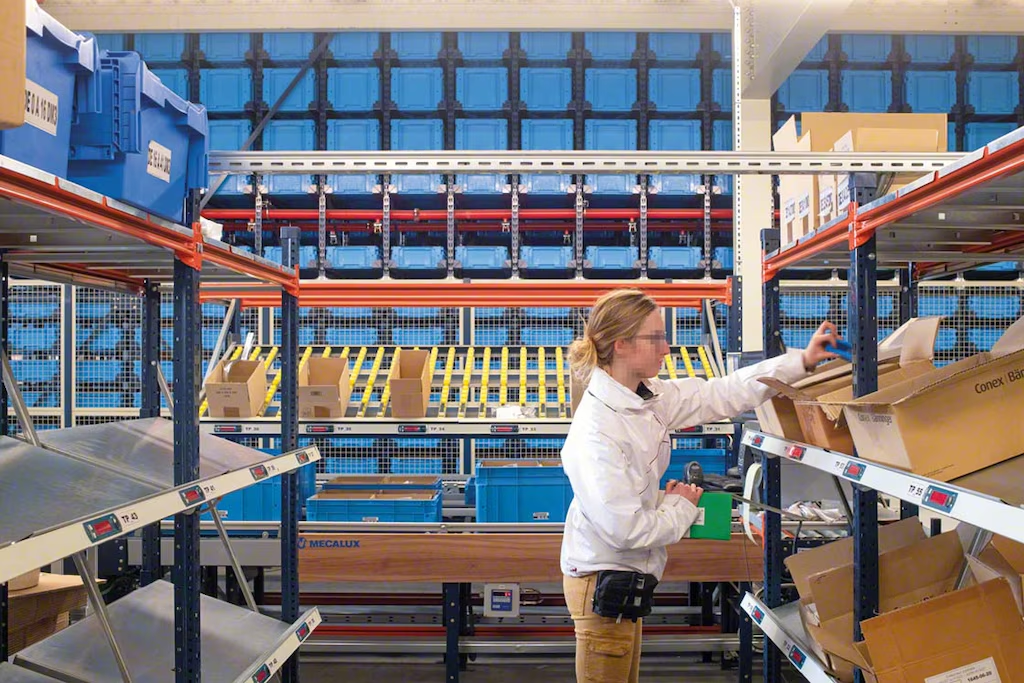
A picker walks to a location, digs through an unmarked bin, pulls the wrong item, walks it back, and starts over. Multiply that by a hundred picks a shift, and you have a productivity problem hiding inside what looks like a normal day. The frustrating part is that the fix is usually not a new software system or a warehouse redesign. More often than not, it starts with the containers themselves. The right stackable totes, configured the right way, can quietly eliminate a surprising amount of wasted time and motion.
Why the Container Choice Affects Pick Speed
Standardized containers create predictable environments, and predictable environments are faster to work in. When every tote is the same height, pickers develop muscle memory for reaching, grabbing, and replacing without thinking about it. When totes have flat labeling surfaces on the front face, signage stays readable and consistent across every location.
Irregular bins, mismatched sizes, and containers without flat label surfaces all slow things down in ways that are hard to measure but easy to feel on a busy shift.
Matching Stackable Tote Size to Your SKU Mix
This is the step most operations skip, and it shows. Buying one tote size for every product type feels efficient at the purchasing stage and creates problems everywhere else. Oversized totes for small parts mean wasted vertical space and harder visual counts. Undersized totes for bulkier items mean overfilling, lid issues, and unstable stacks.
The better approach is to audit your top-moving SKUs by physical size and group them into two or three size categories. Then match a tote depth and footprint to each group. A little work upfront here pays back in cleaner slotting and faster picks for as long as those totes are in service.
Using Stackable Tote Color to Organize Faster
Color coding is one of the cheapest and most effective tools in a warehouse, and stackable totes make it easy to implement without any infrastructure changes.
Assign colors by zone, product category, priority level, or workflow stage. Red totes for priority orders, blue for standard replenishment, yellow for returns processing. Pickers stop reading and start recognizing, which is faster and less error-prone than relying on labels alone.
The system only works if it stays consistent, so build the color logic into your receiving and putaway process from the start rather than retrofitting it later.
Building Safe and Stable Stacks in the Pick Aisle
Stackable totes are only as useful as the stacks are stable. Two design details determine this more than anything else: whether the tote uses a rim-stack or an interlocking design, and whether the load rating holds up through multiple stack levels.
Rim-stacking totes rest on top of each other with no engagement between levels. They work fine for light loads and low stack heights. Interlocking totes have a lip or channel that locks each level into the one below, creating a much more stable column under heavier loads or in high-traffic aisles where vibration is a factor.
Check the rated stack height for your specific tote and stay within it. A collapsed stack in a pick aisle creates a safety incident and a mess that nobody has time for.
Stackable Totes and Conveyor Compatibility
If your facility is moving toward automation or already uses conveyor systems, this spec matters more than most buyers realize. The euro footprint standard of 600 by 400 millimeters is widely compatible with conveyor systems across manufacturers. Smooth bases without protruding ribs or lips feed through conveyor curves without snagging.
When searching for stackable totes for sale across suppliers, flag conveyor compatibility early if automation is anywhere in your near-term plans. Retrofitting a tote system that doesn’t feed cleanly is an avoidable headache.
A Better Picking System Starts With Better Containers
Picking efficiency improvements doesn’t always require a big investment or a systems overhaul. Sometimes the lever is simpler than that. Consistent container sizing, smart color coding, stable stacking, and conveyor-ready footprints add up to a meaningfully faster and more organized operation.
Container Exchanger is a North American marketplace where businesses source new and used stackable totes across a wide range of sizes and configurations. Whether you’re outfitting a new pick line or standardizing an existing one, comparing options across multiple sellers in one place makes finding the right fit faster and easier.